TRENDING TAGS :
Sheetla Ashtami 2026: Why Devotees Eat Stale Food and Worship Goddess Sheetla for Health, Protection
Sheetla Ashtami is an important Hindu festival dedicated to the worship of Goddess Sheetla, who is believed to protect devotees from diseases, especially infections like smallpox, measles, and other seasonal illnesses.

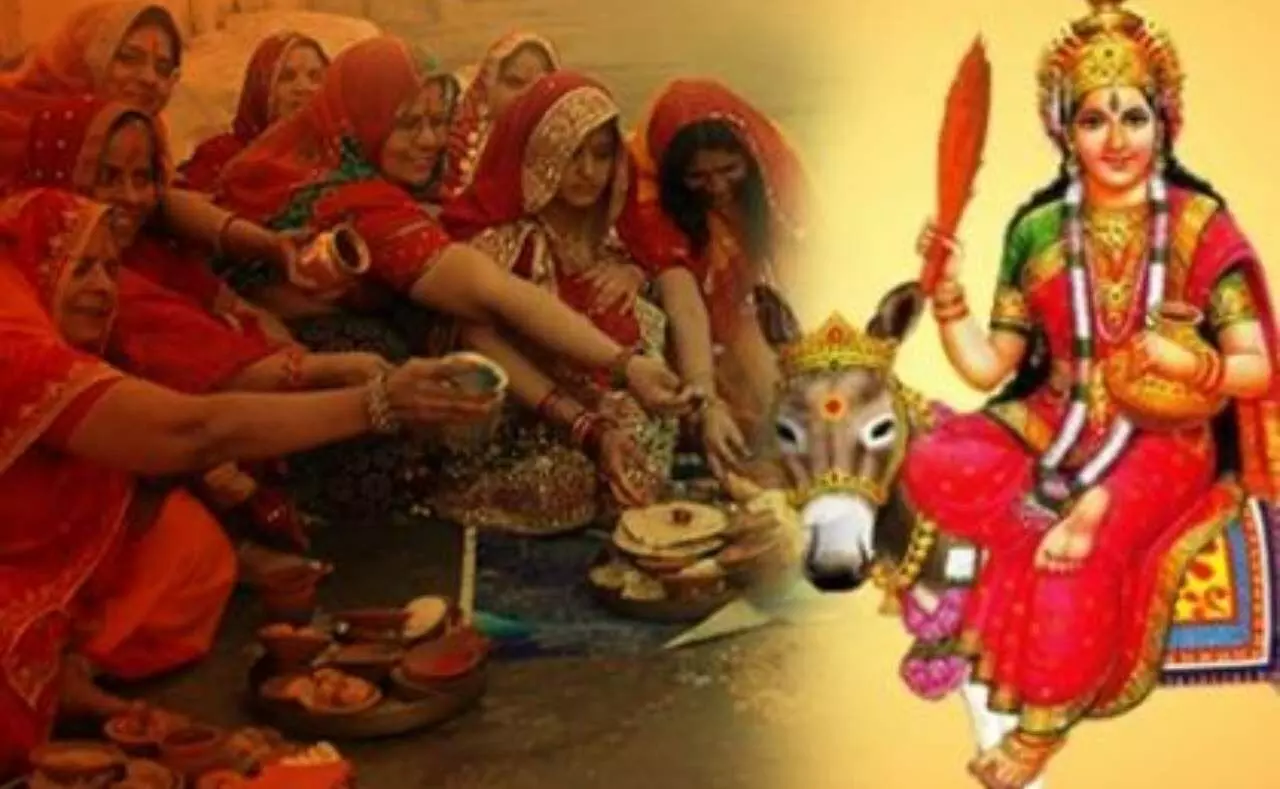
Sheetla Ashtami is an important Hindu festival dedicated to the worship of Goddess Sheetla, who is believed to protect devotees from diseases, especially infections like smallpox, measles, and other seasonal illnesses. The festival is mainly celebrated in northern and western parts of India, including Rajasthan, Uttar Pradesh, Gujarat, and Madhya Pradesh.
Observed on the eighth day (Ashtami) of the Krishna Paksha in the Chaitra month, Sheetla Ashtami usually falls a few days after the festival of Holi. Devotees pray to Goddess Sheetla seeking good health, protection from epidemics, and overall well-being of the family.
Who is Goddess Sheetla?
In Hindu mythology, Goddess Sheetla is considered the deity who cures and prevents diseases caused by heat or infection. The word Sheetla literally means “cooling” or “calm.” She is often depicted riding a donkey and holding a broom, a pot of healing water, and neem leaves—symbols associated with purification and healing.
Traditionally, people believed that worshipping Sheetla Mata could protect families from outbreaks of diseases that were common in earlier times.
The Unique Tradition of Eating Stale Food (Basoda)
One of the most distinctive traditions associated with Sheetla Ashtami is eating food cooked the previous day. This ritual is known as Basoda or Basioda.
On the day before Sheetla Ashtami, devotees prepare various dishes such as:
-
Poori
-
Sweet rice
-
Pua or Malpua
-
Rabri
-
Gram or other traditional foods
These dishes are then offered to the goddess the next morning and eaten without reheating. On Sheetla Ashtami, no cooking is done in the house, as lighting the stove is believed to generate heat, which is considered inappropriate for the “cooling” nature of the goddess.
Rituals and Celebrations
Devotees wake up early in the morning and visit temples dedicated to Sheetla Mata. The idol of the goddess is bathed and decorated with flowers, neem leaves, and offerings of cold food.
Common rituals include:
-
Offering cold food and sweets to the goddess
-
Worshipping with water, turmeric, and neem leaves
-
Visiting Sheetla Mata temples with family members
-
Praying for protection from illnesses and good health
In many regions, fairs and community gatherings are also organized near temples, making the festival a vibrant social and religious event.
Cultural and Health Significance
Historically, the festival also had a practical significance. The tradition of not cooking and allowing the kitchen to cool for a day was believed to help maintain hygiene during warmer months when infections were common.
The use of neem leaves, known for their medicinal and antibacterial properties, also reflects the deep connection between traditional beliefs and health practices.
A Festival of Faith and Well-being
Sheetla Ashtami is more than just a religious observance—it reflects centuries-old traditions that combine spirituality, health awareness, and community bonding. By worshipping Goddess Sheetla, devotees seek divine protection, good health, and peace for their families.
The festival continues to hold deep cultural importance, reminding people of the enduring link between faith, tradition, and well-being.