
Women Empowerment in India: The Role of Journalism in Shaping Women’s Awakening
Explore women’s awakening and journalism in India, media responsibility, digital violence, gender equality, and the evolving role of news in shaping women’s rights.

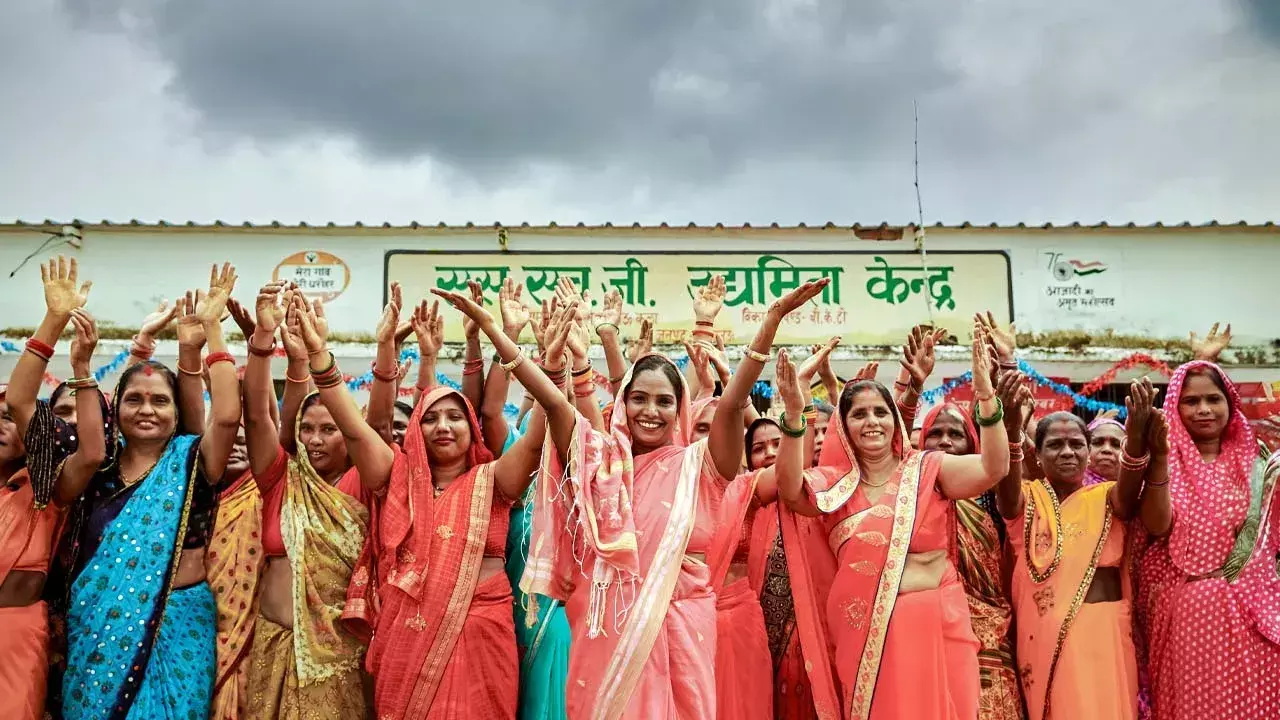
From its very inception, journalism has been accepted as a decisive force influencing social, economic, and political life. In recent decades, numerous expressions such as “women’s liberation,” “women’s awakening,” and “women’s movements” have continuously been shaped to influence our socio-economic relationships. At times, journalism appears to fulfill its social responsibility by clarifying the distinctions in meaning among these terms. But at other times, the same journalism, dazzled by the shine of words, leaves behind real problems, real solutions, and real sensitivity.
There is hardly any newspaper today that does not regularly discuss issues concerning women’s lives—women’s safety, freedom, education, employment, dignity, and justice. Yet the real question is: in what language are these discussions taking place? In what frame are they presented? For what purpose are they conducted? In recent years, under the banner of “women’s awakening,” an atmosphere has sometimes been created as though the entire history of society must be read in a single color. Such a perspective does justice neither to history nor to the complexities of the present. In our tradition, we have the cultural affirmation “Yatra naryastu pujyante ramante tatra devata”—where women are honored, there the divine resides. At the same time, we also face the bitter realities of violence, discrimination, and humiliation faced by women. Solutions will not emerge merely from glorification, nor from the perpetual broadcasting of collective guilt. The task of journalism is to hold both truths together and present the complete picture.
Our culture has revered trees, regarded the Ganga as a mother, and acknowledged women such as Apala, Ghosha, Gargi, and Maitreyi within the lineage of sages. Respect for the dignity inherent in womanhood, particularly after the pain of childbirth, forms part of our civilizational memory. Yet alongside this memory stands another truth—that in every era, there have been attempts to control a woman’s body, her identity, her will, and her freedom. Therefore, the question is not why awakening is necessary; the question is in which direction and with what ethical foundation that awakening proceeds. If journalism, in the name of “awakening,” turns women merely into a spectacle, a product, or a trend, it is not serving women—it is serving the market.
The tendency to isolate “women’s literature” as a separate category also deserves scrutiny. Literature is synonymous with sensitivity. While there may be differences in lived experiences between women and men, dividing the fundamental humanity of sensitivity risks creating a permanent divide within society. Journalism must understand that while raising women’s issues, it should not push society into such binaries where accusation and competition replace dialogue. The foremost condition for women’s welfare is that women’s issues be presented with truth, with respect, and with a direction toward solutions.
Another danger to journalism’s role has steadily grown. The expansion of audio-visual and digital platforms has multiplied the speed at which perceptions about women are constructed. Advertising, entertainment, reel culture, click-based headlines, and the hunger for virality often strip women of their individuality—they become “content.” Here, journalism’s responsibility increases even further, because it is not merely delivering news; it is shaping society’s language, vision, and sensibility.
In earlier times, notions of modesty and self-restraint were considered forms of social discipline. Today, in the name of “freedom,” consumerism is often equated with liberation. Journalism’s role is not to transform women’s freedom into consumerist freedom. Its role is to connect freedom with safety, dignity, opportunity, and justice. For women, education, employment, healthcare, safety in public spaces, dignity at the workplace, access to justice, and respect within the home—these are the concrete measures of awakening. If journalism abandons these measures and becomes entangled merely in body-centric celebrations, display-oriented competitions, or superficial debates, it strays from its core responsibility.
Today, a new and extremely serious challenge has emerged: digital violence. With the rise of social media and technologies such as AI, the forms of attacks against women have also evolved. A recent study by UN Women and partner organizations, based on the experiences of more than 6,900 women journalists, human rights defenders, and activists across 119 countries, reported that over two-thirds had experienced online violence, and approximately 41 percent stated that online abuse was followed by attacks in the “real world.” This data makes it clear that women’s awakening is no longer merely a slogan or an idea—it is a concrete struggle for safety and rights. Journalism must stand at the forefront of this battle.
Therefore, the real question before us is not whether women’s awakening should occur. The real question is at what level journalism raises women’s issues. Does it treat women merely as news items, or as human beings? Does it allow women’s dignity to be drowned in the noise of debate, or does it establish that dignity within social consciousness? If journalism truly wishes to serve women, it must change its frame—from body-centric representation to person-centric representation, from sensationalism to solutions, from polarization to dialogue, and from “viral” to “value.”
We possess a rich cultural heritage. We have festivals of reverence and traditions of memory. But memory alone is not sufficient. It must be translated into the modern language of justice, opportunity, and security. Journalism’s noble duty lies in reminding society of its finest memories while refusing to look away from its harsh realities. The true positive realization of journalism’s decisive power will come only when it views and presents women’s issues not through half-truths, but through the whole truth.
(Published in the souvenir of the ‘Journalist Forum’ on 27 March 1995. The author is a journalist. These are his personal views. [email protected] — brief responses and thoughts from readers are welcome.)


