
AI Summit 2026: What PM Modi Said About Intelligence and Technology
India AI Impact Summit 2026 in New Delhi brings global leaders together as PM Narendra Modi says intelligence and rationality must guide AI for public good.

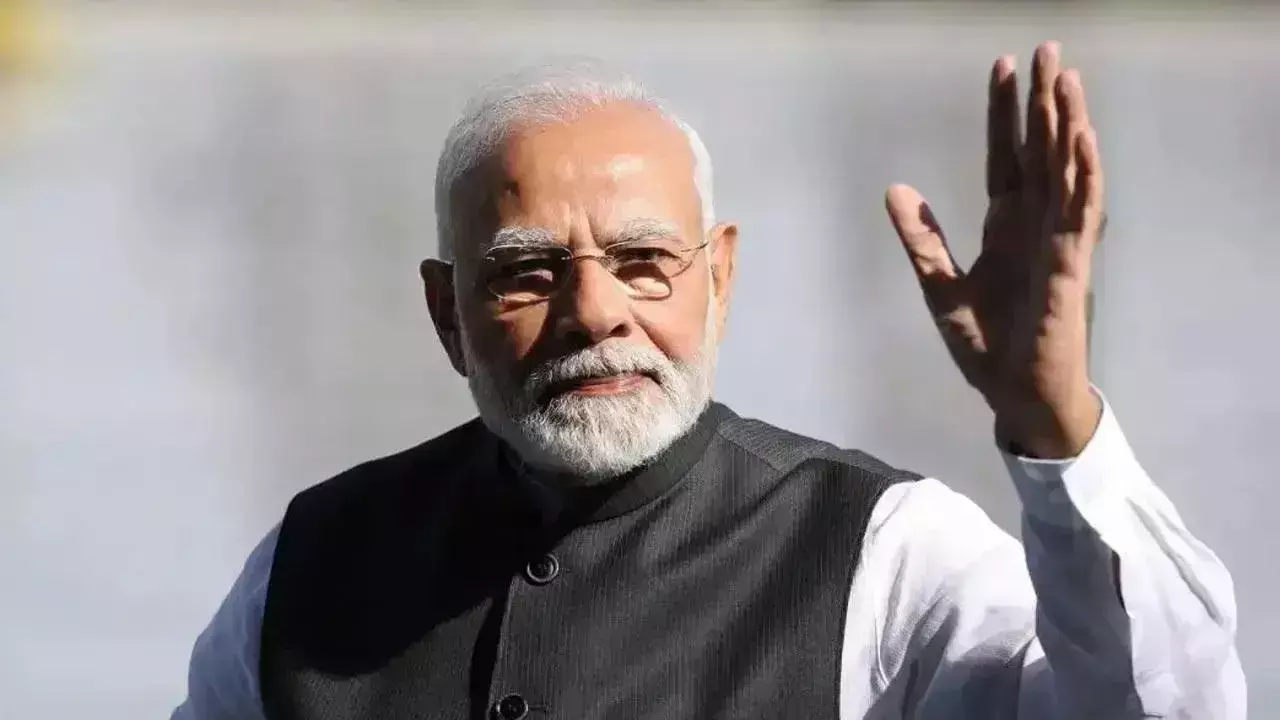
India AI Impact Summit 2026 in New Delhi is focused on one clear idea. Artificial intelligence must serve people, not replace them. Prime Minister Narendra Modi said intelligence and rational thinking are what make technology useful for society. The summit brings world leaders, CEOs, startups, and researchers together to shape how AI will grow in India and beyond.
Why This AI Summit Matters
The summit is being held at Bharat Mandapam in New Delhi. It is the first major global AI gathering hosted in the Global South. That alone makes it important. India is not just attending global tech talks anymore. It is hosting them.
More than 45 countries are part of the event. Leaders like Emmanuel Macron, Luiz Inacio Lula da Silva, and Antonio Guterres are participating. A strong US delegation is also present. Big tech names from Microsoft, IBM, Google, Zoom, and Adobe are engaging in sessions.
The message is simple. AI must be inclusive. It must work for developing nations, not just rich economies.
What PM Modi Said About AI
Prime Minister Narendra Modi highlighted that intelligence, rationality, and decision-making are what make science meaningful. Without ethics, technology can drift. His words were direct. AI should help farmers, students, small businesses, and public services.
He said the objective is to explore how AI can benefit everyone. Not a few. Not just corporations. Everyone.
That line stood out. Because it connects policy with people.
IndiaAI Mission: Big Numbers, Bigger Plans
Under the IndiaAI Mission, the government has invested Rs 10,372 crore to build a full AI ecosystem. Over 38,000 GPUs are now onboarded for shared computing access. This means startups and researchers can build without worrying about huge infrastructure costs.
Twelve indigenous foundation models are being developed. These models support India’s 22 official languages. More than 30 India-specific AI applications have already been approved.
Talent is a big focus. Thousands of undergraduate, postgraduate, and PhD students are getting support. AI labs are expanding. Training programs are being scaled up. It feels serious, not symbolic.
Inside The AI Impact Expo
The AI Impact Expo runs alongside the summit. It spreads across 70,000 square metres. More than 300 pavilions are showcasing real-world AI applications. Around 600 startups are part of the display.
There are country pavilions from nations like France, Germany, Japan, Australia, and Estonia. Visitors can see AI tools for agriculture, healthcare, climate, manufacturing, and public delivery systems.
It is not just speeches. It is live demos, real tools, and working prototypes. That changes the mood of the summit. It feels practical.
Bridging The AI Divide
One strong theme keeps coming up. The gap between the Global North and the Global South in AI adoption. Many developing countries lack infrastructure and data systems. India is trying to position itself as a bridge.
Speakers discussed sovereign AI stacks and trusted governance models. The idea is to build systems that are transparent and accountable. Not black boxes controlled elsewhere.
India’s digital public infrastructure like UPI and Aadhaar is often cited as proof that large-scale tech can work for millions. The same approach is now being tested in AI.
Global Collaboration, Indian Ambition
The summit also signals economic ambition. Global companies have pledged billions in AI and cloud investments in India. The AI market in India is projected to cross 17 billion dollars by 2027.
But beyond investment, there is something else. A desire to shape global AI norms. Hosting this summit sends that message clearly.
India is saying it wants a seat at the table where rules are written.
What Happens Next
Working groups and thematic sessions are expected to produce proposals. Shared compute frameworks. AI commons for public good. Ethical guardrails. Skill pipelines.
The summit is not just about applause. It is about implementation.
Artificial intelligence will change how economies run. The real question is who controls it, who benefits from it, and who gets left behind. India AI Impact Summit 2026 is trying to answer that.
Whether it succeeds fully, time will show. But one thing is certain. India has entered the global AI conversation not as a spectator, but as a serious player.


