TRENDING TAGS :
How CBSE’s New Two-Exam Class 10 System Is Quietly Changing Student Life in 2025
CBSE’s new two-exam Class 10 system is changing learning in India. Know how the 2025 reform reduces pressure, improves scores, and reshapes school education.

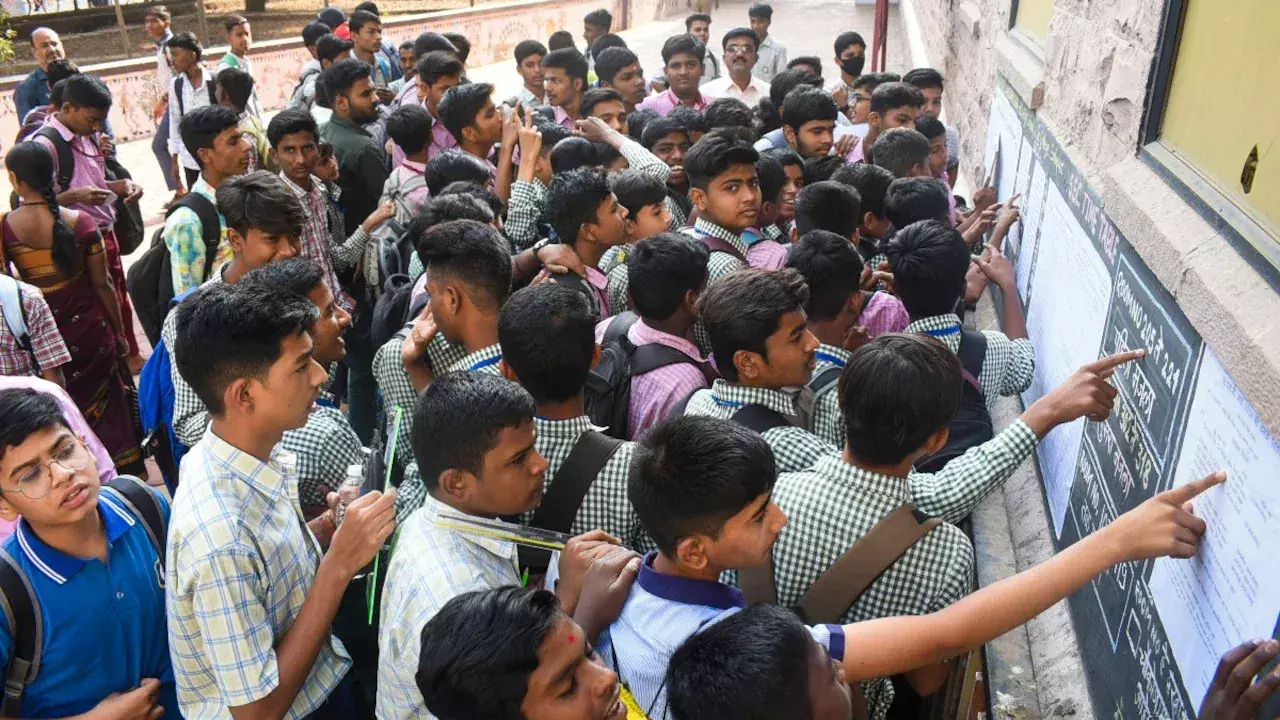
CBSE 10th 12th Result (PC- Social Media)
The biggest education shift of 2025 is the new CBSE rule that gives Class 10 students two chances to take the board exam. The idea is simple and direct, lowering pressure and letting students improve scores without fear. The system changes how students learn through the year and brings the focus back to understanding instead of memorising. This reform lines up with NEP 2020 and tries to make school life a bit fairer and more flexible.
CBSE’s Two-Exam Policy Started a New Way of Learning in Schools
The two-exam system came with a clear purpose, giving every student a main attempt in February and another chance in May. Many students earlier faced one-shot pressure, where a single mistake affected their entire academic direction. With the new process, the load feels lighter because students know they can correct their attempt without getting judged too harshly. Teachers say students take more interest in classes now since the fear of failing in one day is not hanging on them that much.
The rule asks all students to appear in the first exam. After that, only those who want improvement go for the second. The board set a best-of-two approach where a student can improve up to three subjects, something that removes a lot of anxiety for children who struggle with one or two topics. This has pushed schools to shift from cramming to clearer teaching, using shorter chapters, real-life examples and more practical work.
The System Reduced Stress but Also Changed How Students Study Daily
Students and parents say the routine changed a bit because syllabus is now split in a way that helps learning stay stable across the year. Smaller study loads let children revise properly instead of stacking everything at the last moment. Teachers also get time to explain chapters more simply, allowing students to ask questions they usually avoided out of fear of being slow.
Winter-bound schools and sports students got extra flexibility too. Sports students can now choose the second exam if the first date clashes with tournaments. This avoids situations where talented students missed opportunities. Schools noticed more active participation in class because students finally felt they had room to breathe.
New Assessment Style Changed Teacher Approach in Classrooms
Internal assessment is now conducted once before the main exam, which helps track how students are doing over time instead of judging them only on a final answer sheet. Many schools now use class activities, practical experiments, small projects, and simple real-life tasks to test understanding. This follows NEP 2020 goals where learning must be meaningful and not just based on notes.
Teachers say this system made their job smoother because they can focus on explaining topics one by one. Students get time to learn concepts with fewer distractions. Activity-based learning is more common now, especially in Maths and Science, where practical ideas are easier to grasp through short tasks instead of long theory.
The Exam Schedule Became More Predictable and Parent Friendly
The main exam happens in mid-February, and results come in April. The improvement exam occurs in May with results in June. This means parents know exactly when to expect everything. If a student skips the improvement attempt, the main result still appears in DigiLocker for Class 11 admissions so schools can offer provisional seats without confusion.
Revaluation and photocopy requests are allowed only after the second exam cycle, which keeps the system organised. Students who fail the main exam still get a fair chance to sit for the second one and save their academic year. The policy also clearly guides which categories qualify for which attempt, reducing miscommunication.
Experts Say the Reform Set the Tone for India’s Future Schooling
Education experts call the reform one of the year’s biggest changes. They believe the two-exam system prepared the ground for flexible schooling where constant pressure becomes less intense. Some also say it pushes schools to focus more on real understanding, not just tests. Many teachers already report calmer classrooms and more open conversations with students.
Some debate still exists among parents about whether two exams may extend stress across the year. But early results show students feel safer knowing they have another chance. The reform slowly shifts the school culture from fear-driven study to more balanced, concept-centered learning.