TRENDING TAGS :
SC Steps In Over NCERT Class 8 Book Row on Judiciary Corruption
Supreme Court takes suo motu cognisance of NCERT Class 8 textbook over ‘corruption in judiciary’ references, halts circulation and seeks review of controversial chapter.

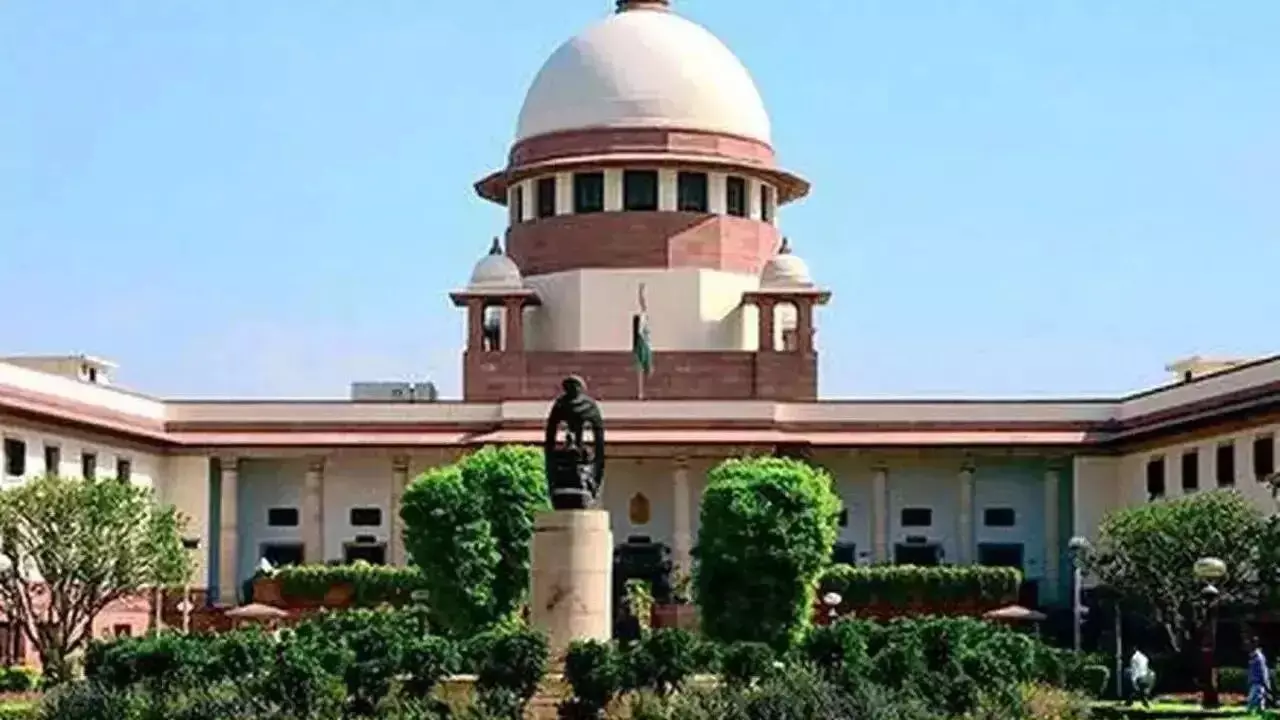
Supreme Court (PC- Social Media)
The Supreme Court has taken suo motu cognisance of references to “corruption in the judiciary” in a new NCERT Class 8 Social Science textbook. The top court registered the case on its own after concerns were raised about how the judiciary was portrayed. Distribution of the book has been halted for now. A hearing is scheduled for February 26.
Why the Supreme Court Intervened
The issue began with a revised chapter titled The Role of the Judiciary in Our Society. In this chapter, NCERT mentioned challenges faced by the judiciary, including corruption at various levels, case pendency, shortage of judges, and infrastructure gaps.
Senior advocates Kapil Sibal and Abhishek Manu Singhvi raised objections before the court. They said many in the legal fraternity were disturbed that schoolchildren were being taught about corruption in the judiciary in this manner. The wording, they argued, was damaging.
Chief Justice of India Surya Kant reacted strongly. He said the matter concerns the entire institution. According to him, both the Bar and the Bench felt uneasy. He made it clear that the dignity of the judiciary must not be tainted.
Soon after, the Supreme Court registered a suo motu case titled In Re: Social Science Textbook for Grade–8 (Part-2) published by NCERT and ancillary issues.
What the Textbook Actually Said
The revised textbook was prepared under the National Education Policy 2020 and the National Curriculum Framework. It aimed to explain how the judiciary works in India. Along with structure and functions, it also listed practical challenges.
The chapter reportedly included references to corruption, delay in cases, and lack of judges. It even shared approximate data on pending cases in the Supreme Court, High Courts, and district courts. It also mentioned accountability systems and complaint redressal processes.
Some believe such topics reflect reality and help students understand institutions honestly. Others argue that sensitive matters must be handled with extreme care, especially in school textbooks.
That tension is now at the heart of the case.
CJI’s Strong Observations
CJI Surya Kant said he had received messages from members of the judiciary who were worried. He noted that every stakeholder in the justice system appeared disturbed.
He also said he would not allow anyone to defame or weaken the integrity of the institution. The remarks signalled that the court views the matter seriously.
The bench hearing the case includes CJI Surya Kant, Justice Joymalya Bagchi, and Justice Vipul M. Pancholi.
NCERT Halts Distribution
After objections surfaced, the Union Ministry of Education directed that the book’s circulation be kept on hold. NCERT temporarily stopped distribution.
In an official statement, NCERT expressed regret. It said certain inappropriate material had appeared in the chapter due to an editorial lapse. The body clarified that there was no intention to undermine the judiciary’s dignity.
NCERT also assured that the chapter would be revised. Experts and stakeholders would be consulted before a corrected version is released.
Why This Matters Beyond One Book
This case is not just about one paragraph in one textbook. It touches on how institutions are presented to young students. It raises questions about transparency, criticism, and responsibility.
Should textbooks discuss institutional weaknesses openly. Or should they avoid such language to protect public faith. There is no easy answer.
The Supreme Court’s decision to take suo motu cognisance shows how sensitive the judiciary is about its image and credibility. At the same time, education experts will likely debate how civics should be taught in a democracy.
For now, all eyes are on February 26. The court’s next steps could shape not just this textbook, but how school content on public institutions is framed in the years ahead.