
TRENDING TAGS :
Global Myopia Epidemic: How Dim Indoor Lighting Is Increasing Nearsightedness Worldwide
Dim indoor lighting may be fueling a global myopia epidemic, with experts warning that 50% of people could be nearsighted by 2050.

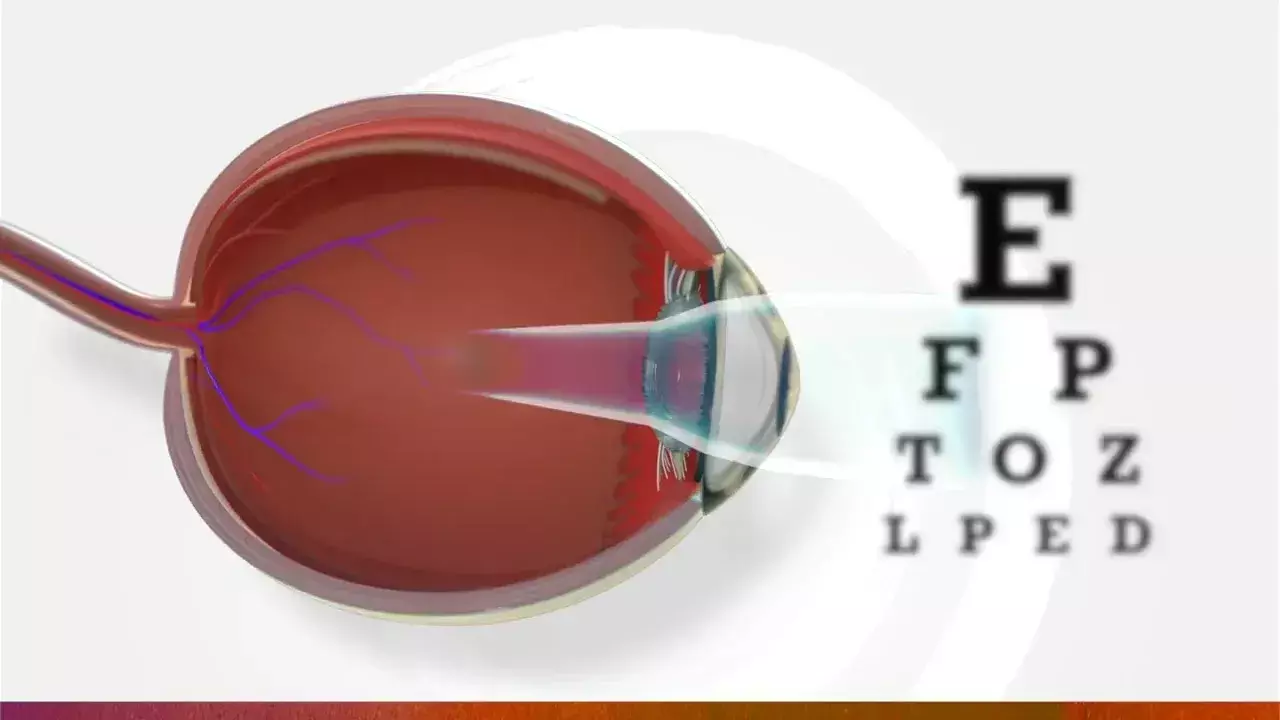
Myopia (PC- Social Media)
Nearsightedness, medically known as myopia, is rapidly becoming one of the most widespread vision conditions worldwide. People with myopia can see nearby objects clearly, but distant objects appear blurry. The condition typically develops during childhood or adolescence and often runs in families.
According to the International Myopia Institute, about 30% of the global population is currently myopic, and that number is projected to climb to nearly 50% by 2050. That means one in every two people could struggle with distance vision within the next 25 years.
While eyeglasses, contact lenses, and refractive surgeries like LASIK can correct vision, health experts warn that high levels of myopia increase the risk of serious eye conditions later in life, including retinal detachment, glaucoma, and macular degeneration.
It is thought that too much screen time has been increasing myopia rates. Smartphones, tablets, computers, and constant close-up tasks were thought to be straining young eyes.
But new research suggests the issue may be more complex than screen exposure alone.
A study conducted at the SUNY College of Optometry and published in Cell Reports proposes a different explanation: the real culprit may be prolonged close-up focus in low-light indoor environments.
Effect of Light on Retina
“Myopia has reached near-epidemic levels worldwide, yet we still don't fully understand why,” said Jose-Manuel Alonso, MD, PhD, senior author of the study and SUNY Distinguished Professor.
The researchers suggest that the key factor may not be screens themselves, but how much light reaches the retina during sustained near work indoors.
In bright outdoor light, the pupil naturally constricts to protect the eye but plenty of light still reaches the retina. When focusing on close objects like books or phones, the pupil also constricts to sharpen the image. In dim indoor lighting, this combination l close focus plus low light may significantly reduce retinal illumination.
Urusha Maharjan, the doctoral student who conducted the study, explained that this reduction in light reaching the retina could contribute to eye growth changes linked to myopia development.
The pupil, researchers say, acts like a camera aperture adjusting light intake. If retinal illumination is consistently reduced during critical developmental years, it may influence how the eye grows.
For years, scientists have observed that children who spend more time outdoors have lower rates of myopia. The new findings may help explain why. Bright outdoor environments provide significantly higher light levels than typical indoor settings. This increased light exposure ensures that the retina receives ample illumination potentially helping regulate healthy eye growth.
Public health experts increasingly recommend at least 1–2 hours of outdoor time daily for children, Proper indoor lighting during reading or screen use and Taking regular breaks during near work.


