TRENDING TAGS :
India Nears a Safer KFD Vaccine: What the Health Ministry Just Revealed
India moves closer to a safer KFD vaccine as Health Ministry confirms progress on an indigenous two-dose Kyasanur Forest Disease vaccine by ICMR.

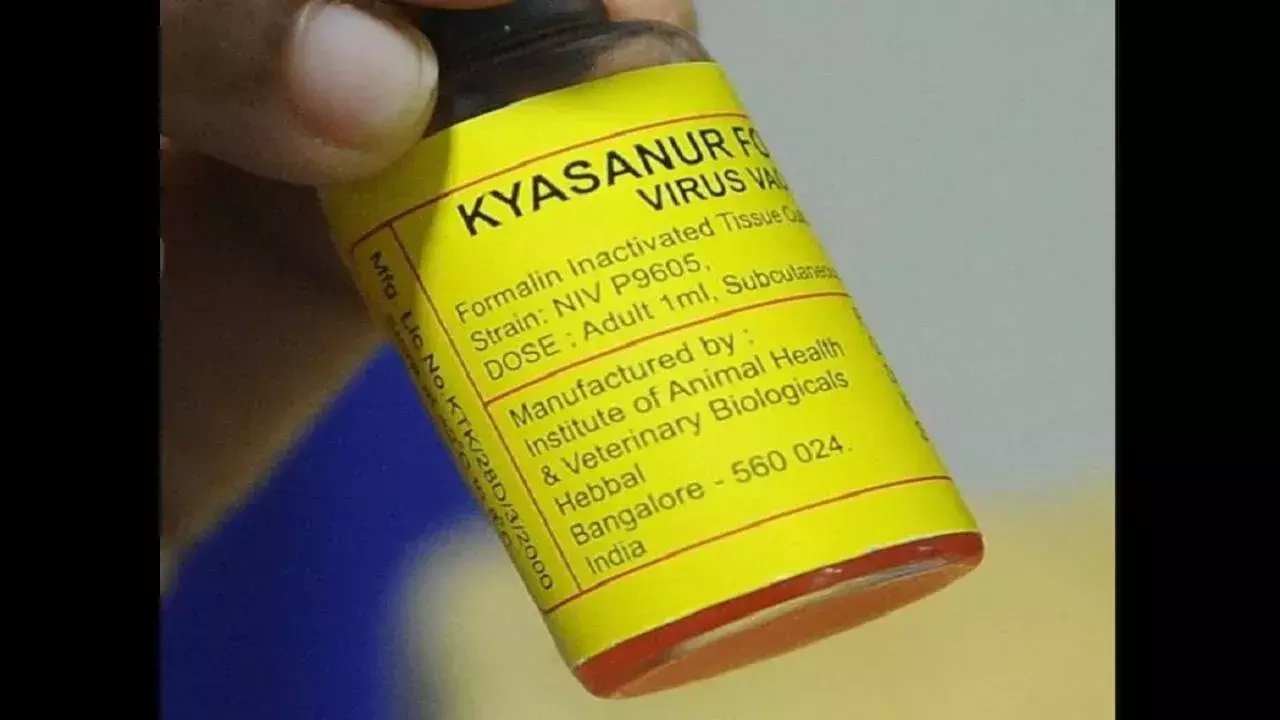
KFD Vaccine (PC- Social Media)
India is moving closer to a safer and more effective vaccine against Kyasanur Forest Disease. The Health Ministry confirmed that an indigenous KFD vaccine has been developed, animal testing is complete, and Phase I human trials have already started. The vaccine is designed as a two-dose shot, made fully in India, and aims to protect people living in high-risk forest regions.
What Is Kyasanur Forest Disease and Why It Matters
Kyasanur Forest Disease, often called monkey fever, is a viral infection spread by tick bites. It mainly affects people living near forest areas. The disease was first found in Karnataka but over time spread to nearby states. It is now seen in parts of Tamil Nadu, Kerala, Goa, and Maharashtra.
People working in forests, farmers, and villagers are at higher risk. Fever, body pain, weakness, and bleeding symptoms make this illness serious. In some cases, recovery takes weeks, and health systems in rural areas face pressure during outbreaks.
Health Ministry Confirms Major Vaccine Progress
The Health Ministry recently shared an important update. The Indian Council of Medical Research is developing an improved vaccine against KFD. This effort was started after a request from the Karnataka government, where KFD cases are reported more often.
According to the ministry, the vaccine has already been successfully developed at the laboratory level. This is not just a concept anymore. It is a real vaccine candidate moving forward in the approval process.
Animal Studies Completed Successfully
Before any vaccine reaches humans, it must pass strict safety checks. The ministry confirmed that animal challenge studies and toxicity tests are complete. These tests check how well the vaccine works and whether it causes harmful effects.
The results so far have been encouraging. This step is crucial because it shows the vaccine is stable enough to move into human testing. Without this stage, clinical trials cannot begin.
Phase I Human Trials Now Underway
After receiving approval from the Central Drugs Standard Control Organization, Phase I human clinical trials have started. This phase mainly checks safety in a small group of healthy volunteers. It also helps doctors understand how the body reacts to the vaccine.
This is a big milestone. Many vaccine projects slow down before reaching this stage. Starting human trials means the vaccine is officially on the development track, not stuck in research labs.
Details of the New Indigenous KFD Vaccine
The new KFD vaccine is being developed as a fully indigenous product. This means it is designed, tested, and produced in India. It is an inactivated vaccine, which uses a killed virus to trigger immunity without causing disease.
The vaccine will be given in two doses. There will be a gap of 28 days between the first and second dose. It also includes an adjuvant, a substance that helps the immune system respond better. This design may offer longer and stronger protection compared to older vaccines.
Why a New KFD Vaccine Is Needed
India already had a KFD vaccine, but it had limitations. Protection was not long-lasting, and multiple booster doses were required. Coverage in remote forest regions was also a challenge.
A new vaccine with better immunity and fewer doses can improve vaccination rates. It can also reduce outbreaks and protect frontline workers who face the highest exposure risk.
Impact on Western Ghats States
The Western Ghats region remains the main hotspot for KFD. States like Karnataka, Kerala, Tamil Nadu, Goa, and Maharashtra regularly report cases. Forest expansion, human movement, and climate conditions increase tick populations.
A reliable vaccine can change how these states handle KFD prevention. Instead of reacting after outbreaks, health departments can focus on routine immunization in high-risk areas.
Role of ICMR in Indigenous Vaccine Development
ICMR has played a key role in many Indian vaccine programs. From COVID-19 research to regional disease control, its focus remains on public health needs.
Developing a KFD vaccine shows attention to diseases that may not be global headlines but affect local communities deeply. This approach strengthens India’s ability to respond to regional health threats without depending on imports.
What Happens Next in the Vaccine Journey
Phase I trials are just the beginning. If safety results remain positive, the vaccine will move to Phase II and Phase III trials. These stages test effectiveness in larger groups and different age ranges.
Approval will come only after all data is reviewed carefully. While this takes time, each step increases trust in the final product. The Health Ministry has signaled strong support, which helps speed coordination.
Why This Update Is Important for Public Health
This announcement is not just about one vaccine. It reflects India’s growing focus on indigenous healthcare solutions. For people living near forests, this could mean fewer illnesses, less fear during outbreaks, and stronger protection for families.
A safer and improved KFD vaccine can quietly save lives. Sometimes, the most important health victories happen far from city headlines, deep inside forests where prevention matters the most.