TRENDING TAGS :
Alcohol Prohibition in India: Economic Impact, Revenue Loss & Ground Reality Explained
Alcohol prohibition in India explained: states with ban, revenue loss, illegal trade, and economic impact. Is prohibition a solution or costly experiment?

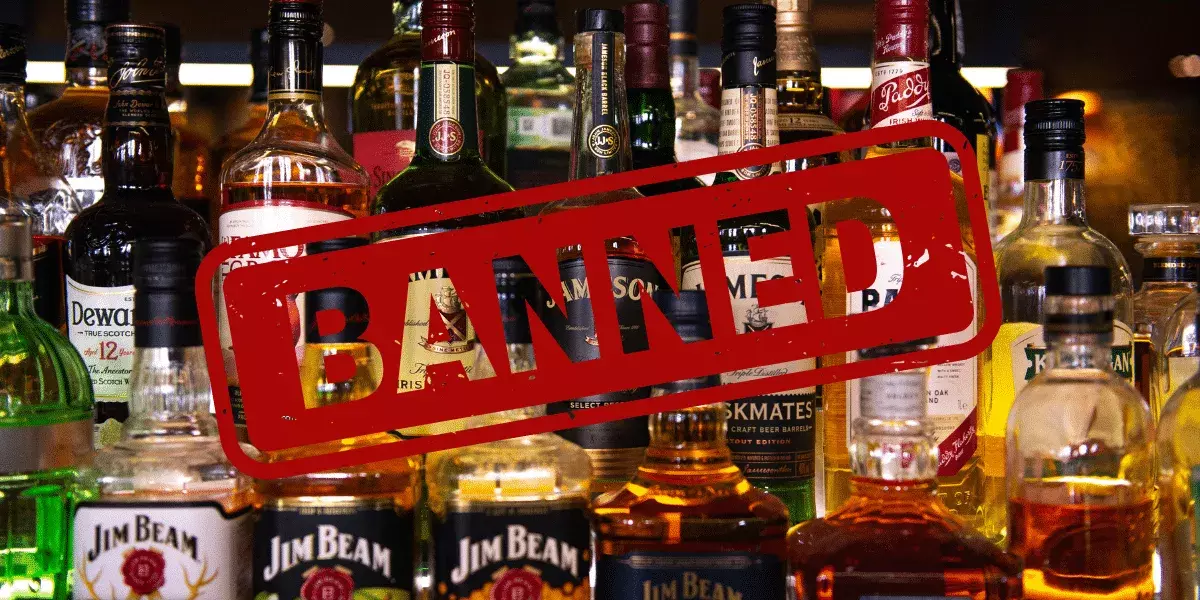
Alcohol Prohibition in India (PC- Social Media)
Does prohibition truly improve society, or does it weaken the economy of states from within? Does banning alcohol eliminate problems, or do they reappear in a new and far more dangerous form? This question is not merely social but is deeply connected to economic and administrative dimensions. In India, prohibition is often presented as a moral and welfare-driven policy, but when examined on the ground, the reality appears far more complex and contradictory. To understand this entire scenario, it is first necessary to know where prohibition is actually implemented in India and how effective it truly is.
States Where Prohibition Is Implemented
In India, complete prohibition is limited to only a few states. In Bihar, full prohibition has been in effect since 2016, where buying, selling, and even possessing alcohol is illegal. In Gujarat, prohibition has existed since before independence, but limited permissions are granted through a permit system. In Nagaland, prohibition has been in place since 1989, although there is significant relaxation at the ground level. In Mizoram, there was earlier complete prohibition, but now limited permission has been allowed. Apart from these, partial restrictions exist in some states and union territories. For example, in Lakshadweep, alcohol is banned on most islands, but allowed in certain tourist areas. In Manipur, prohibition exists in some districts while others permit alcohol. Looking at all these examples, it becomes clear that strict and effectively implemented prohibition exists only in Bihar and Gujarat.
Economic Impact of Prohibition
Now the question arises—what is the economic impact of prohibition? In India, taxes collected from alcohol are one of the most significant sources of revenue for state governments. In many states, this contributes as much as 15–25% of total income. States like Uttar Pradesh, Karnataka, Maharashtra, and Tamil Nadu earn thousands of crores every year from alcohol taxation. For example, Uttar Pradesh earns over ₹40,000 crore, Tamil Nadu around ₹35,000 crore, Karnataka approximately ₹30,000 crore, and Maharashtra between ₹25,000 to ₹30,000 crore. This is precisely why most states avoid implementing prohibition, as it directly affects their financial structure.
Revenue Loss After Prohibition
After prohibition is implemented, the biggest impact is on revenue. Taking Bihar as an example, it is estimated that the state incurs an annual loss of approximately ₹4,000 to ₹5,000 crore after prohibition. When this income disappears, the government is left with limited options. Either it increases taxes on other sources such as petrol and diesel, imposes new taxes, or takes loans. Ultimately, the burden falls directly or indirectly on the public. Thus, prohibition does not only affect alcohol consumption but also impacts the entire economic framework.
Rise of Illegal Markets
However, the impact of prohibition is not limited to revenue alone. Wherever legal restrictions on alcohol are imposed, illegal markets begin to grow rapidly. In Bihar, alcohol smuggling from Uttar Pradesh, Jharkhand, and Nepal has become a major issue. In Gujarat as well, a strong bootlegging network operates. The result is that the government earns no tax revenue, crime and corruption increase, and incidents such as deaths due to spurious liquor occur. In other words, the problem does not end—it merely changes form, often becoming more dangerous.
Impact on Employment and Tourism
Another significant impact of prohibition is on employment. The alcohol industry is not limited to manufacturing alone but is connected to a vast employment ecosystem. This includes factory workers, transportation, hotels, bars, restaurants, and small shop owners. When prohibition is enforced, all these sectors are affected. In Bihar, thousands of small businesses shut down, causing a major setback to the local economy. Tourism is also affected, as in many places alcohol availability is part of the tourism experience.
Government Spending and Enforcement Costs
In India, alcohol is outside the GST framework, which means that the entire tax revenue from it goes directly to the states. This makes it an extremely attractive source of income for them. When this source is cut off, financial balance is disturbed. However, another important aspect is that enforcing prohibition requires additional expenditure by the government. In Bihar, police, courts, and prisons have come under heavy pressure, leading to additional spending of hundreds of crores. In Nagaland, the situation is even more striking—around ₹30 crore is spent on enforcement, while revenue is only about ₹5 crore. In Gujarat and Mizoram as well, heavy expenses are incurred on surveillance, border control, and policing.
A High-Cost Model
Here, an interesting contradiction emerges. In states where prohibition does not exist, the Excise Department still operates, but there it generates revenue along with expenditure. In contrast, in prohibition states, the department becomes purely an expenditure mechanism. In other words, prohibition states face zero revenue, higher expenses, and increased smuggling, whereas other states run a self-sustained system.
Looking at the overall situation, it becomes clear that prohibition in India turns into a “high-cost model.” It results in three levels of impact—loss of revenue, high enforcement costs, and the rise of a parallel illegal economy through smuggling. This is the reason why most states avoid adopting this policy, even though there are periodic social demands for it.
Conclusion
Ultimately, the question remains open—Is prohibition truly a solution, or is it an expensive experiment? Does it improve society, or merely transform problems into a new form? The answer is not simple, because it is not just an economic or administrative issue but also a social and cultural one. However, one thing is certain—until all aspects, including revenue, employment, law enforcement, and social impact, are examined in a balanced manner, the debate on prohibition will remain incomplete.
Now the question is for you—Is prohibition right, or is it an expensive experiment?