TRENDING TAGS :
Bihar Election 2025 Caste Survey: Democracy in Search of New Equations after the Caste Survey
Bihar Election 2025 Caste Survey: A comprehensive ground report by Yogesh Mishra analyzing how Bihar’s 2025 assembly elections are being reshaped by the caste survey...

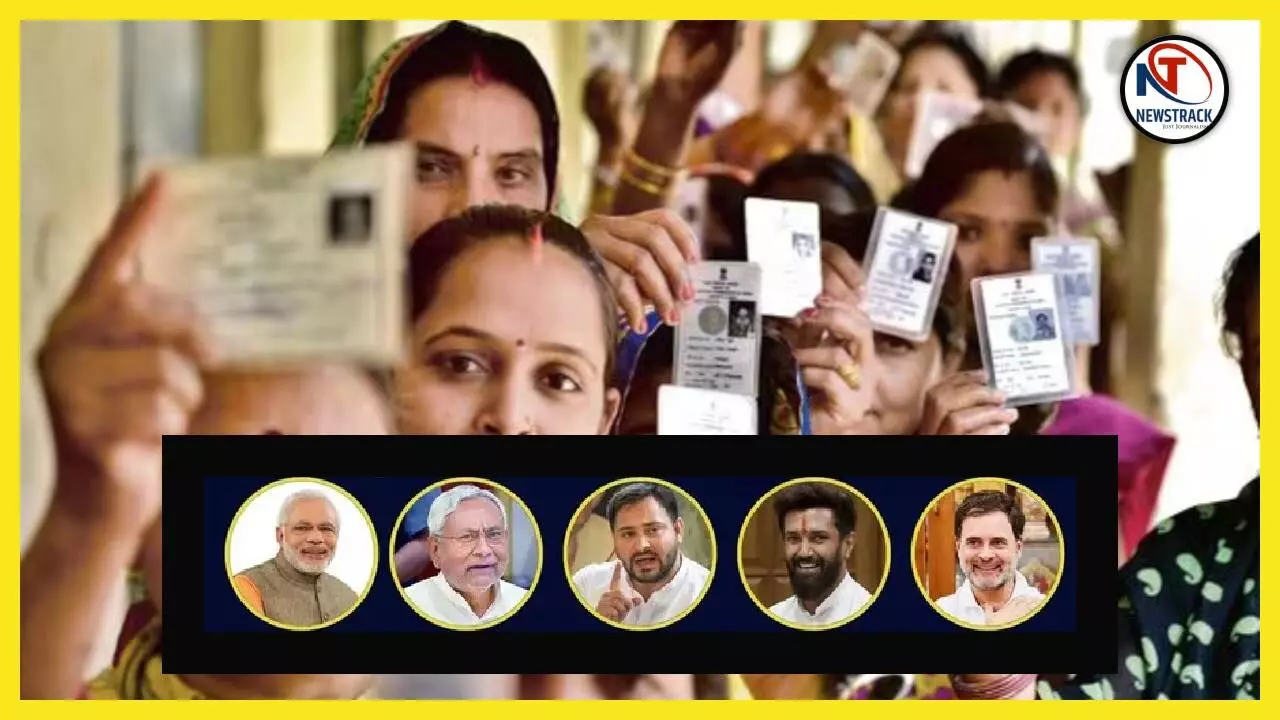
Bihar Election 2025 | Bihar Caste Survey
Bihar Election 2025 Caste Survey: There is an unusual turbulence in Bihar’s politics today, and at its center lies the recently released caste survey data that has reshaped the state’s social, caste, and political landscape. Conducted in two phases by the Nitish Kumar government during 2022–23, this survey has now become the fundamental weapon of every election strategist. It has brought forth the soul of the state as if reflected in a mirror — and every political party is now interpreting that reflection through its own lens.
The caste survey reveals that 36.01 percent of Bihar’s population belongs to the Extremely Backward Classes (EBC), while 27.12 percent comes from the Other Backward Classes (OBC). Scheduled Castes constitute 19.65 percent, Scheduled Tribes 1.68 percent, and the general or upper‑caste population accounts for only 15.52 percent. In total, 214 castes were identified — 113 EBC, 30 OBC, and just 7 upper castes. Clearly, the groups that had long remained on the margins have, post‑census, moved to the center of Bihar’s social arithmetic.
Among specific communities, Yadavs form the single largest group at 14.26 percent, followed by Koeris/Kushwahas (4.27 %), Kurmis (2.87 %), Telis (2.81 %), and Mallahs (2.61 %), who together make up a formidable demographic bloc of EBC and OBC strength. The upper castes — Brahmins, Bhumihars, Rajputs, and Kayasthas — collectively amount to around 10–12 percent, yet in the 2024 Lok Sabha elections they secured over 30 percent of Bihar’s parliamentary seats. This over‑representation shows how their political influence continues to exceed their demographic strength.
The elections of 2015, 2020, and 2024 have peeled back the layers of Bihar’s caste politics one after another. In 2015, when Nitish Kumar sided with the Grand Alliance (Mahagathbandhan), the Yadav‑Muslim‑Kurmi‑Koeri axis overwhelmed the NDA. But after Nitish’s return to the NDA fold in 2017, the Luv‑Kush bloc (Kurmi‑Koeri) shifted back in his favor — a trend visible in 2019, 2020, and again in 2024. The Yadav and Muslim vote banks have remained solidly aligned with the RJD, now forming the backbone of the INDIA alliance. In the Seemanchal belt, AIMIM disrupted the RJD’s hold on Muslim votes in 2020, though by 2024 that influence appeared to have waned.
The Dalit vote continues to vary by sub‑caste. Dusadhs (Paswans) remain loyal to the NDA through the LJP, while the Musahars generally lean toward the NDA as well. Ravidas voters, however, show a stronger inclination toward the RJD and the Left. Within the EBC category, castes like Musahar, Nonia, Mallah, Teli, and Dhobi have largely supported JDU and the NDA since 2010. Similarly, Brahmins, Bhumihars, and Rajputs have been the BJP’s steadfast core since 2014. Interestingly, in 2024 the RJD made an overt outreach to Bhumihars — a new experiment that has introduced mild discomfort within the NDA ranks.
District by district, the picture changes. In Seemanchal, the Muslim majority keeps the contest primarily between the RJD and AIMIM. In North Bihar, RJD remains strong in Yadav‑dominated pockets, but Brahmins and Kayasthas are firmly with the BJP. In Magadh and Shahabad, NDA draws strength from upper castes, while CPI‑ML gains support from the Ravidas community. In Mithila, Brahmins continue to back the NDA, whereas Yadavs and Muslims remain with RJD. The Luv‑Kush belt — Nalanda, Nawada, Sheikhpura, and parts of Gaya — remains Nitish Kumar’s stronghold, with Kurmis and Koeris consistently backing the NDA. Champaran, Gopalganj, and Siwan remain NDA bastions, though in Yadav‑Muslim dominated pockets, the RJD continues to hold ground. In Jamui, Lakhisarai, and Banka, Paswan, Koeri, and EBC communities provide the NDA with a solid foundation.
All political parties are preparing for an extraordinary contest this time. The NDA has publicly announced that a majority of its 243 candidates will come from OBC, EBC, and SC backgrounds. The RJD, meanwhile, has turned the caste survey into its ideological plank — demanding “representation in proportion to population” and simultaneously attempting to woo upper‑caste voters. AIMIM has declared its intent to contest 100 seats, and Prashant Kishor’s Jan Suraaj Party has decided to walk an independent path. Dalit organizations have released a 20‑point charter of demands, ensuring that the Dalit agenda has moved to the center of political debate this election.
Voters’ priorities too are changing. Beyond caste, unemployment, corruption, education, and the efficiency of welfare schemes are now central issues. The Special Intensive Revision (SIR) of the electoral rolls has, for the first time in 22 years, comprehensively updated Bihar’s voter list — adding more than 14,000 centenarian voters, a demographic that could play a surprisingly decisive role.
The upcoming Bihar elections are also witnessing a vibrant third front.
At the forefront of this is Prashant Kishor’s Jan Suraaj Party, which is emerging as an alternative vision on Bihar’s political landscape. Known nationally as an election strategist, Kishor has now stepped directly into public life. His “Jan Suraaj Yatra,” undertaken over two years and covering more than 15,000 kilometers, has reached virtually every district and village of Bihar, transforming into a movement of civic awakening. He speaks of governance beyond the boundaries of caste, religion, and party, emphasizing transparency, employment, education, and local self‑governance. Among the youth and the educated middle class, his appeal is rising fast. Traditional vote‑bank parties, however, view his rise as a third‑front challenge that could reshape their electoral math. Even if Jan Suraaj influences only a limited number of seats, it could play the role of kingmaker or spoiler, especially in constituencies where caste equations are delicately balanced.
Political observers believe that if Prashant Kishor fields candidates on all seats in 2025, his impact could directly alter the victory margins of major alliances. On closely contested constituencies, the PK factor could prove decisive. Moreover, if Jan Suraaj manages to nominate credible faces on select seats, it could establish itself as a new alternative force in Bihar’s politics — making its debut impact a memorable one.
On another front, Asaduddin Owaisi’s AIMIM remains active in the Seemanchal region and has already begun preparations to contest nearly 100 seats. In the Muslim‑dominated districts of Kishanganj, Araria, Katihar, and Purnia, AIMIM’s presence is visible and influential. In 2020, it won five seats, cutting into the RJD’s traditional Muslim vote base. This time, the challenge for the INDIA alliance is even greater, as AIMIM aims to move “beyond Seemanchal,” focusing on issues such as social justice, education, and employment to attract younger Muslim voters.
Meanwhile, the Left parties, particularly the CPI‑ML (Liberation), cannot be ignored. In the 2020 elections, CPI‑ML won 12 seats and built a stronghold among the Ravidas community, agricultural laborers, and the landless in Magadh and Shahabad. The party’s agenda now emphasizes “representation in proportion to population” and “land reform.” Its alliance with the RJD within the Mahagathbandhan has deepened its reach among Yadavs and Dalits, potentially benefitting the INDIA bloc in constituencies where the contest between NDA and INDIA remains razor‑thin.
Together, AIMIM, CPI‑ML, and Jan Suraaj form the emerging third pole of Bihar’s political triangle. Though distinct in ideology and geography, their combined impact could be profound. AIMIM is influencing Muslim votes in Seemanchal; CPI‑ML is revitalizing the Left base in central Bihar; and Prashant Kishor’s Jan Suraaj is inspiring the youth and urban electorate with its promise of clean governance. These three forces, even if not primary claimants to power, will significantly shape the outcome. The 2025 Bihar elections can no longer be described merely as an NDA vs. RJD or Nitish vs. Tejashwi contest — it has become a multi‑layered, multi‑centered democratic battle where every seat carries its own arithmetic and every social group its own psychology.
The 2025 assembly polls in Bihar have moved far beyond the raw arithmetic of caste equations. This is now an election of aspirations hidden in the layers of caste, of frustrations buried within sub‑castes, and of the yearning for development that cuts across communities. Which caste bloc remains cohesive, which group fractures, and which new section realigns — this will determine who claims the throne of Patna.