TRENDING TAGS :
India Flags Rising Arms Race Risks as Global Treaties Weaken
India warns that weakening global arms control, including the end of New START, risks a fresh arms race. At Geneva, India called for strategic stability and responsible AI use.
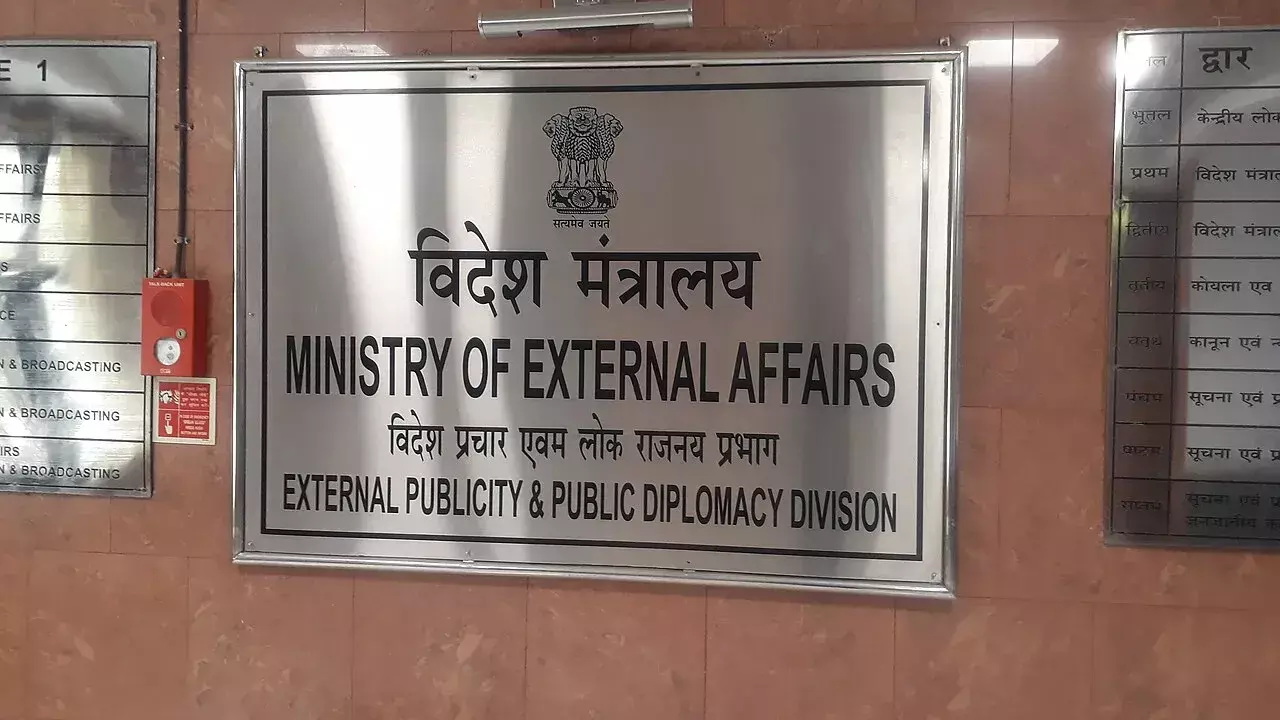
India ministry of external affairs (PC- Social Media)
India has warned that the world is entering a risky phase as major arms control frameworks weaken and geopolitical tensions rise. Speaking in Geneva, Foreign Secretary Vikram Misri said the expiration of the New Strategic Arms Reduction Treaty is a serious setback. He stressed that preserving strategic stability and preventing a fresh global arms race is now more urgent than ever.
He was addressing the High-Level Segment of the Conference on Disarmament in Geneva. The timing, he said, is worrying. Military spending is increasing. Old agreements are under pressure. New technologies are changing how wars could be fought. That mix, honestly, is unstable.
Concern Over End of New START
The New START treaty had placed limits on strategic nuclear weapons. Its expiration removes an important layer of predictability between major powers. India sees that as dangerous.
Misri said global security depends on stability between nuclear-armed states. Without guardrails, mistrust grows fast. Arms buildups can follow. Once that cycle starts, it becomes very hard to reverse.
India does not want that road. It has repeated this position before, but this time the tone carried more urgency.
India’s Nuclear Doctrine Reaffirmed
India described itself as a responsible nuclear-weapon state. Misri reiterated that India follows a credible minimum deterrent policy. The country also maintains a no-first use stance and commits to non-use against non-nuclear-weapon states.
That message was deliberate. It signals restraint, not aggression. At a time when arms control systems look fragile, clarity in doctrine matters.
India also repeated its long-standing support for universal and non-discriminatory nuclear disarmament. The approach, it says, must be phased and multilateral. Not selective. Not biased.
Push for Fissile Treaty Talks
India expressed support for negotiations on a Fissile Material Cut-off Treaty within the existing mandate of the Conference on Disarmament. Such a treaty would limit production of key materials used in nuclear weapons.
Progress has been slow for years. Political disagreements often block movement. Still, India wants talks to continue. Dialogue, even slow dialogue, is better than silence.
AI, Military Tech and Human Control
Emerging technologies were another major focus. Artificial intelligence is reshaping military systems. It improves speed and accuracy. But it also creates risks.
Misri said human judgement must remain central in military AI use. Compliance with international humanitarian law cannot be left to algorithms alone. India has created a domestic framework to assess trustworthy AI in defence. It focuses on reliability, safety and transparency.
He made one point very clear. Decisions related to nuclear weapons will remain under human control. That line was firm.
India recently hosted the AI Impact Summit 2026, where over 100 countries participated. The New Delhi Declaration on AI Impact was adopted there. It called for wider and fairer access to AI, especially for the Global South. Technology, India argues, should not deepen global divides.
Outer Space and Biological Security
India also raised concerns about outer space security. Misri said space must remain a realm of cooperation, not conflict. He backed negotiations on a legally binding instrument to prevent an arms race in outer space.
He referred as well to India hosting a conference marking 50 years of the Biological Weapons Convention. Capacity-building efforts with the UN Office for Disarmament Affairs were mentioned. These steps show India wants to stay engaged across multiple disarmament tracks.
Call for Political Will
India reaffirmed support for the Conference on Disarmament as the world’s single multilateral negotiating forum on disarmament. Misri urged member states to show political will and prioritise collective security over narrow interests.
The global environment, he said, is uncertain and tense. That is exactly why dialogue must continue.
The message from Geneva was steady. Arms control is weakening. Technology is racing ahead. Trust is thin. India wants stability before competition spins out of control. Whether others align with that view will shape global security in the years ahead.