TRENDING TAGS :
Indian Media and Nepal
A reporter’s inside view of Indian media’s restraint on Nepal, shared histories, Chinese influence—and why both sides must judge each other fairly.
Indian Media and Nepal
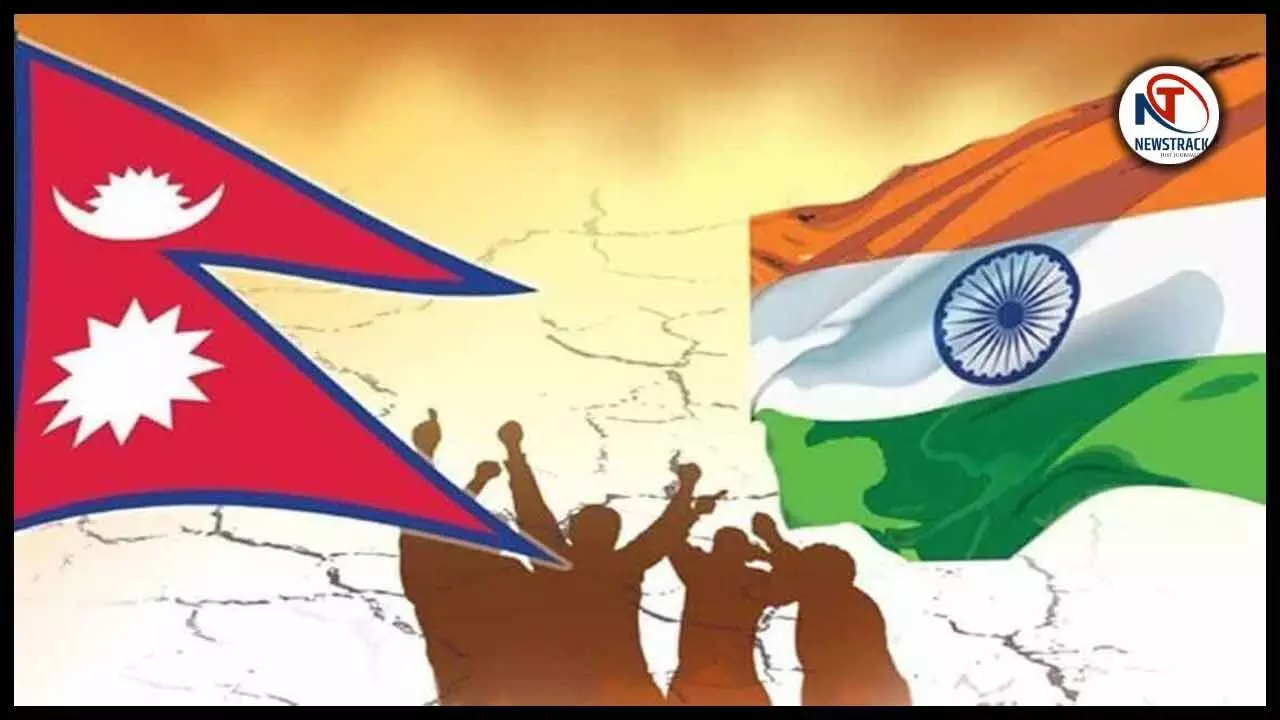
In recent times, a chorus of doubts, questions and objections has grown louder around India–Nepal relations—often voiced in new and curious ways. I have worked across the spectrum—newspapers, magazines, electronic media, domestic and foreign outlets. That experience makes me confident saying: when we in the Indian media report on Nepal, we are typically careful and sensitive. A few instances.
When the royal massacre in Nepal took place, I was sent by Dainik Jagran to Kathmandu to report it. Not only I, but colleagues who flew in from Delhi, weighed every word and sentence with care. We took pains to avoid bruising Nepali sentiment. We never lost sight of the fact that many in Nepal saw their king as an incarnation of Vishnu. It is not that we were unaware of the palace power politics behind the massacre; we simply chose not to foreground that, then. Nor did Indian media hound Devyani—the sole eyewitness to the massacre—even though she was in India.
After the Maoist-led government came to office, a murderous attack on the Pashupatinath temple priest was treated by Indian media as a limited incident—reported without amplification. Everyone knew the subtext: the priest was of Indian origin. If such a thing had happened in India, you know how hyped the coverage could have been. Similarly, during Nepal’s democratic transition, Indian media did not frame the story as “the fall of monarchy” or “collapse of the world’s only Hindu nation.” Anyone who tracked those years closely can tell you: the return of democracy in Nepal rode in no small part on the shoulders of Indian media—precisely because, at that time, the Maoists’ high-handedness toward the Madhesis was not turned into a nightly Indian talking point; otherwise, a class war could as easily have flared as a democratic upsurge. Indian leaders, too, played their parts. And it is not as if we were blind to Maoist excesses—yet we often held back.
If you read Indian coverage of Naxalism at home and compare it to the coverage of Nepali Maoism then, you will see the contrast. Within India we were squarely critical of Naxal violence; while toward Nepali Maoism—the very fountainhead of ideological sustenance for Indian Naxalism at the time—our tone was often restrained, even guarded. There are scores of such examples. The point is: by and large, Indian media showed more sensitivity and caution on Nepal than is our norm. And yet, the gatekeepers of Nepal’s democracy—who rode into office partly on our shoulders—now throw gratuitous brickbats at Indian media.
India and Nepal are not just neighbours on a map—they share culture and, in many regions, a layered heritage. Ayodhya–Janakpur—Rama and Janaki—bind us. In 1857, Begum Hazrat Mahal of Lucknow and Kashibai, widow of Nana Fadnavis, found refuge in Nepal and died in Kathmandu. In 1858, Nepal’s Jung Bahadur reached as far as Lucknow’s Ashok Marg. Among Netaji Subhas Chandra Bose’s trusted associates was Captain Ram Singh—a Nepali—who composed “Kaḏam-Kaḏam Baḍhāe Ja” for the INA. He died in Lucknow.
There was once a King “Jiteshthi” of Nepal; Mahābhārata (Ved Vyāsa) notes his role in the epic. Arthashastra mentions Nepal’s woollen blankets as the most prized imports in Chandragupta’s dominion; the Magadha–Tibet route passed through Nepal. In the time of Samudragupta and Chandragupta, Nepal was part of the Indic world. Nepal has an attested literary history of roughly three millennia. The famed Koiralas cut their political teeth under Jayaprakash Narayan’s guidance in Patna; B.P. Koirala, Matrika Prasad Koirala and Girija Prasad Koirala each became Prime Minister. The fight against entrenched Rana power was seeded out of Banaras (Varanasi): the Nepali Temple by the Ganga and the Nepali Khapra in Thatheri Bazaar were hubs for literature and posters of the revolution. When the Shahs dislodged the Ranas, many of the latter lived out their days in Allahabad and Kashi. King Mahendra built Lalita Ghat and Vishva Mandir in Kashi in memory of his mother, Lalita Devi; even today Nepali widows are seen living there. In Ishwargangi stands the celebrated Mahamaya Temple built by Nepalis. Once upon a time, the Nepali Congress had its office in Gorakhpur’s Krishnanagar/Krishkit mohalla, before moving to Mohaddipur. Former PM Jhalanath Khanal studied at JNU, Delhi. Nepal’s President Ram Baran Yadav and Vice-President Parmanand Jha are of Indian origin. The “Iron Man of Nepal” Ganesh Man Singh spent his exile in Gorakhpur. Kashi has been a second home to many Nepali leaders; most studied Sanskrit to the level of Madhyama, Śāstri or Āchārya. Pakistan and Bangladeshi actresses never found entry into mainstream Indian cinema; yet Girija Prasad Koirala’s niece Manisha Koirala— schooled at Varanasi’s Basant Kanya—rose to the top. Nepali-origin talents like Danny Denzongpa and Mala Sinha have their substantial chapters in our film history.
The very word “Nepal” connotes “laboring, self-respecting, valiant”. And yet, today, brushing aside all these bonds, Chinese-aligned Maoists are recasting India and Indian media as villains. A “red corridor” from Kandahar to Kathmandu; another from Pashupatinath down to Tirupati—that is the whisper. Violence will follow; it must be resisted. Usually the media luxuriates in controversy and skimps on cooperation; in Nepal’s case, Indian media did the opposite—on news, politics and development—an exception to our house style. One illustration.
Not long ago, an NGO presented 23 Nepali girls who had been “sold” to a convent in Kerala under the pretext of being orphans. These were the very girls “requisitioned” in Nepal by Maoist supremo Pushpa Kamal Dahal “Prachanda” during the “people’s war” under the slogan “one person—boy or girl— from every household.” The batch had 45 girls; 22 are still untraced. Their names were anglicized—Rita Bhandari became “Alevia”, Parbat Rawal “Ania”, Ula “Isabella”, Emily “Elais”, Sheetal Sharma “Kate”… Indian media could have sensationalized the story to discredit the Maoist movement wholesale. We did not. See the coverage of 25 November 2011 and you will recognize the restraint.
In 2009, when PM Madhav Nepal visited India, his Foreign Minister Sujata Koirala did not accompany him—not because she lacked the wardrobe; indeed, she had shopped saris and done the salon rounds—but because she wanted the Deputy PM slot, which Madhav Nepal resisted. Indian media knew all this, yet did not splash it—though we routinely spend whole days pushing celebrity-kid “sightings” on our channels. On Nepal, we tempered ourselves.
Around the same time Nepal Police disclosed that 22,000 Bangladeshis had been routed out via Nepal on forged passports to Gulf and other destinations; a ring was nabbed moving people through China’s Gonggar corridor and by sea to Macau and Hong Kong—Pakistanis, Chinese and Nepali nationals included. Even so, Indian media did not blast out a headline of “Nepal aiding Pakistan in terror against India”; we wrote, correctly, that Nepalese soil was being used. The harder truth is that, for money, some Nepalese facilitators have greased such enterprises. It is estimated that ₹100 crore worth of fake Indian currency was being funneled each month via Nepal; by December 2010 an estimated ₹10,000 crore in FICN had been pushed into India. Fakes even turned up in the SBI currency chest in Siddharthnagar on the border. Nepal, mindful of the risk, prohibited Indian ₹500 and ₹1,000 notes at the time. The best-known fake-currency operative, Majid Manihar, ran out of Nepali soil for long. Yet Indian media kept its head, avoided indicting Nepal indiscriminately. Within India—from Mundhra in Nehru’s era to 2G, Coalgate, Bofors and CWG—our media has unmasked corruption time and again. News in India rarely stays buried; it appears somewhere. Even so, on Nepal we have often worked against our normal impulse—to preserve the relationship. And still the accusations fly.
One cause for present rancour: efforts to weaponize Lord Buddha between our peoples. Content in Chinese and Nepali is being seeded to question the birthplace of the Buddha. Social networks are filled with claims that India refuses to accept Lumbini (Nepal) as the birthplace, that India is trying to pass off Piprahwa (Siddharthnagar) as Kapilvastu. Some 3,000 Nepalis join such pages daily. One Facebook page—“Buddha was born in Nepal, not in India”—has 25,950+ likes; comments go so far as to say “Buddha was born in Nepal; Gandhi used to sell chatpate in Nepal”—and paint Indians generally as “deceivers”.
Sections of the Nepali press feed this fire. An Indian leader lands in Kathmandu and the first question hurled is: “Where was the Buddha born?” Once the world’s only Hindu kingdom, Nepal—ensnared in Beijing’s strategic plays— is now channeling this narrative via Prachanda. We hear that China has “adopted” Nepal’s development agenda; this is disinformation. In 2009 China’s aid to Nepal was ₹81.4 crore; India’s was ₹200 crore. Year after year the pattern is similar. Yet when Prachanda took oath, he flew to Beijing before visiting Delhi. That, too, is his prerogative. The more worrisome signs: Chinese “bar dancers”, professional beggar rings, and “cultural” Mandarin centres sprouting in towns across Nepal. China has reportedly endowed the Asia Pacific Exchange & Cooperation (APECF) with funding north of $2.2 billion; supplied the Nepali Army $2 billion in hardware; cleared 4,721 tariff-free export lines from Nepal into China; permitted Nepali helicopters to Mount Kailash–Manasarovar; moved forward with China Airlines and China Eastern operations; greenlit a Lhasa–Kathmandu bus link after a five-year hiatus; and poured billions into at least half a dozen hydro projects—while ceding only ~10% of output to Nepal. China’s expanding footprint is why some 13 border districts adjacent to Tibet now require special permits for foreigners—including Indians— to enter 44 Village Development Committees; even helicopter overflights need MHA clearance with fines up to ₹50,000 for violations. This ban came into focus when the Indian Ambassador was stopped in Mustang.
You would have seen some of this in scattered Indian reports. But alongside the news, our editorial reflex—so quick to declaim—has often been restrained on Nepal. Because India–Nepal ties did not begin with—and will not be decided by—China’s shadow. Janakpur to Ayodhya, the web of shared memory matters. Still, if present trends persist, we may not be able to keep relying on shared history forever. Note also: we frame Bangladesh and Pakistan in a certain way; for Nepal, even when reporting similar security misdeeds, we hold a different lens—because the cultural commonwealth is real. That difference now needs to be understood by Nepali media and political class. In border districts, Indian reporters often receive media passes for Nepali events just as Nepali reporters do—evidence of lived reciprocity.
Indian media has already passed through an ordeal by fire—during the palace massacre and the Maoist insurgency. Hindi binds our publics. Not only Gorkhas within India, but also residents in the Indian districts from Bihar to Udham Singh Nagar know and use Nepali. India lists Nepali in the Eighth Schedule of its Constitution. Yet when Nepal’s Vice-President Parmanand Jha took the oath in his mother tongue Hindi, Maoists created such a ruckus that he had to retake the oath. Language should bind, not divide. Here Indian media accepts fault: we have under-reported Nepal’s socio-political and socio-economic realities. We too often presume “low interest”, when in today’s globalized world we should be asking: What does “only soap-making” Nepal make today? How far has its film industry come? If you watch “Nepal One” TV, you see how much Nepal is changing. We missed these stories. Still, we would ask for due credit where earned: on 30 September 2008, Nepal’s newly minted Agriculture Minister Jayaprakash Gupta admitted, “Nepal came of age in the lanes of Banaras.” That acknowledgment matters. On the same yardstick should come both reproach and appreciation—so that media and citizens on both sides can be fair to each other.
(Indian Federation of Working Journalists’ seminar, Gorakhpur, 6 November 2011; revised September 2025.)