TRENDING TAGS :
India’s Strategic Grip on Chabahar Port Faces a Critical Test Amid Sanctions Pressure
India’s strategic engagement with Iran’s Chabahar Port faces a critical phase as U.S. sanctions pressure and expiring waivers put long-term plans at risk.

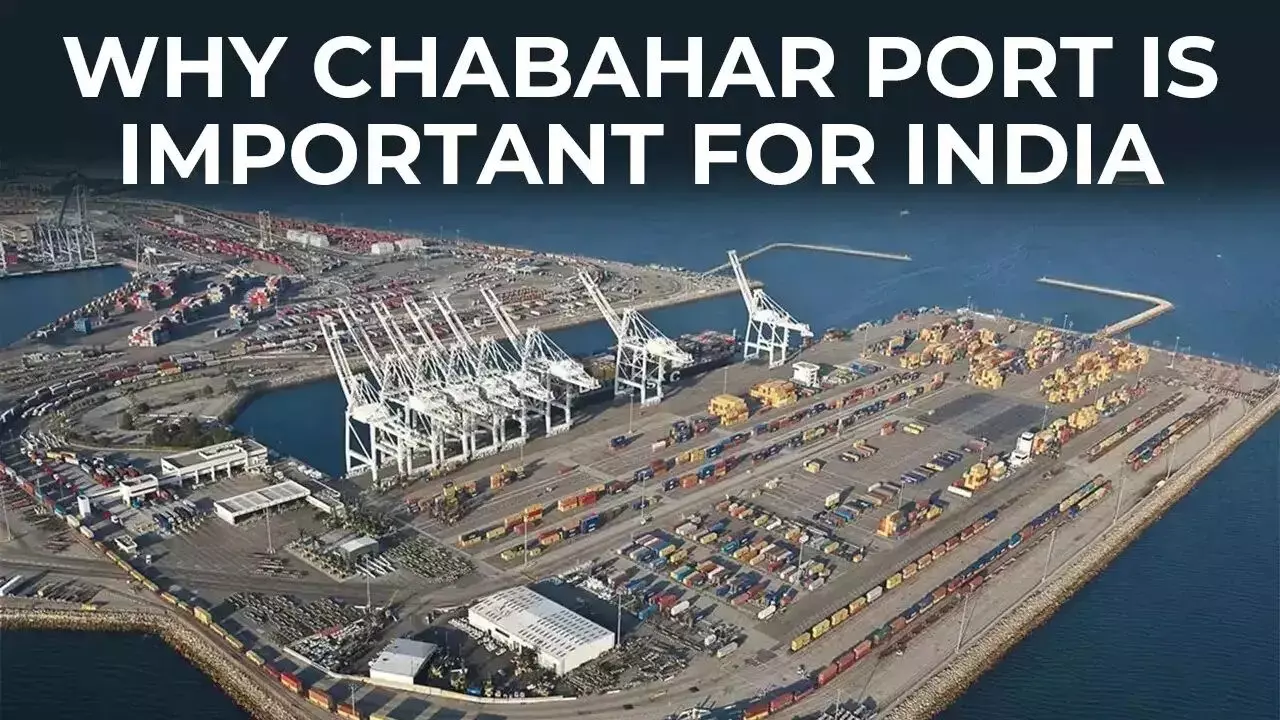
Chabahar Port (PC- Social Media)
New Delhi. India’s long term, high stakes engagement with Iran’s Chabahar Port has entered a critical phase, with conflicting signals emerging amid renewed U.S. sanctions pressure and strategic recalibration.
Why Chabahar Port Matters
Chabahar is a deep-water seaport on Iran’s southeastern coast in Sistan-Baluchistan, developed jointly with Indian participation since 2016. It offers India a crucial trade and connectivity route to Afghanistan, Central Asia and beyond, bypassing Pakistan and reducing reliance on land routes through hostile territory. India Ports Global Ltd (IPGL) operates the Shahid Beheshti terminal, and India has committed substantial investment under a 10-year pact with Tehran.
Strategically, the port could anchor India’s role in the International North South Transport Corridor (INSTC) which is a multi-national trade network linking India, Iran, Russia and Europe, thus helping diversify Indo-Pacific supply and transit routes.
India’s Current Position
The Ministry of External Affairs (MEA) insists India remains engaged with the Chabahar project and continues talks with the United States to secure conditions allowing operations to continue after the current sanctions waiver expires in April 2026. India has repeatedly clarified that reports of a total withdrawal are not true. However, India’s position has grown tense for three main reasons:
A conditional sanctions waiver granted by the U.S. which allowed Indian participation at Chabahar without penalty. This waiver is set to lapse on April 26, 2026, forcing India to seek fresh terms.
It is being said that the U.S. government may impose broader tariffs or restrictions on entities doing business with Iran. This amove that could affect Indian involvement if no waiver is secured.
The MEA continues to publicly deny that India is abandoning the Chabahar project and stresses ongoing engagement with the U.S. and Iran to secure a sustainable operating framework beyond April.
However, practical realities, including the expiry of the current sanctions waiver and mounting geopolitical risk have complicated India’s ability to fully realize its long-term plans at Chabahar.