TRENDING TAGS :
Is Democracy Really in Danger? A Reasoned Analysis of a Complex Question
Is democracy really in danger? A balanced analysis of institutions, free speech, elections, and public participation shaping democratic resilience today.
“Across the world, the same question keeps surfacing—is democracy in danger?” Today, this is no longer merely a political slogan; it has become a global debate. From the United States to Europe, from Asia to Africa, almost every democratic society has, from time to time, expressed concern over whether democracy is weakening, whether institutions are under pressure, and whether the voice of the people is truly being heard. But the answer to this question is neither a simple “yes” nor an easy “no.” Democracy is not a fixed object; it is a living process, whose strength and fragility both depend on time, circumstance, and the vigilance of society itself. In such a situation, the real question is not merely whether democracy is in danger or not… the real question is how deeply we understand democracy in the first place.
Understanding Democracy Beyond Elections
To reduce democracy merely to elections is one of the gravest misunderstandings about it. Democracy does not mean only casting a vote once every five years; it is a far wider system that includes freedom of expression, institutional autonomy, judicial impartiality, media independence, and above all, the active participation of the people. If any one of these pillars weakens, the apprehension of danger to democracy naturally arises. Yet it is equally true that democracy’s greatest strength lies in its ability to correct itself.
Global Concerns Around Democracy
History bears witness to the fact that questions over democracy are nothing new. Even in the United States, democracy has repeatedly been said to be under threat—whether during the Watergate scandal, the movements against racial discrimination, or the sharp electoral polarization of recent years. In Europe, too, the debate has continued over countries such as Hungary and Poland, where concerns have been raised that governments are weakening institutions. In Turkey, questions were raised over the centralization of power, while in Brazil, too, controversies emerged regarding the electoral process and political leadership. All these examples make one thing clear: the debate over danger to democracy intensifies whenever the balance between power and institutions appears to be breaking down. Then the inevitable question arises: if democracy is indeed under threat, then from where does that threat come—from सत्ता, from the system… or from the people themselves?
Democracy in the Indian Context
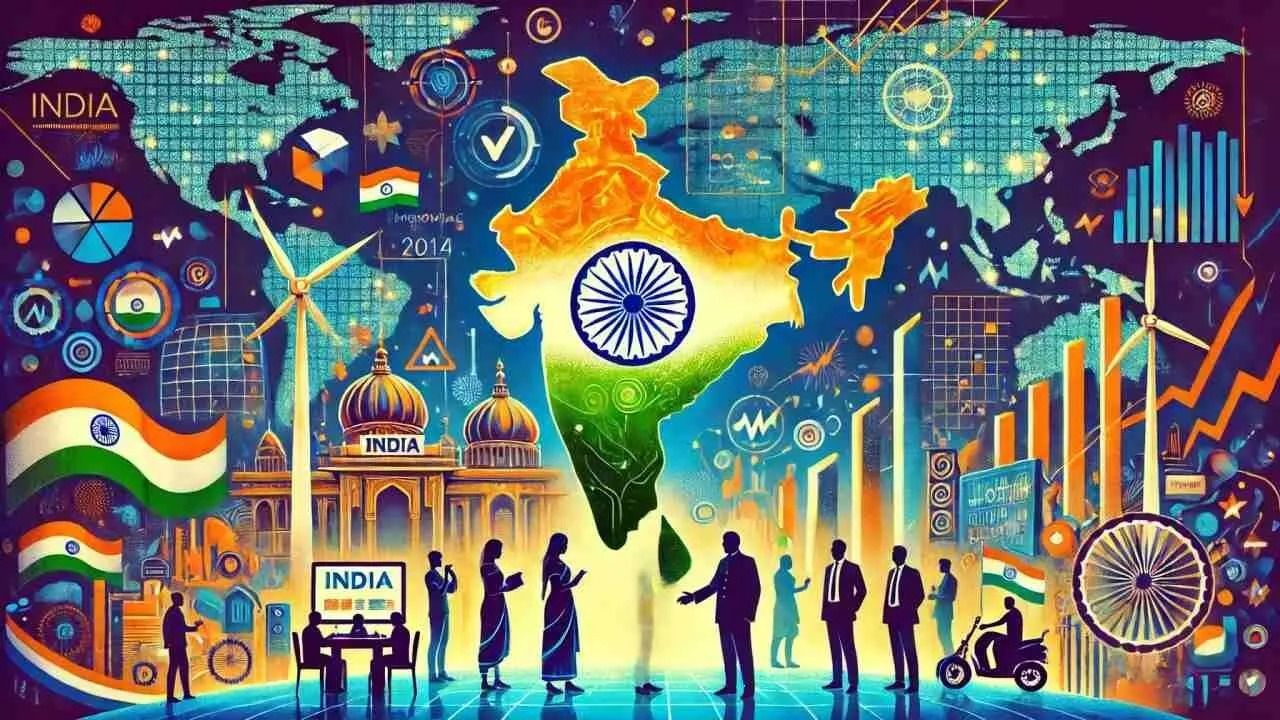
In the Indian context, this question becomes even more sensitive, because India is the world’s largest democracy. Here, democracy is not merely a political arrangement; it is also the means by which a society full of diversities remains bound together. Whenever the slogan “democracy is in danger” is raised in India, it carries many kinds of anxieties behind it—concerns about freedom of expression, the role of the media, the autonomy of institutions, the transparency of the electoral process, and the possibility of centralization of power. But these concerns must be analyzed rationally, not merely responded to emotionally.
Key Issues in the Democracy Debate
Freedom of Expression
The first major concern arises around freedom of expression. Critics argue that voices of dissent are being suppressed, while supporters counter that in India today, from social media to the streets, the government continues to be openly criticized on every platform. If democracy were truly collapsing, such wide-ranging criticism would not even be possible. Therefore, the truth seems to lie somewhere in between—there may indeed be cases of pressure or excess, but the claim that freedom of expression has been entirely extinguished appears to be an exaggeration.
Independence of Institutions
The second important issue is the independence of institutions. Questions have repeatedly been raised about bodies such as the Election Commission, the judiciary, the CBI, and the ED. It is often alleged that these are being used for political purposes. Yet it must also be noted that the judiciary has, on several occasions, delivered judgments against the government; decisions of the Election Commission are publicly debated; and the media openly criticizes these institutions as well. This means that institutions have not become wholly inert or fully controlled. Rather, their functioning continues to be watched, debated, and contested—and that, in itself, is a sign of democracy.
Electoral Process and EVM Debate
The third question concerns the electoral process and transparency, particularly in relation to EVMs. Suspicion around EVMs arises because elections are not merely a matter of technology; they are equally a matter of trust. However secure a machine may be, if the public or the losing side does not trust it, controversy is bound to emerge. What is necessary here is greater transparency in the electoral process, independent audits, and stronger measures to build voter confidence. Yet so far, no solid evidence has shown that election outcomes were altered on a large scale through tampering with EVMs. The debate, therefore, is more psychological and political than purely technical.
Centralization of Power
Another major issue is the centralization of power. Critics believe that decision-making authority is increasingly being concentrated in the hands of a few, and that this could weaken democracy. Supporters, on the other hand, argue that strong leadership brings speed and clarity to decision-making, which is essential for development. Here, balance is the real need—for neither excessive centralization nor excessive fragmentation serves democracy well.
The Self-Correcting Nature of Democracy
In many countries across the world, democracy is said to be under threat because pressures on institutions, shrinking media freedom, or disputes over electoral processes have become visible. But it must also be remembered that democracy’s defining strength lies precisely in its ability to renew and repair itself. Wherever the people remain alert and aware, democracy does not weaken; rather, it becomes stronger.
The Real Question: Where Does the Threat Come From?
Ultimately, to say that “democracy is in danger” may serve as a warning—but to accept it as the final truth would also be mistaken. Democracy is not a machine that stops working in a single day; it is an ongoing process, sustained jointly by the people, institutions, and leadership. If the people stop asking questions, if the media falls silent, if institutions become passive—only then will democracy truly be in danger. But when debate is alive in society, when questions are being raised, and when answers are being demanded, that itself is evidence that democracy is still alive. For democracy does not run only through governments. It also runs through the courage and habit of people asking questions. That is why it is said that where democracy exists, such questions will arise. And where questions cease to be raised… democracy has already come to an end.
Now comes the most important question of all—if democracy is in danger, where does the real danger come from? Does it come only from the government? Or is social indifference equally responsible? When the public stops asking questions… when the media turns into mere noise… and when scrutiny of institutions begins to fade—then democracy starts to weaken, slowly but surely.
Conclusion
“Democracy remains safe so long as the people continue to ask questions.” That is democracy’s truest strength—and its greatest safeguard.