
TRENDING TAGS :
Long-Term Change in the Education System Will Come Only Through Gender-Transformative Education
The programme was attended by state government officials, representatives of national and state-level CSOs, educationists, and grassroots social workers.

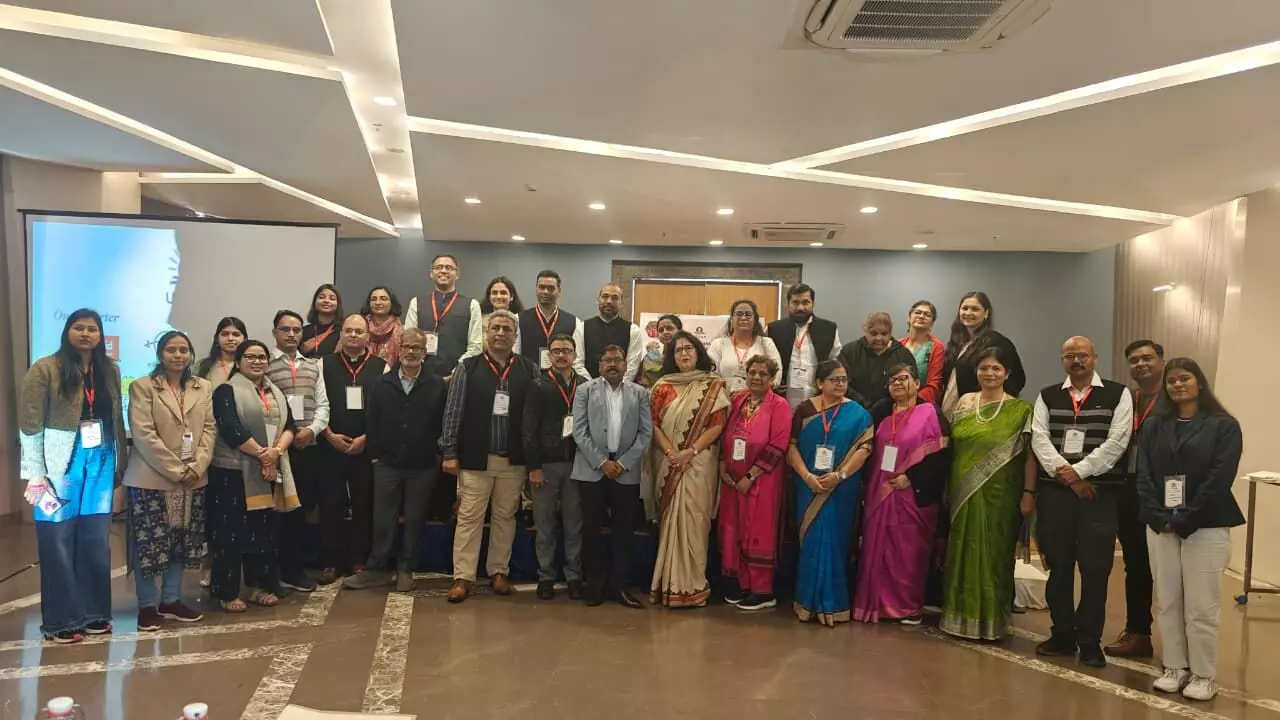
Lucknow, February 10: A significant step toward making girls’ education in Uttar Pradesh more equitable, high-quality, and transformative was marked by the formal launch of the Uttar Pradesh Transformation of Girls’ Education Alliance Network (UTGAN) on Tuesday in Lucknow. The network is a collaborative platform of civil society organisations (CSOs) working on girls’ education in the state and has been formed to bring long-term, systemic change to the education system through gender-transformative education.
Opening the programme, Vaibhav Kumar, Co-founder of Swataleem Foundation, shared the journey of UTGAN and described the coming together of various institutions on a single platform as a golden chapter. He stated that collective efforts by social organisations would strengthen government initiatives aimed at adolescent girls’ education and gender equality, and that this alliance would prove to be a positive step toward sustainable change.
The chief guest, Dr Pawan Sachan, Joint Director, State Council of Educational Research and Training (SCERT), Uttar Pradesh, while addressing the gathering, emphasised that real change in girls’ education cannot be limited to enrolment alone. He highlighted the need for groups like UTGAN to come forward and work collaboratively. According to Dr Sachan, meaningful transformation in girls’ education is possible only when the curriculum, teaching–learning processes, and social mindset evolve simultaneously. He further stressed that long-term change in the education system can be achieved only through gender-transformative education.
On this occasion, a panel discussion titled “From Theory to Practice in Gender-Transformative Education” was organised. The discussion focused on envisioning a gender-equal Uttar Pradesh through education. Panellists deliberated on how global examples and research-backed frameworks can be adapted to the Uttar Pradesh context, and how collective efforts can help address gender inequality at its roots.
Pushpendra Singh, Deputy Director, Department of Women and Child Development, Government of Uttar Pradesh, participated in the programme and emphasised that when civil society organisations align their efforts with government priorities, the impact becomes more effective. He noted that platforms like UTGAN can play a crucial role in this process.
During the programme, the UTGAN Charter was formally released, outlining the network’s shared vision and future roadmap. On this occasion, Dr Ananya Tiwari, Co-founder of Swataleem Foundation, congratulated all participating organisations for this collaborative initiative and stated that the effort presents a new perspective and direction for girls’ education in Uttar Pradesh. She added that in the coming years, UTGAN will work through research, policy dialogue, and grassroots engagement to develop a collaboration-based model for girls’ education in the state, which can serve as an example at both the state and national levels.
The collaborative network includes Swataleem Foundation, Piramal Foundation, UNICEF, Study Hall Educational Foundation, Educate Girls, ActionAid, Pratham Education Foundation, and Milaan Foundation. The programme was attended by state government officials, representatives of national and state-level CSOs, educationists, and grassroots social workers.


