TRENDING TAGS :
Bengal Elections Malda: The District Where Every Election Reshapes the Power Equation
A detailed analysis of Malda district in West Bengal, highlighting its complex electoral dynamics, key voter groups, party strategies, and 2026 election outlook.

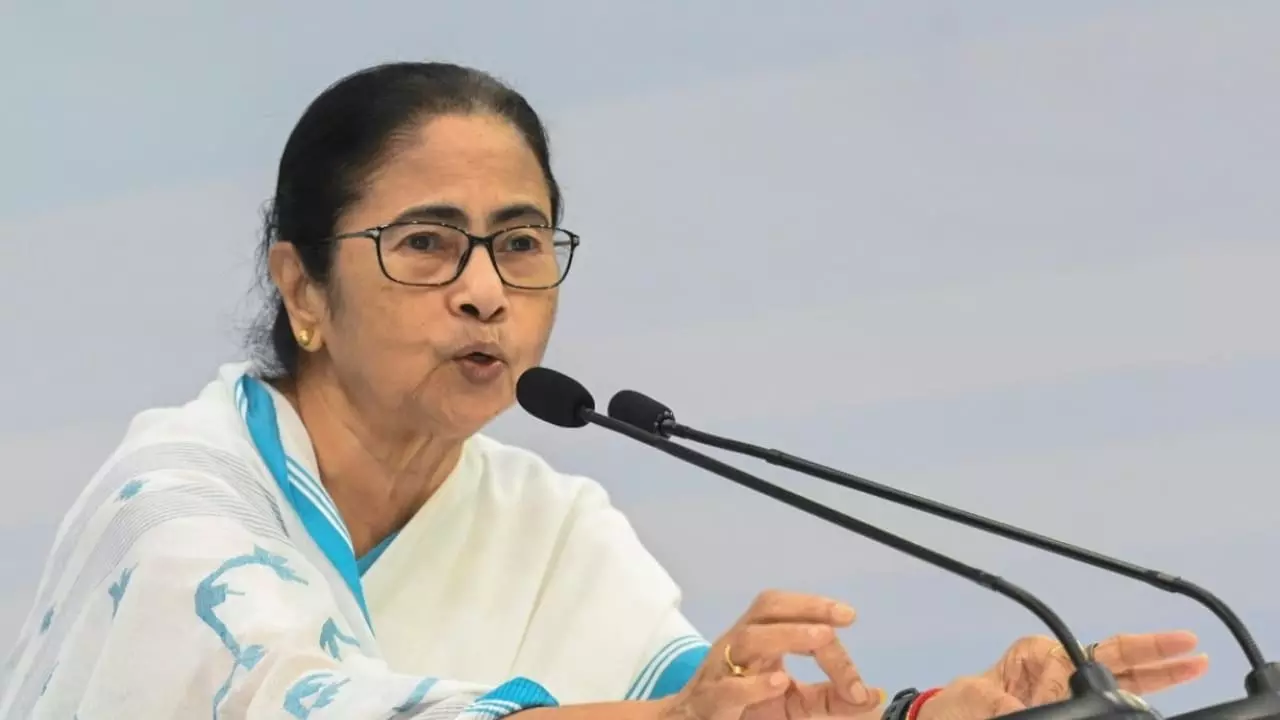
Mamata Banerjee (PC- Social Media)
Malda is a district in West Bengal where the politics of North Bengal and the Murshidabad belt intersect. This is precisely why it has never become a permanent stronghold of any single party. It is neither a completely safe zone for the Trinamool Congress (TMC) nor a core area for the Bharatiya Janata Party (BJP). Instead, it is among the few districts where triangular politics is most clearly visible—TMC on one side, BJP on another, and the traditional influence of Congress-Left on the third. Malda has a total of 12 assembly seats and is divided into two major parliamentary constituencies, Malda North and Malda South, each with distinct political characteristics that shape the district’s overall electoral direction.
Muslims as the Decisive Factor
The most important key to understanding Malda is its social composition. The Muslim population is the single most decisive factor here, exceeding 50% in many areas and reaching 60–70% in some pockets. Regions such as Harishchandrapur, Ratua, Manikchak, Kaliachak, and parts of English Bazar clearly reflect this influence.
The electoral logic here is straightforward: if Muslim votes remain united, victory usually goes to TMC or Congress. However, if these votes split, BJP gains an opportunity. This is why discussions around polarization or division of Muslim votes dominate the political narrative before every election.
At the same time, in the northern and mixed regions of the district, Rajbanshi, OBC, Scheduled Caste, and economically weaker Hindu rural voters form another important bloc. Areas like Chanchal, Gazole, and Habibpur highlight this dynamic. BJP has gradually strengthened its hold in these regions, especially after 2019, by combining identity politics with socio-economic discontent. Reserved constituencies like Gazole (SC) and Habibpur (ST) further complicate the equation. BJP has expanded its outreach among tribal and marginalized communities, while TMC continues to rely on strong local leadership and grassroots networks.
Economic Issues Also Matter
Understanding Malda purely through a religious lens would be incomplete. Economic factors are equally important. The district is famous for its mango production, with the “mango economy” significantly influencing local employment and trade.
Additionally, the silk industry, cross-border trade, informal economic activities, unemployment, and migration shape voter behavior. Voting is not based solely on religion, issues like employment, roads, flood conditions, and border security also play decisive roles. These often act as “hidden factors” that can produce unexpected electoral outcomes.
Recent Trends
Recent elections further clarify Malda’s political nature. In the 2021 Assembly elections, TMC won the most seats, but both BJP and Congress maintained a presence. Muslim-majority areas largely favored TMC and Congress, while BJP became competitive in SC and tribal belts.
The 2019 Lok Sabha election was a turning point when BJP won Malda North, marking its strong entry into the district, while Congress retained Malda South. The 2024 Lok Sabha election reinforced this pattern, BJP strengthened its hold in Malda North, while Congress held Malda South with its legacy and Muslim support. This confirms that Malda remains a “split district” with different political forces dominating different regions.
BJP’s Electoral Strategy
From an electoral perspective, Malda can be divided into three major zones:
- Muslim Core Belt: Includes Harishchandrapur, Ratua, Manikchak, and Kaliachak. BJP can only win here if Muslim votes split; otherwise, the contest is primarily between TMC and Congress.
- Mixed and Swing Seats: Includes English Bazar, Malatipur, and Chanchal. Candidate image, local issues, and caste balance determine outcomes. BJP is gradually expanding here.
- SC/ST Belt : Includes Gazole and Habibpur. BJP has built a strong base since 2019, though TMC remains competitive at the local level.
TMC’s Vote Bank and Party Positions
TMC’s biggest strengths are its Muslim vote base, welfare schemes, and strong grassroots organization. However, it faces challenges such as corruption allegations, anti-incumbency, and direct competition with Congress, which cuts into its vote share.
BJP’s strengths lie in Hindu consolidation, growing support among SC/ST communities, and issues like border security. However, its limitations are clear in Muslim-majority seats, along with a lack of strong local leadership in some areas.
Congress, once the dominant force in the district, still retains influence especially in Malda South due to its legacy and support base. However, organizational weakness and competition with TMC remain its biggest challenges.
2026 Election Outlook
The outcome of the upcoming 2026 Assembly elections will largely depend on how social equations evolve. If Muslim votes remain united, BJP may be restricted to a limited number of seats, with TMC and Congress dominating. However, if these votes split, BJP could gain significantly and win 5–6 seats.
Any informal understanding between TMC and Congress could make things difficult for BJP. Additionally, local anti-incumbency and candidate credibility may produce unexpected results in several constituencies.
Conclusion
Malda’s politics can be summed up in one line: while elections may begin with religious polarization, the final outcome is decided by organization, candidates, and local issues.
At present, TMC appears to have a slight edge, BJP is emerging as a strong challenger, and Congress continues to play a kingmaker role in certain areas. In a balanced scenario, TMC could win 5–7 seats, BJP 3–5 seats, and Congress/Left 1–3 seats.
The most decisive factors will remain the unity or division of Muslim votes, the impact of local issues, Congress’s relevance, and border and economic dynamics. This is why Malda continues to be one of the most dynamic and strategically important districts in West Bengal politics.