TRENDING TAGS :
Nepal Election Shock: Former PM Oli Accepts Huge Defeat as New Party Sweeps Vote
Former Nepal PM K.P. Sharma Oli accepts major election defeat as Rastriya Swatantra Party sweeps parliamentary vote and Balen Shah secures historic victory.

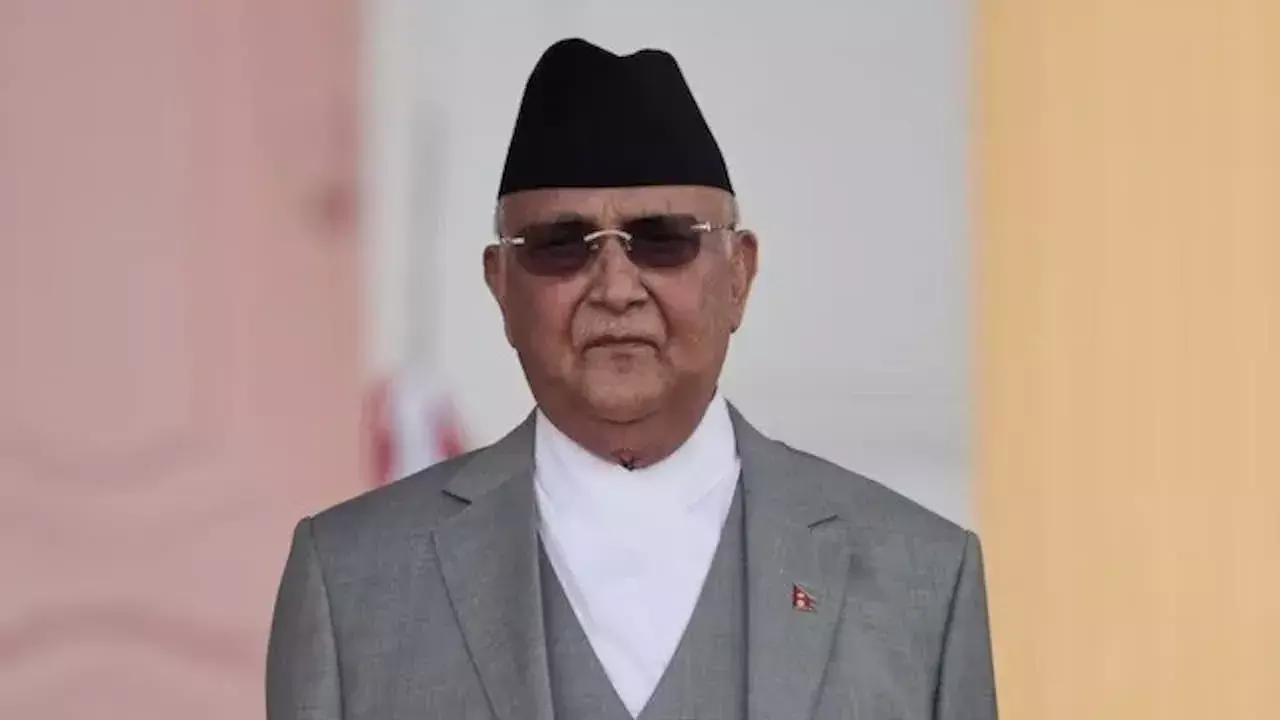
K.P. Sharma (PC- Social Media)
Nepal’s former Prime Minister K.P. Sharma Oli has accepted a major election defeat after the Rastriya Swatantra Party swept the parliamentary vote. Oli lost the Jhapa-5 constituency to Balen Shah, who secured a record number of votes. The election result has completely changed Nepal’s political landscape, with the relatively new RSP party emerging as the dominant force in parliament.
The result surprised many observers. Jhapa-5 was long considered a stronghold of Oli’s party, yet the voters decided something different this time.
Balen Shah’s Record Victory In Jhapa-5
One of the biggest highlights of the election was the stunning victory of Balen Shah. The former mayor of Kathmandu Metropolitan City entered the parliamentary race as the prime ministerial candidate of the Rastriya Swatantra Party.
His victory margin shocked political analysts. Shah received 68,348 votes in the constituency. That number is now the highest vote count achieved by any candidate in Nepal’s parliamentary history.
Oli, once one of Nepal’s most powerful leaders, received only 18,734 votes in the same constituency.
| Candidate | Party | Votes Received |
|---|---|---|
| Balen Shah | Rastriya Swatantra Party (RSP) | 68,348 |
| K.P. Sharma Oli | CPN (UML) | 18,734 |
The result clearly showed a strong shift in voter mood.
RSP Party Dominates Parliamentary Seats
The Rastriya Swatantra Party, which is barely three and a half years old, achieved a remarkable victory across the country. The party is led by Rabi Lamichhane and had campaigned strongly on governance reforms and anti-corruption promises.
In the First Past the Post system, the party secured victory in a massive number of seats.
| Party | Seats Won (FPTP System) |
|---|---|
| Rastriya Swatantra Party | 125 |
| CPN (UML) | 9 |
| Other traditional parties | Remaining seats |
The House of Representatives has 275 members in total. Out of these, 165 seats are filled through direct elections, while 110 seats are allocated through proportional representation.
Such a result indicates a dramatic political shift in Nepal.
Why Voters Turned Away From Traditional Parties
Political frustration had been building in Nepal for years. Many citizens were unhappy with repeated power struggles among major political parties. Governments were formed, collapsed, then formed again.
This cycle created a sense of instability in the country’s political system.
Corruption allegations against several senior leaders also played a role. Younger voters especially became more vocal about accountability and transparency in government.
The emergence of a strong youth-driven political movement further accelerated the demand for change.
Role Of Youth Movement In Nepal Politics
Last year, a large anti-corruption movement led mainly by younger citizens gained national attention. Many people from the Gen Z generation participated in protests and campaigns demanding political reform.
The movement grew stronger after a tragic incident where seventy-seven people lost their lives and property damage crossed NPR 84 billion according to government estimates.
The public anger that followed eventually weakened the ruling coalition.
Soon after, the coalition government collapsed and an interim administration led by Sushila Karki was formed to manage the political transition.
Election System Of Nepal Parliament
Nepal uses a mixed electoral system to form its House of Representatives. This system combines direct constituency elections with proportional representation.
| Election Method | Number of Seats |
|---|---|
| First Past The Post | 165 |
| Proportional Representation | 110 |
| Total Seats | 275 |
This approach aims to balance regional representation with overall national vote share.
Oli Responds To The Election Result
After the results were confirmed, former Prime Minister Oli publicly accepted the outcome. In a statement shared on social media, he said he respects the decision made by voters.
He admitted that the election results did not match what his party expected. Still, he also said the commitment to serve people remains unchanged.
According to him, democracy ultimately belongs to the citizens. When people give their verdict through voting, political leaders must accept it with respect.
For Nepal, this election seems like the start of a new political chapter. A young party rising so quickly, defeating long-established leaders, it doesn’t happen often. But sometimes voters decide very clearly that they want something different.