TRENDING TAGS :
UGC Regulations - If We Dont Intervene, it Will have Dangerous Consequences: Supreme Court
The Supreme Court stays UGC Regulations 2026, calling them vague and potentially dangerous, warning of societal division if judicial intervention is not made.

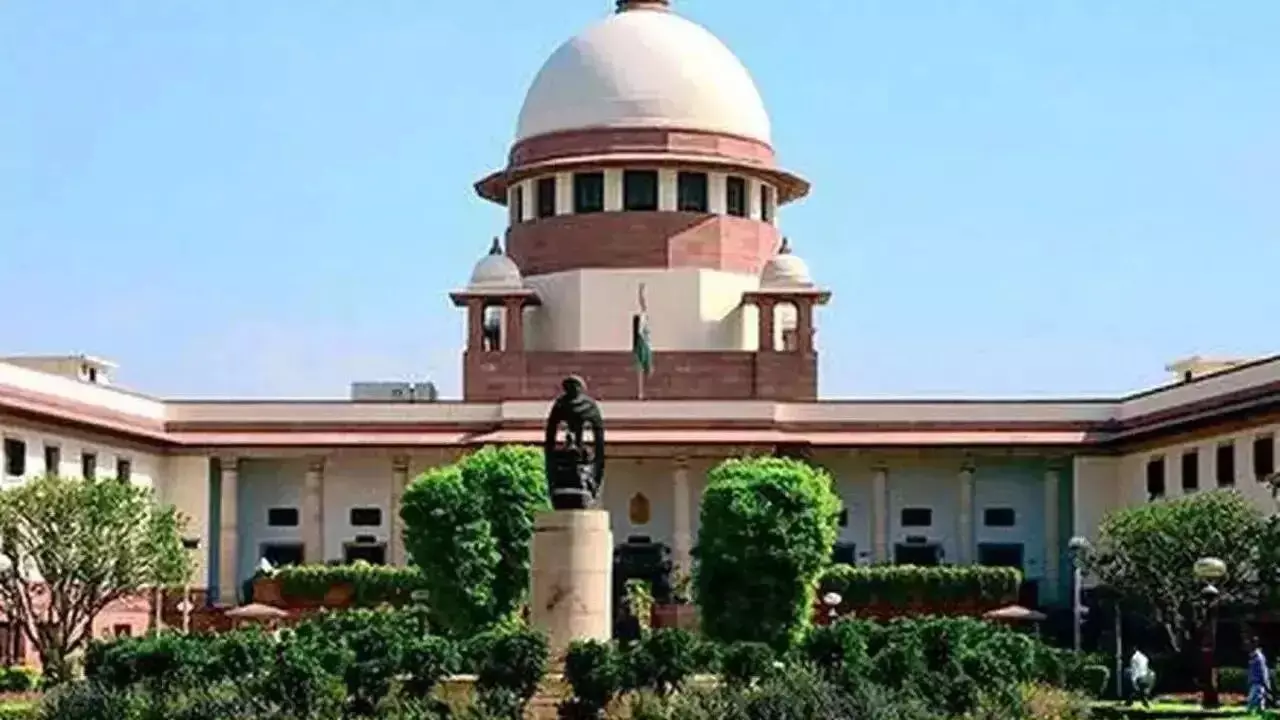
Supreme Court (PC- Social Media)
The Supreme Court has strongly objected to the new UGC regulations. It called these regulations vague, potentially dangerous, and divisive. The Court expressed regret that even today, our society has not been able to eliminate discrimination based on caste, class, and region. The Court stated that such a situation could be exploited.
The Court has stayed the regulations and ordered an export committee to investigate them.
What happened in the court
A Supreme Court bench comprising Chief Justice of India Surya Kant and Justice Joymalya Bagchi heard petitions challenging the new UGC regulations. The Court stated that if the Court does not intervene, it will have dangerous consequences and divide society.
Investigation by Export Committee
The court said, "Prima facie, we believe that the language of the regulation is unclear and experts need to carefully consider this so that the language can be modified to prevent misuse."
Stay on Regulation
The court ordered: "Issue a notice, which will be responded to on March 19th. The Solicitor General has accepted the notice. Since the issues raised in the 2019 petition will also have a bearing on the constitutionality of the petition, these petitions should be tagged with it. In the meantime, the UGC Regulation 2026 should be stayed."
What the petitioners said
Advocate Vishnu Jain, representing the petitioners, argued that the definition of 'caste discrimination' in the UGC Regulation is limited to discrimination against SCs, STs, and OBCs and does not include the general category.
He said, "We are challenging Section 3(c) of the Regulations. Caste-based discrimination is defined as caste discrimination against SCs, STs, and OBCs. This does not entirely include those in the general category. This definition under Section 3(c) completely violates Article 14 of the Constitution, even though discrimination is already defined, and it cannot be assumed that the discrimination is against a class."
Chief Justice Kant asked, "Suppose a student from the South takes admission in the North, or a student from the North takes admission in the South. If a taunting or insulting remark is uttered against them, and the caste of both castes is unknown, which provision covers this?"
Jain replied, "Section 3(e) covers all this."
The court lamented that even after 75 years of independence, society has not been able to eliminate discrimination based on caste, class, and region.
The Chief Justice remarked, "In a country after 75 years all that we have achieved to become a classless society are we becoming a regressive society? Worst thing which is happening in ragging is that children coming from south or north-east .. they carry their culture and somebody who is alien to this starts commenting on them. Then you have spoken about separate hostels. For God's sake. There are inter-caste marriages also and we have also been in hostels where all stayed together."
"Article 15(4) empowers the states to make special laws for scheduled castes and scheduled tribes. But we get your point why should there be regression in a progressive legislation. I hope we don't go to segregated schools like US where blacks and whites went to different schools," Justice Bagchi weighed in.
The Chief Justice further said, "Such a situation can be exploited."
The lawyer for the petitioners said, "There are statements from politicians as well, saying that general category students will have to pay the price, etc."
The Chief Justice said, "Mr. Solicitor General, please tell us about forming a committee of eminent people to look into this so that society can move forward together and there are no such discrepancies."
Justice Bagchi said, "We are considering creating a fair and inclusive environment in society. Now, in view of this, how does Section 2(e) become relevant when Section 3(c) exists? Therefore, we seek your help, Ms. Jaisingh."
Jaising said, "Yes, this is a question of discrimination within discrimination. This has troubled the Supreme Court from the beginning. Therefore, the question before this court is what does the word 'only' mean."