TRENDING TAGS :
Diwali 2025: The Festival of Light and the Illumination of the Indian Soul
Diwali 2025: The story of Diwali is as ancient as Indian civilization itself.
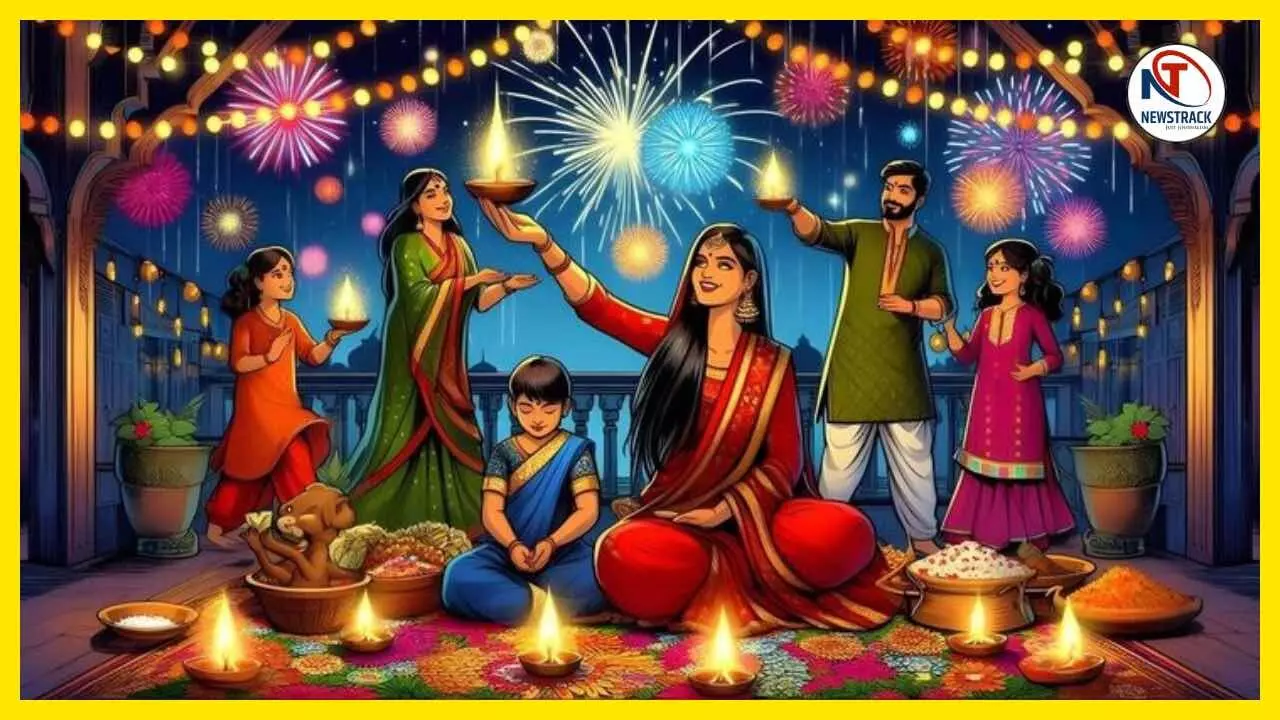
Diwali Festival 2025: India’s festivals are never mere rituals or calendar dates; they are the sacred moments when culture reawakens its timeless essence. Diwali — or Deepotsav — is one such celebration, where the glow of countless lamps outside mirrors the awakening of consciousness within.
It is not just a festival of light, but the radiant expression of India’s collective memory, aesthetic sensitivity, and spiritual unity.
From Darkness to Light
The story of Diwali is as ancient as Indian civilization itself.
According to legend, it marks the return of Lord Rama to Ayodhya after fourteen years of exile and his victory over Ravana. When Rama, Sita, and Lakshmana returned, the people of Ayodhya lit millions of lamps to welcome them.
“Tamaso ma jyotirgamaya” — “Lead me from darkness to light.”
This Upanishadic prayer is the very soul of Diwali.
But the story of Rama is only one strand of this luminous tradition.
On this day, Lord Vishnu is believed to have slain the demon Narakasura, liberating the worlds from fear. It also commemorates the emergence of Goddess Lakshmi from the churning of the cosmic ocean (Samudra Manthan).
For the Jains, it marks the nirvana of Lord Mahavira.
For the Sikhs, it is Bandi Chhor Divas — the day Guru Hargobind Sahib was released from captivity.
In South India, it is celebrated as the victory of Krishna over Narakasura.
Thus, Diwali is not just a tale — it is a spiritual thread weaving together the many faiths of India.
Diwali in the Scriptures
Sanskrit literature calls it Deepamala or Deepotsava — the Festival of Lamps.
The Skanda Purana says: “Kartikamāse tu amāvāsyāyām dīpadānaṃ śubhaṃ bhavet.”
Lighting lamps on the new moon day of Kartika brings great auspiciousness.
Another verse declares:
“Dīpo bhayaṃ hara tyeva, dīpo dāridryam āśritam,
Dīpo rogaṃ hara tyeva, tasmād dīpaṃ pradīpayet.”
The lamp removes fear, poverty, and disease; therefore, one must light a lamp.
The message is profound — the lamp is not merely an instrument of light but a symbol of positive energy and divine grace.
The Cultural Essence of the Festival
The beauty of Diwali lies in its multi-layered character — it is simultaneously religious, social, familial, and economic.
• Spiritually, it signifies the triumph of light over darkness and good over evil.
• Socially, it unites people across caste, creed, and class.
• Familially, it brings together love, forgiveness, and reunion.
• Economically, it marks the new financial year for merchants — a time of Chopda Pujan, the worship of ledgers and new beginnings.
On this darkest night of the year — the new moon of Kartika — the Indian mind envisioned the grandest festival of light, turning darkness itself into beauty.
Folk Traditions and Ritual Practices
Diwali unfolds over five days, each carrying a unique spiritual essence:
1. Dhanteras — the day of prosperity and longevity, when people buy gold, silver, utensils, and even brooms as symbols of renewal.
2. Naraka Chaturdashi — purification of body and mind, a ritual of sacred bathing.
3. Amavasya (Main Diwali Night) — the night of Lakshmi Puja and illumination.
4. Govardhan Puja — gratitude toward nature, cattle, and the environment.
5. Bhai Dooj — celebration of love and protection between brothers and sisters.
Each day represents a facet of human aspiration — wealth, purity, devotion, harmony with nature, and relationships — together forming a complete philosophy of life.
Diwali in Literature
Diwali has inspired poets and thinkers across centuries.
Acharya Hariod wrote: “Light the lamps, O light the lamps of pure emotion.
Drive away the darkness of the mind, dispel the greed and illusion within.”
And Jaishankar Prasad in Kāmayani reflected: “Everything exists in light, yet light has its own price.”
In these verses, the lamp becomes not just a flame, but the symbol of awakening and inner illumination.
Philosophical Symbolism of the Lamp
The flame of a lamp represents a sacred trinity —
Oil symbolizes discipline, wick represents devotion, and light embodies knowledge.
It burns steadily, consuming itself to illuminate others — a perfect metaphor for selfless life.
“Yatra dīpaḥ sadā tiṣṭhet, tatra devāḥ sadā vasanti.”
Wherever a lamp burns, there the divine resides.
Modern Context: The Clay Lamp’s Silent Message
In today’s world of neon lights and glittering screens, the humble earthen lamp reminds us of our roots.
It tells us that true progress is not outer brilliance but inner radiance — the glow of compassion, harmony, and empathy.
When we decorate our homes, we are, in truth, cleansing our hearts;
and when we light a lamp, we are dispelling the inner darkness of ego, hatred, and intolerance.
A Festival of Harmony and Human Dignity
Diwali unites all sections of society.
The potter shapes the earthen lamps, the goldsmith crafts ornaments, the merchant opens new ledgers, and the farmer celebrates his harvest.
Rich and poor alike bask in the same golden light —
a luminous symbol of India’s collective labor, dignity, and equality.
The Light of the Soul
Diwali is not just a festival — it is a vision, a reminder that even the smallest flame can conquer vast darkness.
When rows of lamps light up the night, it is not only homes but the very soul of India that glows in timeless radiance.
If we kindle the lamp within, the world outside will naturally shine.
“Dīpajyotir namastubhyam, dīpe devo namo’stu te;
Yastvaṃ trailokyatāmaṃ pāpaṃ hanti namo’stu te.”
Salutations to the divine light; the lamp that destroys the sins of all three worlds.
This verse is not just a hymn to the lamp but a salutation to human consciousness itself.
Diwali, therefore, is not merely the festival of lights — it is the celebration of empathy, unity, and inner illumination.
It is not a single day’s festivity but an eternal practice — a meditation on recognizing darkness and awakening the light within.
For as long as light exists, life will endure;
and each time this festival returns, India rediscovers her eternal essence —
Satyam, Shivam, Sundaram — Truth, Goodness, and Beauty.
“Asato mā sadgamaya, tamaso mā jyotirgamaya.”
Lead us from untruth to truth, from darkness to light.