
TRENDING TAGS :
Light in the Darkness: Premchand
How Premchand’s realist torch still lights our “terrifying darkness”—from feudalism to liberation, and why his voice remains urgent today.

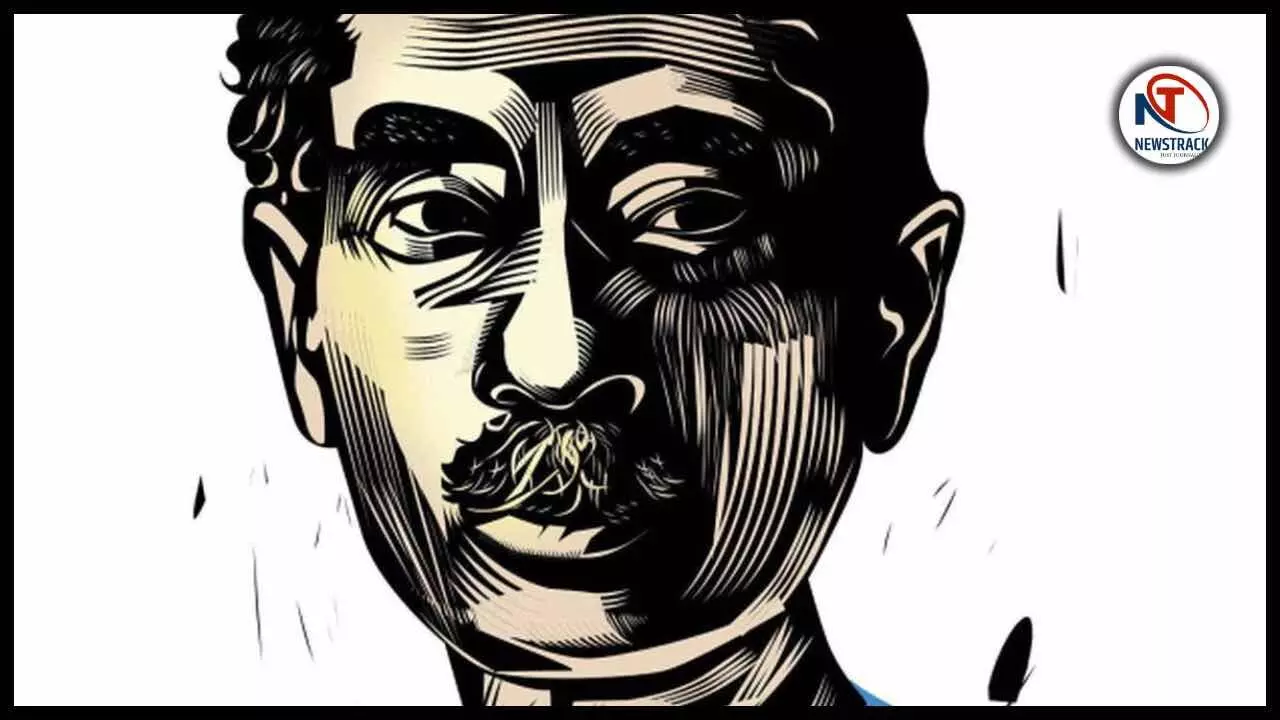
Light in the Darkness: Premchand
Premchand’s literary sādhanā (creative discipline) makes one thing amply clear: throughout his life he accepted the toughest challenges with courage. He understood his times with clarity, and rendered them in his work so that the history of his era could be expressed with credibility. We cannot claim that Premchand built his literary edifice in a vacuum, yet it is equally clear that there was nothing in his family milieu that naturally steered him toward becoming a writer. The circumstances at home and outside were such that he could easily have taken a clerical job and pushed the cart of life, like any average householder, down a modest track. Instead, in those contrary conditions, he dreamt of becoming a writer—and lived that dream not merely as a writer, but as a great writer.
When Premchand emerged as an author, Babu Devkinandan Khatri’s romance–tilism–ayyāri novels were all the rage in Hindi. A few writers of a parallel stream were beginning to bring flashes of social realism, but—unarguably—Khatri’s chivalric, magical worlds held center stage. Kings and queens, princes and princesses, spies and sorcerers, secret chambers, tunnels and caverns—this was a fantastic, romantic realm that captivated not only Hindi readers but speakers of other Indian languages too; it is said many learned Hindi just to read Khatri.
In his early years Premchand himself was lost somewhere in this world. He admitted that he had stayed up nights as a student reading the tilismatic Tilism-e-Hoshruba. Bengali novels also drew him in. He could easily have pressed on in fiction along the boulevard of such money and fame. But he chose otherwise: to render, instead, the living reality of the world he had seen and endured. History attests: in that delicate moment of decision, Premchand did not falter. He chose the path of realism—precisely what his era demanded—leaving an honest writer no respectable escape.
Premchand has been called a yug-pravartak (epoch-making) creator. What matters here is that he took the then-maligned, “story-telling” form—the novel—banished from many respectable homes, and tied it openly to ideas and to social problems, giving it a useful, meaningful personality. He made it a mirror not only to human conduct but to society—and to the character of the governing order that ran it. Enslavement of India and her economic distress, social inequality, the exploitation and oppression of ordinary people, their humiliation and injustice—Premchand kept a simultaneous focus on all these. Perhaps he was India’s first writer to fully lay bare the sordid impulses of feudalism and capitalism, while granting the ordinary person of the street the stature of protagonist in his stories and novels.
Premchand’s literature is a literature of liberation. His “liberation” is not spiritual or otherworldly; it is liberation for the poor, the deprived, the oppressed—caught in material, economic and religious shackles. It is a consciousness that makes human beings restless to claim the right to live as human. Premchand believed it was the writer’s dharma to struggle for the people and to advocate their struggle. His consciousness of liberation and struggle extends from the person to society, nation and world. Through his novels, stories and essays he not only spoke his opposition to exploitative forces; he drove it to the point of rebellion—until those responsible for exploitation and injustice squirmed.
His is the literature of a revolutionary writer who showed that a handful of schemers enjoy the fruit of the hard, backbreaking labor of the guileless many; that the toiling masses remain hungry and unclothed. He also perceived that the aesthetic lens through which literature had thus far been composed was feudal and hedonistic—a view that no longer served us. Hence he argued for changing the aesthetic canons of literature.
In this way Premchand accomplished two large tasks. First, he deposed the deities, gods and kings who sat upon the throne of literature. Second, he changed literature’s aesthetic gaze. He expelled from literature the miracles of otherworldly beings and the life of luxury paraded by kings, nobles and princes; in their stead he granted primacy to the pain and life-struggles of the laboring classes who worked in fields and granaries, mills and factories. He wrote around 266 stories (of which perhaps 30–40 remain inaccessible) and at least 18 address Dalit experience.
Even so, some Dalit writers and champions have placed Premchand in the dock, alleging that his depiction of a particular caste and its problems is not just. Such critiques should be weighed against the specific conditions of the time. And even if some are unwilling to concede that, one must still acknowledge Premchand as a crucial point of departure for raising those questions in his era—he laid milestones on that road.
In his presidential address at the Progressive Writers’ Association session in Lucknow, Premchand said the writer is not merely the mouth that repeats the slogans of patriotism and politics; he is the lamp held aloft ahead of them. Premchand was just such a truth. He was no mere arranger of soirées or provider of entertainment; he was a nation-shaping writer, who gave his time’s social life a new force and a new direction.
When widow remarriage was counted a radical reform, he wrote Sevasadan—shifting the focus to woman’s subjugation as such, and placing the feudal underpinnings of prostitution before the reader. When Jallianwala Bagh and the Rowlatt Act had stirred India’s trampled self-respect, he wrote Premashram, highlighting the oppression of peasants under British rule and its native intermediaries—and showing that the freedom movement would draw its true strength by grappling with these very problems. During the heyday of the national movement he wrote Rangbhumi, declaring: the people are still fighting; they have not lost; they will win.
In Godaan, he signaled the unity between the educated youth and the peasantry, and painted plainly the usury that exploited farmers—a reality still ignored then by peasant politics. When temple-entry was viewed as the prime remedy to “untouchability”, he wrote Karmabhumi, centering the land question of untouchable peasants and field laborers, and arguing that the struggle to end land revenue (lagānbandi) was the main fight.
The forms of struggle and freedom Premchand projected in his novels did, in time, appear before us. All this confirms that he strode with lamp in hand ahead of patriotism and politics themselves. He belonged to no political party. One feels he was waiting for a party yet to come—one that would create a new kind of political awareness in the people. In a letter to Munshi Dayanārāyan Nigam he wrote: “You ask me which party I belong to. In truth I belong to none—because at this time neither party is doing the essential work. I am a member of that party which is yet to come, which will make the political education of the common man its constitution.”
Seventy-five to eighty years after his passing, it still seems Premchand walks among us. His voice continues to knit together the Hindi-speaking peoples; it reminds us of our duties and gives courage to move forward. It reaches the far South and draws North and South closer. Workers of Kolkata and Mumbai draw near upon hearing that voice. His voice makes us proud—of our country and our people.
Premchand’s voice rose when the guns of the First World War still thundered. Even today—when the world sometimes seems to gather storm clouds of a third—this soldier of Indian freedom calls upon the people to defend peace. His is the voice of India’s people. That is why Premchand remains with us still—because the challenges before literature have not changed as much as the challenges before journalism have. Once upon a time Mādhurī and Hans set the standard for literary journalism; now both journalism and literary journalism have altered substantially—in language and in content.
A man hurries with medicine for his ailing mother, meets an accident and dies—that is news. But how much grief did that news inflict upon his mother? How will she live after her son’s death? What hardships will flood her life? Will her surrounding society support her—or has society already altered its outlook? When we render such fullness—that becomes literature.
Writer Satyaprakash Mishra has said a writer can be remembered in two ways. First: how well did he diagnose his time’s sickness, and how hard did he struggle to cure it? Second: on the important questions of today—many of which existed in Premchand’s day—how did he see them then, and how useful is that seeing to us now? Because Premchand painted, on a broad canvas, his era’s crucial questions—industrialization, caste hierarchy, religious and economic exploitation, the exploitation of women and Dalits, and the longing for emancipation—there should be no doubt of his present relevance. Gajanan Madhav Muktibodh called our era “a time of terrifying darkness”. We must remember Premchand as a light against that darkness—as the one who, carrying a torch, either bears a solution to each problem or strengthens those wrestling with it as he walks ahead.
(Delivered 31 July 2011 at the Premchand Jayanti programme, Sahayogi R.B. Degree College, Barabanki. Revised September 2025.)


