TRENDING TAGS :
Bihar Elections — Once Again, Your Story Returns
A deeply reflective and ironic commentary on the 2025 Bihar Assembly elections by journalist Yogesh Mishra — exploring why the state’s political, social, and economic stories remain unchanged for over seven decades.

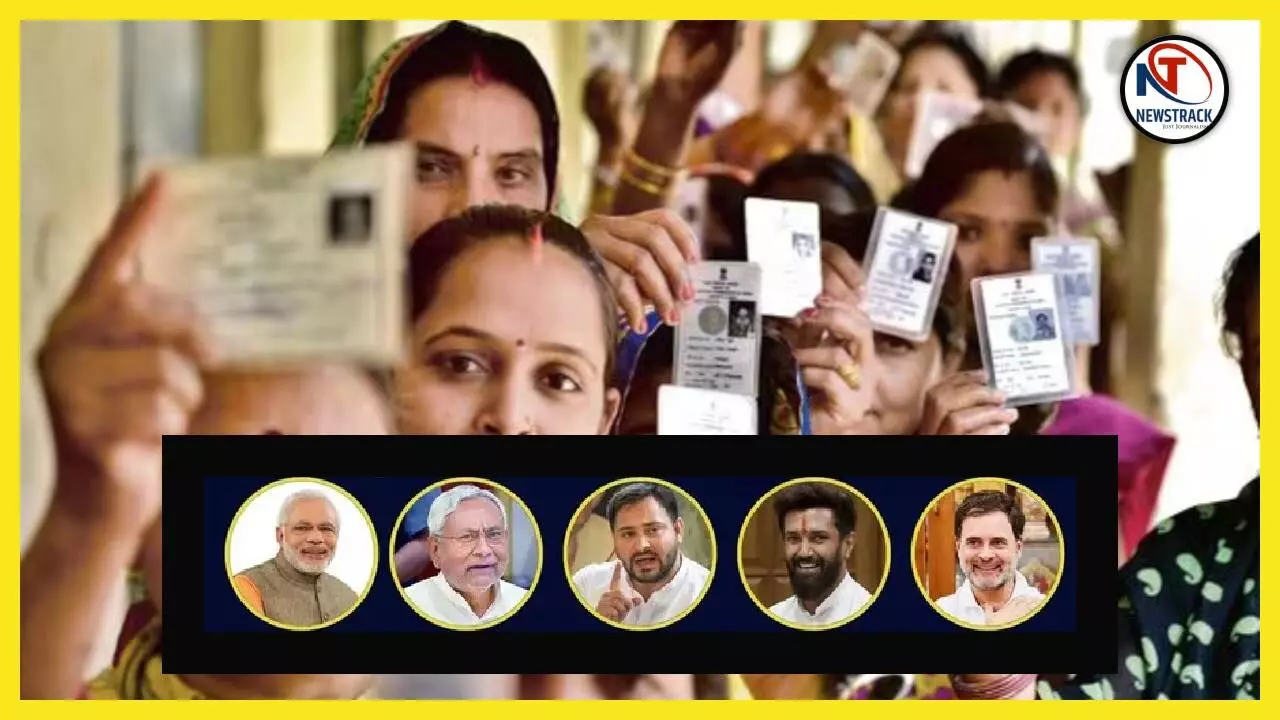
Bihar Election 2025 | Bihar Caste Survey
Bihar — a unique state of India, forever in the spotlight. These days, the political heat of elections has added a special intensity to that attention. Yet even in ordinary times, Bihar can never escape discussion. Its trains, its perennial floods, its infamous mafia dons, its revolutions, its poverty, its tales of booth-capturing, its “jungle raj” and “good governance,” its Champaran meat, its litti-chokha, its great festival of Chhath — everything about Bihar carries a story within itself.
And when election season arrives, the drama reaches another level. The entire media world descends upon Bihar. Every grain of its stories finds place in newspapers, reels, and podcasts alike. The same spectacle is unfolding again. Out of Bihar’s 13 crore population, more than 3 crores live scattered across India — from Kashmir to Kanyakumari. And yet, the curiosity about Bihar remains undiminished.
Perhaps that curiosity survives because Bihar, in many ways, remains what it always was. Even in the 2025 election season, the stories feel fifty years old — the same tales of strongmen like Anant Singh, Pappu Yadav, Shahabuddin, Kali Pandey, and Surajbhan Singh; the same heartbreaking accounts of the poorest people; the same recurring floods; the same videos of overcrowded democratic train journeys; the same caste-driven social equations; the same riots of Bhagalpur; the same caste-based armies; the same makhana fields and rat-eating Musahars. Everything seems frozen — as if the clock of progress stopped ticking long ago.
Bihar held its first Assembly election in 1952. In 2000, Jharkhand was carved out of it. And if we look back at seventy-three years of elections, the issues remain nearly identical — poverty, crime, unemployment, migration, and so on. The 2025 election is no different.
Every one of Bihar’s 243 Assembly constituencies has its own story, yet the issues — and the language of politics — remain the same. The same old threat echoes: “Go to sleep, or Gabbar will come.”
The people, meanwhile, resemble Thakur from Sholay — helpless, yet full of endurance. This is the very land where ideas were born, but power always went elsewhere. It was here that Gandhi learned Satyagraha, Buddha taught the Middle Path, and Chanakya defined the essence of politics.
And yet, despite being the birthplace of revolutionaries and ideas, the struggle continues.
India’s lowest per capita GDP, over 80% rural population, and around 16% still below the poverty line — this is Bihar’s stark reality. Its economy depends largely on agriculture. Industry is barely visible. Education and labor both exist here, but opportunities do not.
Bihar’s people sleep under the illusion of security, their eyes never quite opening.
What should Biharis do? Whether good governance really replaced Gabbar’s fear is uncertain — but what’s sure is that the trains packed with Biharis still leave the stations, never empty. Some go to Delhi’s Mukherjee Nagar chasing the IAS dream, some sell litti-chokha or Champaran meat in Lucknow, some pull carts in Kolkata’s markets, some polish diamonds in Surat, some drive taxis in Mumbai, and others sell trinkets on the streets of Bengaluru. Bihar’s labor is the brick in every wall of India’s cities — but the roof it deserves remains unfinished.
Patna now has a metro, perhaps a symbol of “development,” yet its citizens still travel in the Amrit Bharat trains, blue drums in hand.
The election hour is upon us. Votes are being counted not yet in ballots, but in caste equations. The same old arithmetic dominates — Yadavs, Kurmis, Kushwahas, Dalits, Savarnas — each in their own camps. Muslims remain a distinct electoral factor — sought by all, sometimes to secure votes, sometimes merely to divide them.
Nine-time Chief Minister Nitish Kumar continues his struggle to stay relevant. Lalu Prasad Yadav tries to rekindle his fading charisma. The Congress still looks toward the old walls of Sadaqat Ashram (1921) for revival. The BJP, meanwhile, stands face to face with Bihar’s 70-year-old ground realities. And yes, there’s a new face — Prashant Kishor — who has thrown a pebble into the pond. Ripples have appeared, but whether they turn into a wave remains to be seen.
Bihar’s story is such that the same chapters reopen again and again. The names remain the same, the slogans sound familiar. Even for the media, there’s little new to show — the same visuals on TV, the same images in print.
It isn’t that there are no fresh, honest faces in the fray. This time, there are doctors, teachers, writers, lawyers, and social workers among the candidates. But in the grand fair of politics, the stall of honesty always stands in the farthest corner — ignored, dust-covered, waiting.
Now that the cycle of religious festivals has ended, the festival of democracy begins. Bihar’s soil has always written history.
And now the question arises — will Bihar write a new chapter in 2025, or simply repeat its old story? Perhaps the golden future will dawn the day when trains will leave Bihar empty — and return filled with people from across India, seeking fortune in the land that once sent its own away.
(The author is a journalist.)