TRENDING TAGS :
Which Countries Are at Risk?

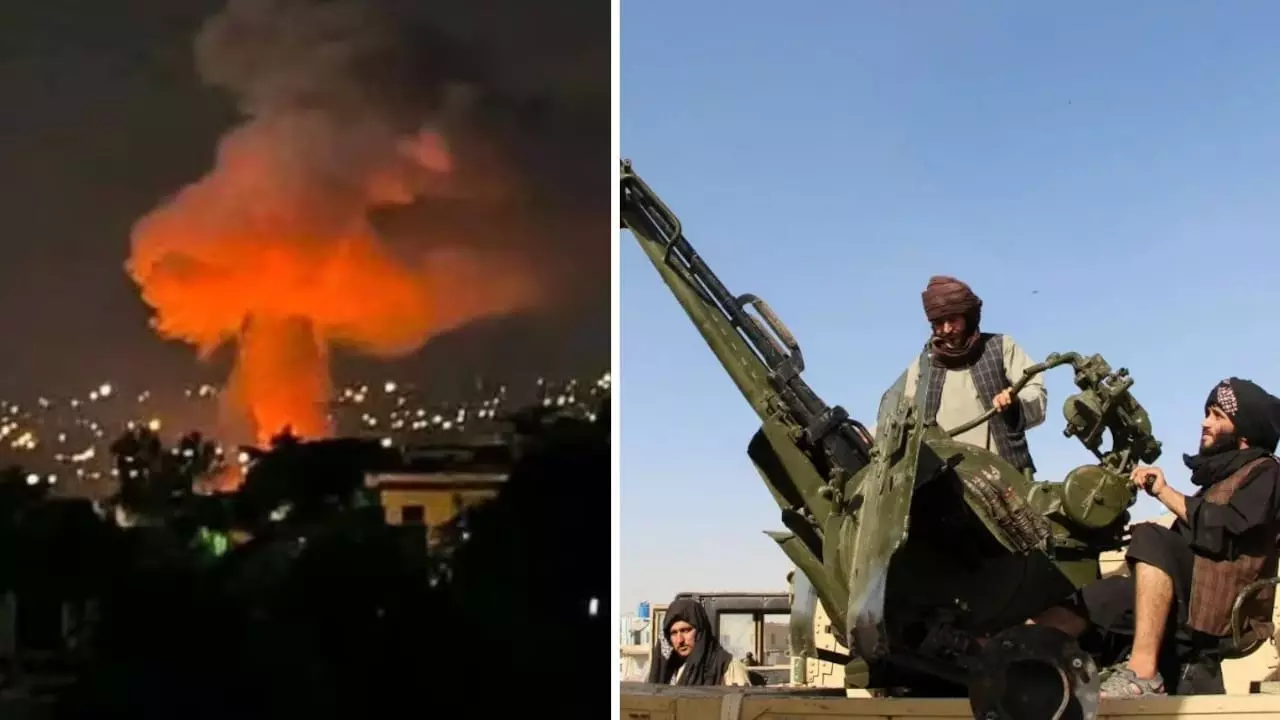
Pakistan-Afghanistan War (PC- Social Media)
The phrase “the next Sri Lanka” is generally used to describe a country that, due to a severe shortage of foreign exchange (FX), inability to service external debt installments, an import-dependent economy, and mounting political and social pressures, suddenly finds itself trapped in a balance-of-payments crisis—ultimately leading to default and restructuring. The clearest warning signals of such a crisis include a sharp decline in foreign reserves, pressure on the current account, a high proportion of short-term external debt, a heavy import bill (especially fuel and food), and excessive dependence on tourism or commodities.
Russia vs. Ukraine—Began: 24 February 2022. Duration (as of 1 March 2026): approximately 1,466 days. Nature: A full-scale conventional war involving drones, missiles, artillery, and trench warfare. Impact: A major transformation in Europe’s security architecture, an energy crisis, and immense military and civilian losses.
Israel vs. Hamas (Gaza-centered war)—Began: 7 October 2023. Duration: approximately 876 days. Nature: Urban warfare, airstrikes, and limited ground operations. Regional impact: Spillover tensions along the Lebanon border, disturbances in the Red Sea region, and the involvement of Iran-backed groups.
Pakistan vs. Afghan Taliban (border tensions)—No formally declared war, yet marked by airstrikes and cross-border clashes. Nature: Limited military action, including aerial bombardment and artillery exchanges. Status: Undeclared war, but active military confrontation.
Civil Wars
Sudan—Began: 15 April 2023. Duration: approximately 1,051 days. Parties: Sudanese Army vs. Rapid Support Forces (RSF). Consequences: Massive displacement and famine-like conditions.
Myanmar—Began: 1 February 2021 (following the military coup). Duration: approximately 1,854 days. Nature: The military versus ethnic armed organizations and resistance forces. Status: A multi-front civil war.
Yemen—Main phase began: 2014. Duration: over 11 years. Parties: Houthis vs. the government, along with regional powers. Nature: Internal war combined with regional intervention.
Syria—Began: 2011. Duration: approximately 15 years. Nature: Multi-sided civil war involving foreign powers. Status: Low-intensity conflicts persist in several regions.
Multi-Group / Low-Intensity / Prolonged Armed Conflicts
Democratic Republic of Congo (Eastern Region)—Decades of instability; M23 active in the current phase. Nature: Rebel groups and cross-border tensions.
Somalia—Al-Shabaab vs. government forces; over two decades of conflict marked by guerrilla warfare and suicide attacks.
Sahel Region (Mali, Niger, Burkina Faso)—Islamist militant groups vs. national armies. Multiple military coups. Rural instability remains widespread.
Ethiopia (including Tigray and other regions)—Despite a formal ceasefire, sporadic violence continues. Ethnic tensions remain a significant driver of unrest.
Haiti—No formally declared war, yet armed gangs control significant territory. The capital faces conditions akin to a semi-civil war.
As of March 2026, the global picture can be summarized as follows:
Two major open international wars.
Four to five significant civil wars.
More than ten countries experiencing active armed conflicts.
The Sahel region in Africa, the Middle East, and Eastern Europe remain the most affected zones.
Countries Experiencing “Nepal–Sri Lanka–Bangladesh-like” Conditions in the Past Five Years
If we consider economic crisis, political instability, mass protests, or regime change as criteria, then approximately 20 to 25 countries have faced such circumstances.
For clarity, they can be understood in three categories:
Severe Economic Crisis + Political Turmoil
Countries exhibiting Sri Lanka-like conditions (debt crisis, IMF bailout, inflation, public protests):
• Pakistan
• Argentina
• Lebanon
• Zambia
• Ghana
• Tunisia
• Egypt
• Suriname
• Laos
Common features among many of these nations include:
• Foreign exchange crises
• IMF conditionalities
• Removal of subsidies
• Fuel and food inflation
• Mass protests
Political Instability / Frequent Government Changes (Nepal-like Conditions)
• Israel (continuous election cycles)
• Italy
• Peru (frequent presidential changes)
• Thailand
• Bulgaria
• Spain
• Mongolia
These countries did not necessarily face economic collapse but experienced governance instability.
Electoral Disputes / Opposition Suppression / Major Public Movements (Bangladesh-like Conditions)
• Myanmar (post-coup nationwide protests)
• Iran (nationwide unrest following Mahsa Amini’s death)
• France (pension reform protests)
• Kenya (electoral disputes)
• Venezuela
• Georgia
• Senegal
• Guatemala
South Asia: Where Does the Risk Appear Higher?
Pakistan: Repeated reliance on IMF programs, persistent external payment pressures, and political-economic uncertainty place it close to Sri Lanka-like crisis territory. In recent years, IMF arrangements for Pakistan have continued.
Maldives: A small, tourism-dependent economy with a large import bill. Rising external debt and refinancing pressures could quickly trigger an FX crisis. Recent reporting highlights financial vulnerabilities and funding pressures.
Bangladesh: Signs in recent years include FX pressure, import controls, and balance-of-payments challenges. While not at Sri Lanka’s extreme level, risks increase if global energy prices spike, exports weaken, remittances decline, and domestic financial stress intensifies. The country has pursued multilateral support and policy adjustments.
Nepal: Its risk profile differs. Less prone to a default spiral, its vulnerabilities are more linked to remittance dependence, limited industrial base, political instability, and natural disasters. Liquidity and current account pressures can emerge periodically.
Africa: Why Is the ‘Default/Restructuring Risk’ Cluster Larger?
Since 2020, many African countries have faced combined pressures from high global interest rates, Eurobond refinancing challenges, commodity shocks, and currency depreciation. Thus, Sri Lanka-like risks appear in two forms:
1. Countries where default or restructuring has already occurred or is underway (e.g., Ghana with IMF-supported restructuring).
2. Countries facing Eurobond rollover risks combined with domestic unrest (e.g., Kenya in recent years amid refinancing pressures and IMF engagement).
Risk Map Insight
In South Asia, Pakistan and Maldives are often discussed as being closest to the “next Sri Lanka” narrative. In Africa, the risk appears more clustered because multiple economies are simultaneously caught in external debt refinancing cycles.
IMF Bailout Dependence: Practical Indicators
There is no universal metric, but three practical indicators help:
• Countries with active IMF programs
• Countries with large IMF credit outstanding
• Countries repeatedly seeking IMF rolling support
The IMF’s recent “Financial Activities Update” reports mention several countries, including Pakistan and Sri Lanka.
Examples of High-Dependence Group
• Pakistan: Repeated IMF-backed policy adjustments and balance-of-payments support cycles.
• Sri Lanka: IMF program and restructuring post-crisis.
• Ghana: IMF-backed stabilization and restructuring.
• Kenya: IMF engagement amid fiscal pressures.
Each country’s situation remains distinct.
Impact on India: Four Main Channels
1. Trade and Payments:
If neighboring countries face FX crises, import payments stall, Indian exporters’ receivables get stuck, and sectors such as pharmaceuticals, food, auto parts, and FMCG supplies are affected.
2. Geopolitics and Security:
Economic crises often fuel internal instability. This can escalate border tensions, smuggling, radical recruitment, and refugee flows—particularly where state capacity weakens.
3. Financial Reputation and Contagion Narrative:
When discussions of “the next Sri Lanka” intensify, investors may raise risk premiums across the region. Even if India’s macro fundamentals differ, regional sentiment can exert some pressure.
4. Opportunities:
Where neighbors look toward India for credit lines, trade settlements, energy and food supplies, strategic and economic opportunities emerge. A recent example includes India announcing financial relief and credit lines for the Maldives.