TRENDING TAGS :
China’s Air Defence System Under Fire After Report Claims Major Failures
China’s HQ-9B air defence system faces criticism after reports claim failures in Pakistan, Venezuela and Iran. Here’s why the system is being questioned globally.

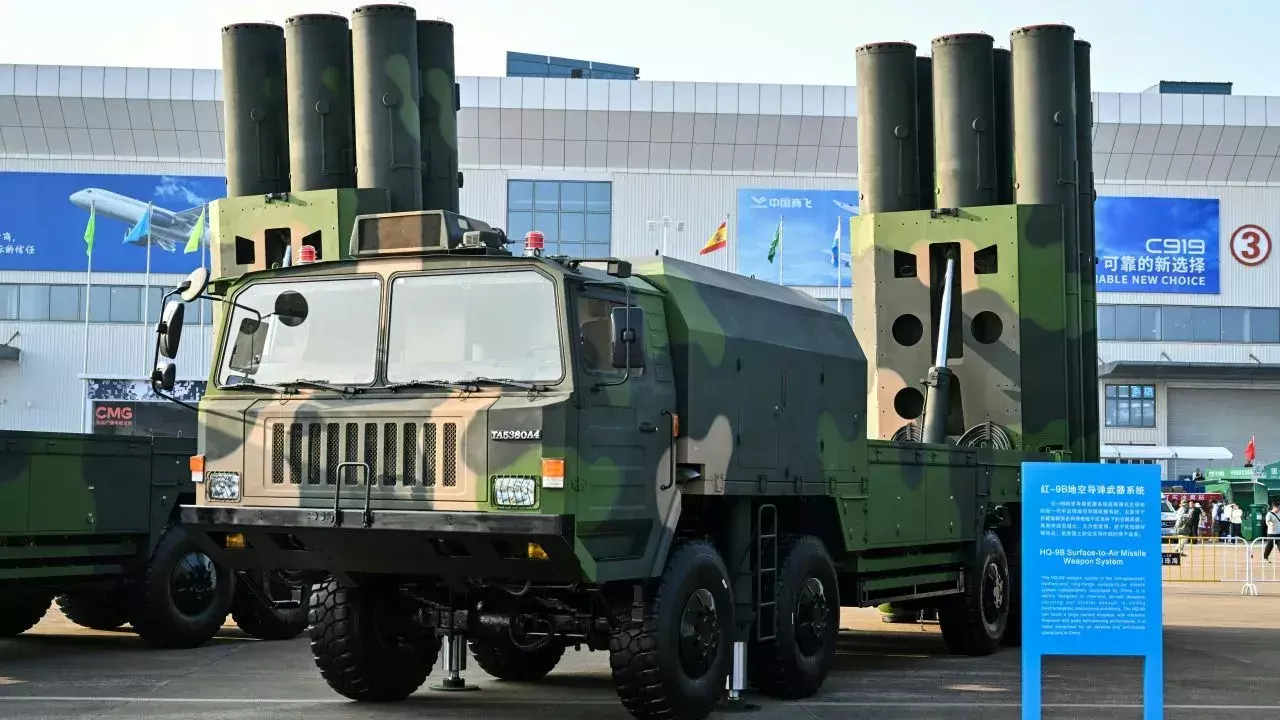
China’s Air Defence System (PC- Social Media)
China’s HQ-9B air defence missile system is facing global criticism after reports claimed it failed during real combat situations in Pakistan, Venezuela and Iran. The system, once promoted as a powerful defence shield, reportedly struggled to detect or stop attacks in these conflicts. Because of this, analysts are now questioning how reliable the system actually is when used in real warfare.
The discussion has sparked debate worldwide about the gap between military demonstrations and real battlefield performance.
What Is China’s HQ-9B Air Defence System
The HQ-9B, also known as Red Flag-9, is one of China’s major long-range air defence missile systems. It was designed to intercept enemy aircraft, missiles and other aerial threats before they reach critical targets.
In theory the system looks impressive. It includes radar networks, missile launchers and command units that work together to detect and destroy incoming threats.
Some experts say the design was influenced by systems such as the US Patriot missile defence and Russia’s S-300 air defence system.
During military parades and demonstrations, the technology often appears highly advanced. But critics say real battlefield performance tells a different story.
Questions Raised After Conflicts In Several Countries
Recent reports have pointed to failures involving the system in multiple countries that purchased Chinese air defence technology.
In Pakistan, the system reportedly struggled during a military confrontation. Analysts claimed it failed to intercept incoming threats for several days.
Another case mentioned involves Venezuela. During a large military operation, reports suggested the Chinese radar systems failed to detect aircraft entering the country’s airspace.
More recently, similar criticism appeared during conflict events in Iran, where air defence systems including Chinese technology reportedly failed to stop strikes.
These situations have raised doubts about the effectiveness of the technology in high-pressure combat environments.
The Role Of The JY-27A Radar System
A key part of China’s air defence network is the JY-27A radar system. This radar is designed to detect aircraft at long distances, sometimes between 280 and 390 kilometres.
The system is particularly advertised as capable of detecting advanced fighter jets such as stealth aircraft.
In theory that sounds extremely powerful. Radar detection is crucial because missiles cannot be launched without locating targets first.
However, critics argue that real situations have exposed weaknesses in detection capability. According to some reports, the radar struggled to track aircraft during certain operations.
That has created embarrassment for countries depending on the technology.
Why Military Technology Looks Different In Real Combat
Military experts often say that equipment can behave very differently during real conflicts compared to controlled tests.
In demonstrations everything works under perfect conditions. Weather is controlled, targets are predictable, and systems are carefully prepared.
Actual combat is chaotic. Electronic warfare, surprise attacks and complex environments create huge pressure on defence systems.
This is why many weapons that look impressive during parades may face serious challenges in battlefield conditions.
The situation surrounding these air defence reports reflects exactly that difference.
Impact On China’s Global Defence Reputation
China has become a major exporter of military equipment in recent years. Many countries buy Chinese systems because they are often cheaper than Western alternatives.
However, if reports of failures continue, it could affect confidence in those weapons.
Countries investing billions in defence technology expect reliable performance, especially during emergencies.
Some analysts believe these recent controversies could push buyers to reconsider future defence purchases.
Others say it is still too early to judge the system completely.
What This Means For The Global Arms Race
The debate around these systems highlights how competitive modern military technology has become. Nations constantly compare defence capabilities and search for strategic advantages.
Air defence systems remain one of the most important parts of national security. They protect cities, military bases and critical infrastructure from aerial attacks.
Because of that, reliability matters more than appearance.
Whether the criticism proves accurate or not, the discussion itself shows something important. In modern warfare, technology must perform under real pressure, not just during military showcases.