TRENDING TAGS :
Dollar Deluge Deals a Sharp Blow to World’s ‘Most Powerful’ Nation Trump’s ‘Tariff’ Move Backfires
India counters global tariff pressures as trade deficit shrinks, exports rise, and MSMEs drive growth, signalling a major shift in global trade power dynamics.

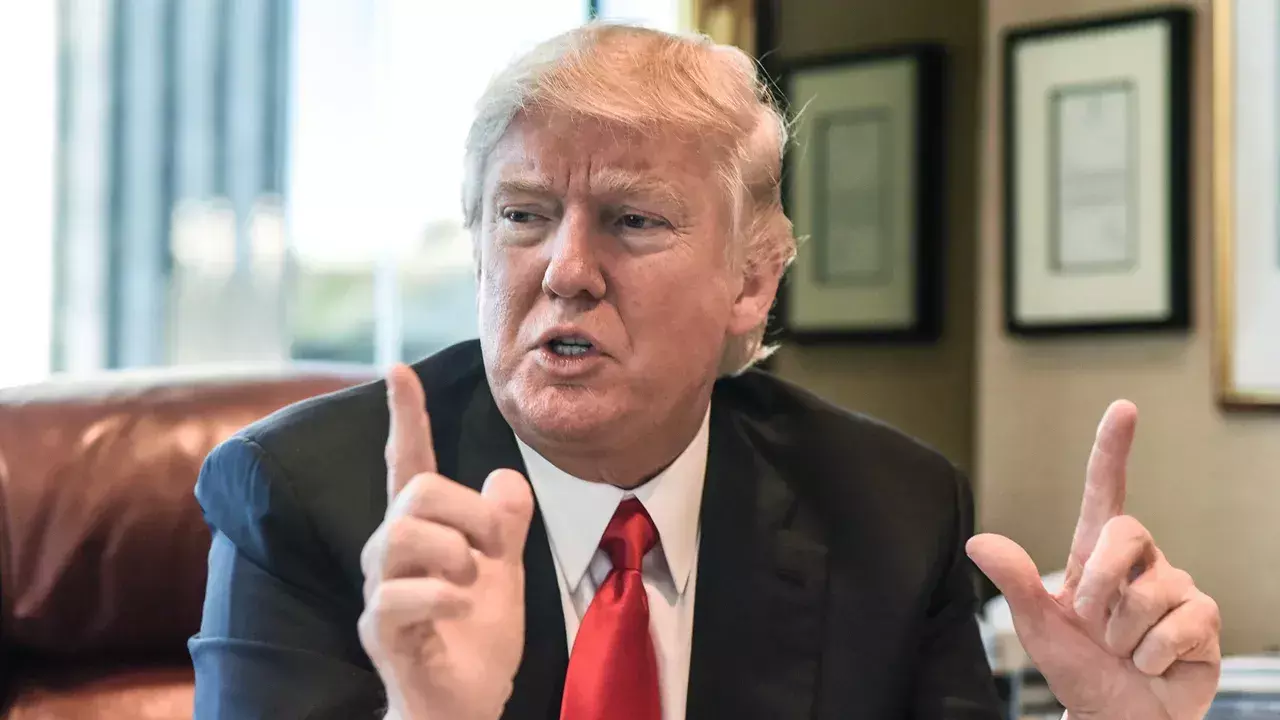
Donald Trump (PC- Social Media)
December 2025 has emerged as a major and highly significant turning point in India’s economic history. At a time when the global economy is grappling with recessionary pressures, inflation, and deep uncertainty, India has delivered a performance that has forced policymakers from the world’s so-called “most powerful” nation—the United States—to China to rethink their strategies. The United States, which once spread fear across the globe through tariff wars, is now seen treading cautiously when it comes to India.
Turmoil After Trump’s Return to Power
Donald Trump’s return to power as President of the United States triggered massive upheaval in global markets due to his aggressive tariff policies. Threats of imposing tariffs ranging from 50% to 100% on Canada, Mexico, China, and BRICS countries cast dark clouds over the exports of many nations. In India too, concerns were raised—would Indian products be able to survive in the US market? The outcome, however, turned out to be completely opposite to these fears.
India’s Trade Deficit?
According to the latest government data, India’s trade deficit has shrunk to its lowest level in the last seven months. The deficit narrowed to approximately USD 17.52 billion, compared to more than USD 20 billion during the same period last year. This clearly indicates that India is now importing less and focusing strongly on increasing exports. The flow of foreign currency has turned in India’s favor, which is considered a major source of strength for any economy.
A Joint Strategy of Government, Industry, and Trade
A crucial factor behind this success has been the coordinated strategy of the government, industry, and the business community. India neither panicked nor took hasty decisions that could have proved damaging. Emphasis was placed on controlling non-essential imports while maintaining stability in exports. This is precisely the strategic autonomy that India has spoken about for a long time.
On the export front as well, the picture has changed significantly. India is no longer confined to IT services alone. Engineering goods, electronics, pharmaceuticals, and textiles have now emerged as the backbone of Indian exports. The engineering and electronics sectors, in particular, have set new records. Despite economic slowdowns in Western countries, demand for Indian products remained intact, ensuring a strong balance between quality and pricing.
Exports Worth Over USD 3 Billion in Just One Month
Micro, Small, and Medium Enterprises (MSMEs) played a decisive role in this entire performance. In just one month, India exported goods worth more than USD 3 billion, with the largest contribution coming from these enterprises. Under the “China Plus One” strategy, many countries are reducing their dependence on China and turning toward India. Smartphones sold in the US carrying the label “Assembled in India” have now become a symbol of India’s growing global credibility.
Major Shifts Observed on the Import Front as Well
Significant changes were also witnessed on the import side. Gold imports declined by nearly 30% to USD 2.45 billion, while silver imports fell by almost 90%. Imports of petroleum products also dropped by more than 21%. This clearly shows that India is rapidly moving toward self-reliance in energy and investment.
Overall, India’s performance amid Trump’s tariff threats is not just a story of numbers—it is a reflection of a transforming India that makes decisions with confidence rather than under pressure. If this momentum continues, India’s path toward becoming a global economic powerhouse will only grow stronger in the coming years.