TRENDING TAGS :
Iran: From an Ancient Civilization to a Nation in Crisis
A comprehensive analysis of Iran’s journey from an ancient civilization to a nation in crisis, examining its history, politics, economy, society, power structure, and possible solutions to its current collapse.

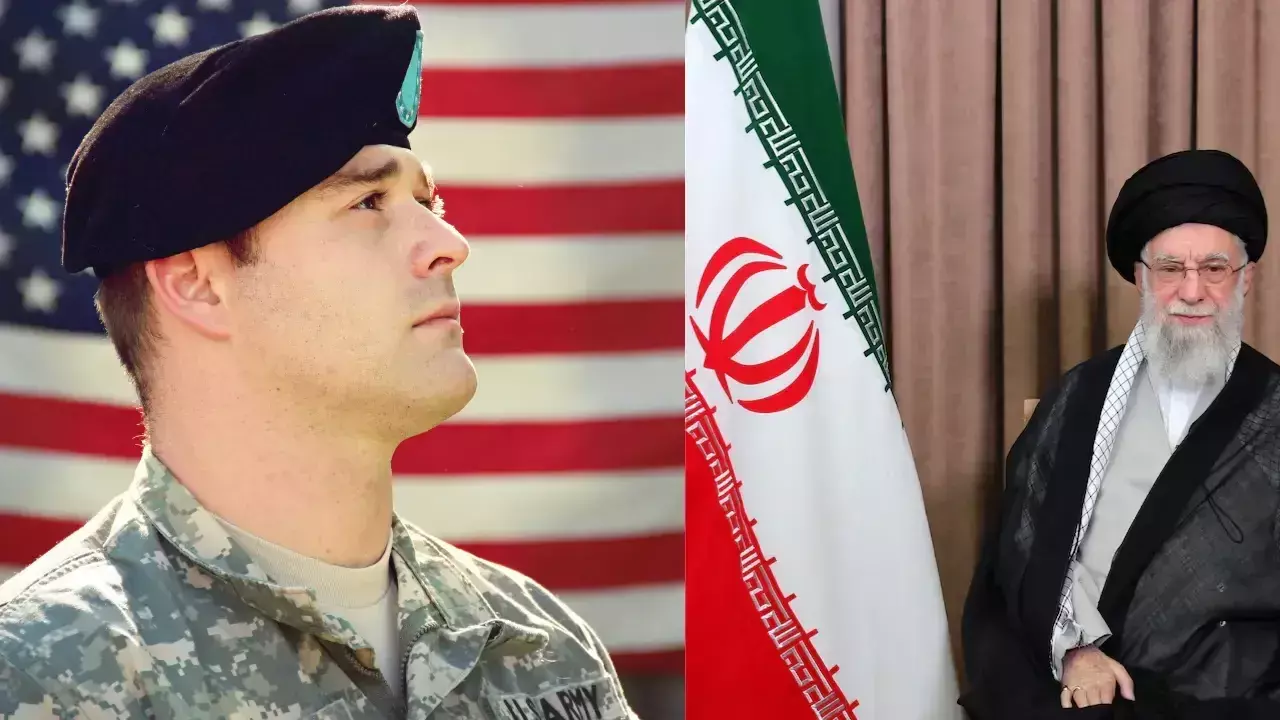
Iran (PC- Social Media)
Iran is not merely a modern nation-state; it is one of the few rare civilizations whose roots run deep into thousands of years of recorded history. Known historically as Persia, this land was once a central pillar of human civilization. From Cyrus the Great to Darius, the Persian Empire set enduring examples of administrative efficiency, cultural richness, and vast geographical expansion—models that influenced both Europe and Asia. This civilizational pride remains deeply embedded in Iran’s historical consciousness and continues to shape the psychological framework of the modern Iranian nation. However, when this inherited pride collides with contemporary failures, it often transforms into dissatisfaction, anger, and rebellion.
Iran’s political history in the modern era has unfolded through a profound tension—tradition versus modernity, religion versus the state, and nationalism versus the global order. In the early twentieth century, Iran began moving toward a constitutional monarchy, but repeated foreign interventions—particularly by Britain and later the United States—continually undermined its political autonomy. The foreign role in removing democratically elected Prime Minister Mohammad Mossadegh in 1953 embedded a deep conviction within the Iranian psyche that the West was not a protector of democracy, but a guardian of its own interests. It was upon this foundation of distrust that the Islamic Revolution of 1979 emerged, overthrowing the Shah and transforming Iran into a religious republic.
After the Islamic Revolution, Iran’s political system evolved into a unique structure in which democratic institutions formally exist, yet ultimate authority rests in the hands of religious leadership. The institution of the Supreme Leader, religious councils, and the Revolutionary Guards together form a system where elections are held, but choices remain constrained. In its early years, this arrangement promised moral purity, national dignity, and liberation from foreign dominance. Over time, however, it became rigid, self-protective, and increasingly detached from society. The concentration of power stifled political innovation and fostered a tendency to view dissent as treason.
Iran’s economic system is deeply intertwined with this political framework. Despite possessing vast natural resources such as oil and gas, the Iranian economy failed to diversify. A state-controlled structure, the economic dominance of paramilitary organizations, and deep mistrust of the private sector combined to create an environment of low productivity and high corruption. U.S. and international sanctions further worsened the situation. The banking system was severed from global finance, the currency sharply devalued, and inflation crushed ordinary citizens. When a nation, despite abundant resources, cannot provide basic economic security to its people, discontent ceases to be merely economic and evolves into a political and moral crisis.
Iranian social life, too, exists under the shadow of this crisis. Iranian society is exceptionally young, educated, and globally connected. Through the internet, social media, and the Iranian diaspora, global comparisons are constantly present. At the same time, social control, cultural restrictions, and moral policing dominate daily life. The condition of women represents the sharpest expression of this contradiction—on one hand, high levels of education and professional competence; on the other, strict regulation of public behavior. This tension gradually became explosive, turning each economic crisis into a broader social uprising.
Geographically, Iran occupies an extraordinarily sensitive position. Surrounded by Central Asia, the Gulf region, South Asia, and the Caucasus, persistent geopolitical tensions exert constant pressure on the country. This reality explains why Iran’s foreign policy appears security-centric and often aggressive. Its strategy of expanding regional influence—whether in Lebanon, Syria, or Yemen—has provided strategic depth, but at the cost of the domestic economy and the well-being of ordinary citizens. When a nation channels more resources into external fronts than into the needs of its own people, internal unrest becomes inevitable.
The decline Iran now appears to be heading toward is not the result of a single cause. It is the outcome of a failed balance across history, politics, economy, society, and geopolitics. The state equated legitimacy with performance, viewed reform as weakness, and treated dissent as conspiracy. Economic hardship broke the silence, social anger gave it voice, and political rigidity poured fuel on the fire. This is why today’s movements are not limited to demands for bread or currency stability; they are demands for dignity, participation, and a future.
Iran’s crisis is global in significance not because it affects only one nation, but because it demonstrates what happens when a state fails to harmonize civilizational memory, political legitimacy, and economic justice. Iran now stands at precisely such a crossroads. Its future depends on whether it can abandon the long-standing habit of viewing power solely through the lens of security and separating the state from society. If it cannot, history bears witness: civilizations do not vanish into dust, but state systems do collapse.
Population, Power Structure, and Possible Paths Out of the Crisis
Present-day Iran is a country of approximately 89 million people, nearly 60 percent of whom are under the age of 35. This demographic reality is itself the key to understanding Iran’s current upheaval. When a young, educated, and globally connected population is compelled to live within a rigid, closed, and fear-based power structure, discontent gradually transforms into rebellion. Iran’s current condition is not the product of sudden rage, but the eruption of pressures accumulated over many years.
Iran’s Explosive Present: Who Is Responsible and What Are the Solutions
The most central factor behind Iran’s current crisis is its power structure, at the apex of which stands Ali Khamenei. The institution of the Supreme Leader exercises decisive influence over Iran’s politics, judiciary, military, media, and even the electoral process. Presidents have come and gone—whether Ebrahim Raisi or the current president Masoud Pezeshkian—but real power has remained concentrated in the hands of the Supreme Leader and the institutions aligned with him. This structure has virtually eliminated accountability. When public or parliamentary influence over decision-making becomes negligible, governance gradually detaches itself from society.
The second critical factor is the Islamic Revolutionary Guard Corps (IRGC). Far more than a military force, the IRGC is Iran’s most powerful political-economic actor. Its dominance extends across oil and gas, construction, ports, telecommunications, and the arms industry. This has transformed Iran’s economy into a form of semi-militarized capitalism where competition, transparency, and private enterprise have little space. For ordinary Iranians, this translates into fewer jobs, rising inflation, and shrinking opportunities.
The third major cause is long-term economic mismanagement. For decades, Iran’s economy relied heavily on oil, yet much of the revenue was either trapped by sanctions or diverted into regional power projection strategies. U.S. and Western sanctions worsened the situation, but it would be incomplete to attribute the crisis solely to sanctions. The deeper issue lies in the regime’s tendency to mask inefficiency under the banner of self-reliance rather than pursuing genuine reform. The result has been the collapse of the rial, inflation hovering between 40 and 50 percent, and the near erosion of the middle class.
The fourth decisive factor is social control and repression. Moral policing, restrictions on expression, stringent controls on women’s public freedoms, and the habitual labeling of dissent as a “foreign conspiracy” have exhausted Iranian society from within. The anger with which Iranian women and young men take to the streets is not merely economic; it is a struggle for dignity and autonomy. This is a society where women are doctors, engineers, and scientists, yet their attire and behavior in public life remain under state surveillance. This contradiction has become unbearable.
The question, then, is how Iran might emerge from its present tragedy. The first and most fundamental solution lies in restoring genuine balance within the power structure. Without constitutionally and institutionally limiting the Supreme Leader’s unchecked authority, no reform can be sustainable. This is not a revolutionary demand, but a basic requirement of a modern state.
The second solution is to curtail the economic role of the IRGC. As long as a military-religious institution dominates the economy, private enterprise, employment generation, and innovation will remain impossible. The role of the military should be security—not commerce or politics.
The third solution involves economic restructuring and global reintegration. Iran must recognize that self-reliance does not mean self-isolation. Diplomatic agreements to ease sanctions, transparent banking systems, and a secure environment for private investment are essential.
The fourth and most sensitive solution is the reconstruction of the social contract. The state must accept that dissent is not treason. Without the meaningful inclusion of women, youth, minorities, and intellectuals, Iran cannot achieve stability. Repression does not create peace; it merely postpones explosion.
Ultimately, Iran’s crisis cannot be resolved through external intervention alone, nor merely through regime change. The solution lies in internal reform, restoration of legitimacy, and honest dialogue with society. If this does not occur, Iran’s population size, youthful energy, and civilizational pride will together drive not strength, but deeper instability.