Iran-Israel War: Explosions Rock Tehran As US-Israel Strikes Continue In Iran
Explosions reported in Tehran as US and Israeli forces continue attacks on Iran. Over 1,000 people killed and tensions rising across the Middle East.

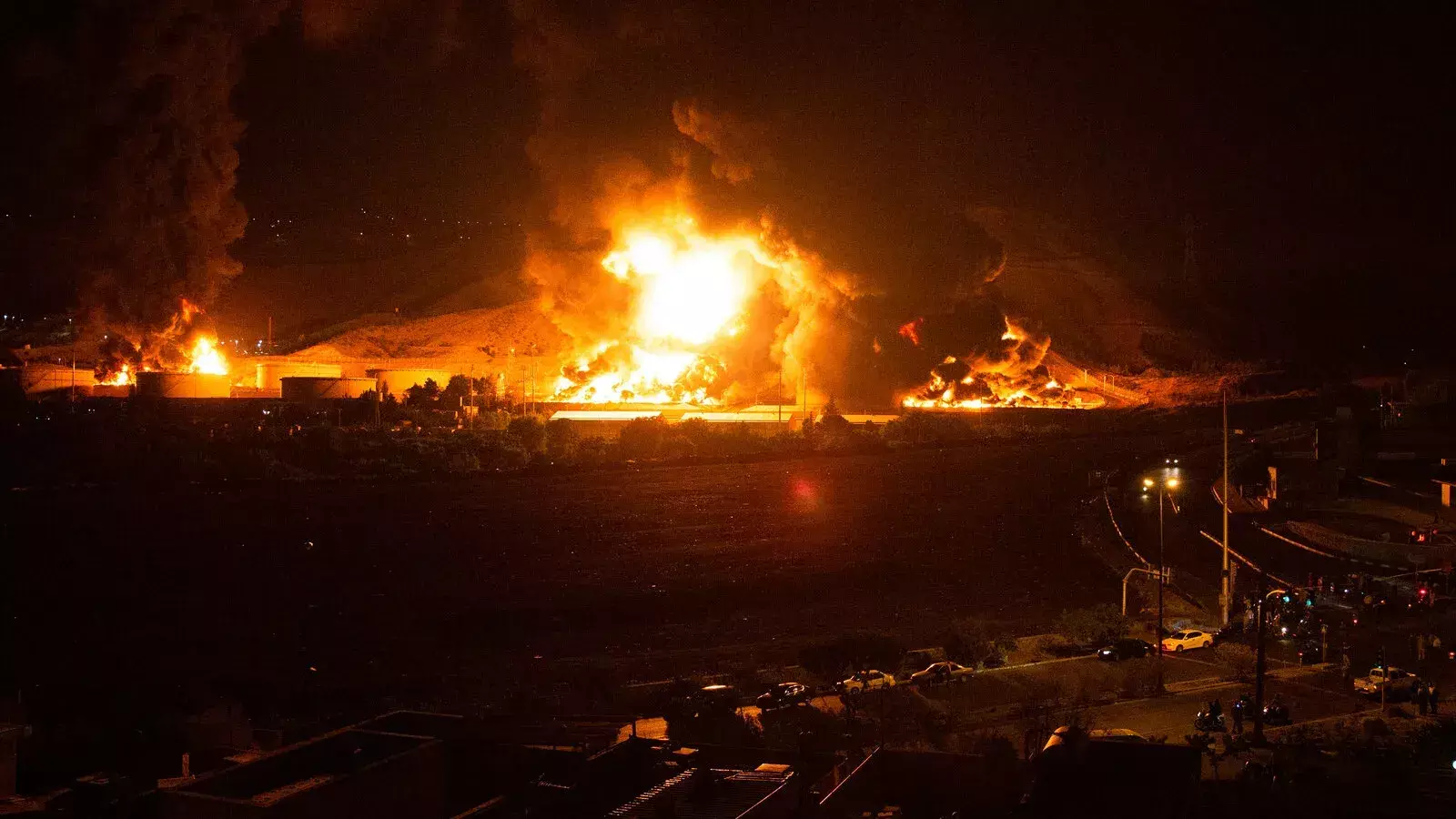
Explosions are being reported in Tehran as the United States and Israel continue air strikes across Iran. Since the attacks began last Saturday, more than 1,045 people have reportedly been killed. The strikes are hitting different targets while the conflict slowly spreading into other parts of the Middle East too.
Videos coming from Iranian media show damaged residential buildings and streets covered in debris. People were seen walking around destroyed areas, trying to understand what just happened around them.
Heavy Air Strikes Hit Iranian Cities
Fresh blasts were heard in Tehran and also in the nearby city of Karaj. Reports say Israel launched what it called a broad wave of attacks targeting different locations in the capital.
Footage shared by Iranian state television shows entire rows of buildings damaged badly. Some vehicles buried under dust and concrete. Construction machines could be seen clearing piles of broken walls and rubble.
For many residents, the night was loud and confusing. Sirens, explosions, and smoke in the distance. Life suddenly looking very different.
Drone Shot Down During The Fighting
Amid the ongoing attacks, Iranian air defence systems reportedly shot down an Israeli Hermes drone over Hamedan province. The report came from Iran’s Tasnim news agency.
The drone incident happened almost at the same time when new air strikes were being reported. Military activity on both sides is clearly increasing, and that’s worrying many people watching the situation closely.
Right now, information keeps changing quickly. Every few hours new developments coming in.
Conflict Spreads Toward Lebanon
The fighting is not limited to Iran only. Israeli forces have also launched attacks in Lebanon, targeting what they say are Hezbollah command centres in Beirut.
The Israeli military claimed it struck facilities used by Hezbollah aerial units. It didn’t provide evidence, but said the operation targeted specific command locations.
Meanwhile, warnings have again been issued to residents in southern Lebanon. The Israeli army asked civilians to move north of the Litani River, saying areas linked to Hezbollah could be targeted.
For families living there, that warning means quick decisions. Leave homes or stay and hope the bombs don’t fall nearby.
Refugees Fleeing Toward Syria
As the fighting spreads, thousands of civilians are trying to escape the violence. Syrian officials say more than 25,000 people crossed into Syria within just two days.
Most of them are women, elderly people and children. Many travelled for long hours, sometimes a full day or more, just to reach the border crossings.
Humanitarian groups and local authorities are providing medical care and psychological support for the arriving refugees. But officials say the numbers could rise even more if the air strikes continue.
And honestly, it probably will.
Airlines Changing Flights Across The Region
The conflict has also disrupted air travel across the Middle East. Several major airlines have reduced or cancelled flights due to safety concerns.
Qatar Airways stopped many flights from Doha. Emirates and Etihad are operating only limited services through safer air corridors. Turkish Airlines has cancelled flights to several regional destinations including Iran, Lebanon, Qatar and Bahrain.
Air France suspended flights to Dubai and Riyadh for a few days as well.
Even Air India has adjusted operations, planning a special Mumbai-Dubai-New Delhi flight using a larger aircraft to help passengers return home.
Political Tensions Rising Globally
The situation is also heating up politically. In the United States, the Senate recently voted against a proposal that aimed to restrict President Donald Trump’s military campaign against Iran.
The vote result was 53 to 47, meaning the operation will continue for now.
At the same time, Australia announced it is sending military assets to the Middle East as a precaution. Officials didn’t reveal details, but reports say two military aircraft have already been deployed.
Right now the region feels tense. Very tense actually. What happens next will depend on how both sides respond in the coming days. Many people around the world are watching closely, hoping the conflict doesn’t grow even bigger.