
Major Reshuffle in Bangladesh Army High Command Signals Strategic Realignment
Bangladesh Army announces major reshuffle in high command, including DGFI chief change, signaling strategic realignment in defence, intelligence, and diplomacy.

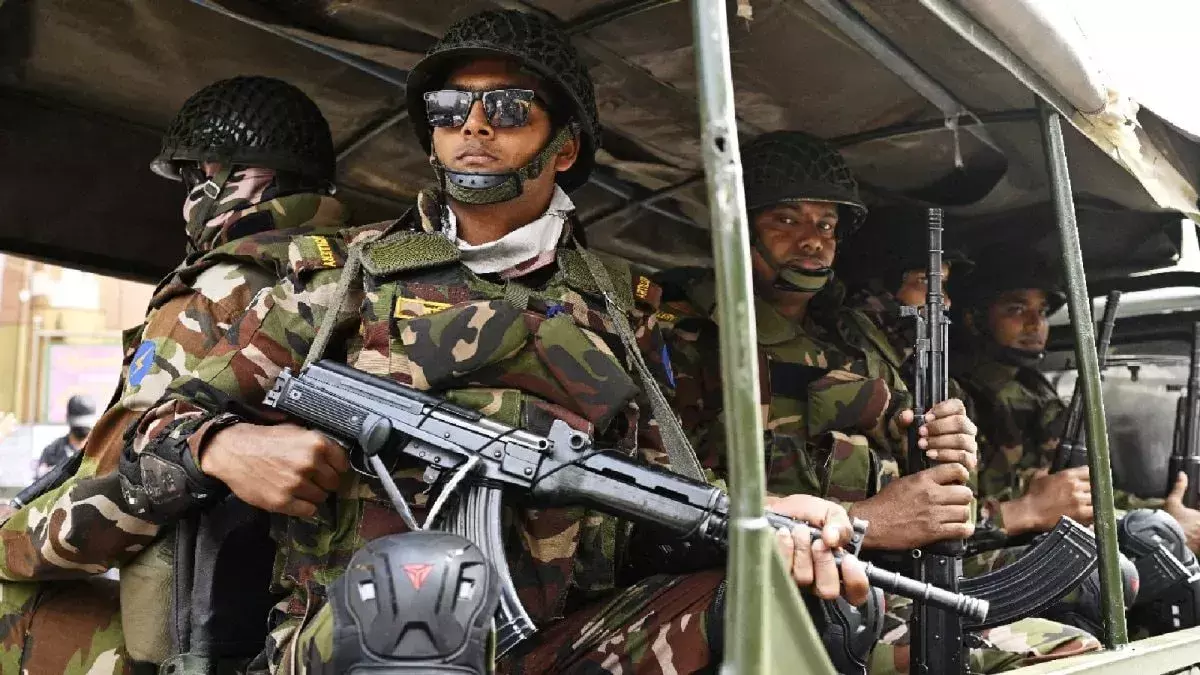
Major Reshuffle in Bangladesh Army High Command Signals Strategic Realignment (PC- Social Media)
In a sweeping shake-up at the top echelons of the military, the Bangladesh Army has reassigned and promoted several senior commanders in what officials describe as a “routine restructuring” but analysts say the moves point to deeper strategic recalibration within the country’s defence and intelligence architecture.
Orders for the reshuffle were issued Sunday from Army Headquarters, according to Defence Ministry sources.
Key Appointments
Lieutenant General Md Mainur Rahman has been appointed Chief of General Staff (CGS) at Army Headquarters, moving from the Army Training and Doctrine Command (ARTDOC).
Major General Mir Mushfiqur Rahman, formerly General Officer Commanding (GOC) of the 24 Infantry Division, has been promoted to Lieutenant General and appointed Principal Staff Officer (PSO) of the Armed Forces Division (AFD).
Lieutenant General SM Kamrul Hasan, previously PSO at AFD, has been posted to the Ministry of Foreign Affairs as ambassador.
Major General JM Imdadul Islam of the 55 Infantry Division becomes Commandant of the East Bengal Regiment Centre (EBRC). Major General Ferdous Hasan Selim, formerly at EBRC, takes over as GOC of the 24 Infantry Division.
Brigadier General Md Hafizur Rahman, Defence Adviser at the Bangladesh Embassy in India, has been promoted to Major General and appointed GOC of the 55 Infantry Division.
Significantly, parallel changes have taken place at the powerful Directorate General of Defence Intelligence (DGFI). Its current Director General, Major General Mohammad Jahangir Alam, is being reassigned to the Foreign Ministry, while Brigadier General Kaiser Rashid of the M and Q Directorate has been promoted to Major General and appointed as the new DGFI chief.
Reasons Behind the Reshuffle
While described as administrative, defence analysts suggest several underlying factors may be driving the changes. Bangladesh’s military is undergoing modernization, including procurement upgrades, force digitization, and doctrinal reforms. Moving Lieutenant General Mainur Rahman from ARTDOC to CGS places a doctrine-focused officer in a central operational planning role, a signal that strategic transformation is a priority.
The leadership change at DGFI could indicate an effort to streamline military intelligence operations amid evolving regional security dynamics, including border management, counterterrorism, and cybersecurity threats. DGFI plays a critical role not only in military intelligence but also in strategic national security assessments. A new chief often signals recalibration of intelligence priorities.
The posting of two senior officers, Lieutenant General SM Kamrul Hasan and Major General Mohammad Jahangir Alam, to the Foreign Ministry suggests an increasing emphasis on defence diplomacy.
Bangladesh has expanded military cooperation with regional and global partners in recent years. Senior officers in ambassadorial roles can strengthen strategic ties, particularly with countries involved in defence procurement, peacekeeping cooperation, and regional security frameworks. Military reshuffles at this level often reflect long-term succession planning. Rotating commanders through operational, training, intelligence, and diplomatic roles broadens experience ahead of potential future promotions.
Implications for National Security
The reshuffle carries several potential implications:
Installing new GOCs in key divisions such as the 24 and 55 Infantry Divisions may affect operational posture, particularly in strategically sensitive regions. However, such transitions are typically structured to avoid disruptions.
A new DGFI chief may bring adjustments in intelligence coordination and internal oversight mechanisms. Observers will watch for shifts in how the agency approaches counter-extremism, regional surveillance, and internal security analysis.
With senior military figures moving into diplomatic roles, Bangladesh may be signaling a more integrated defence-diplomacy approach, especially amid shifting geopolitical alignments in South Asia and the Indo-Pacific.
Historically, high-level reshuffles in Bangladesh’s armed forces are closely monitored domestically. However, no indications of internal discord have emerged; sources describe the moves as structured and centrally coordinated.
The changes come at a time when Bangladesh is balancing multiple priorities: economic pressures, regional security concerns, participation in UN peacekeeping missions, and evolving geopolitical competition in South Asia. By repositioning experienced commanders across operations, intelligence, training, and diplomacy, the Army appears to be consolidating its leadership bench while aligning its command structure with long-term strategic objectives.


