TRENDING TAGS :
Nepal Election Results 2026: Balendra Shah's RSP heading towards win, KP Oli trailing in Jhapa
Balen Shah’s Rastriya Swatantra Party (RSP) is leading in 103 constituencies across Nepal in the early round of vote counting.

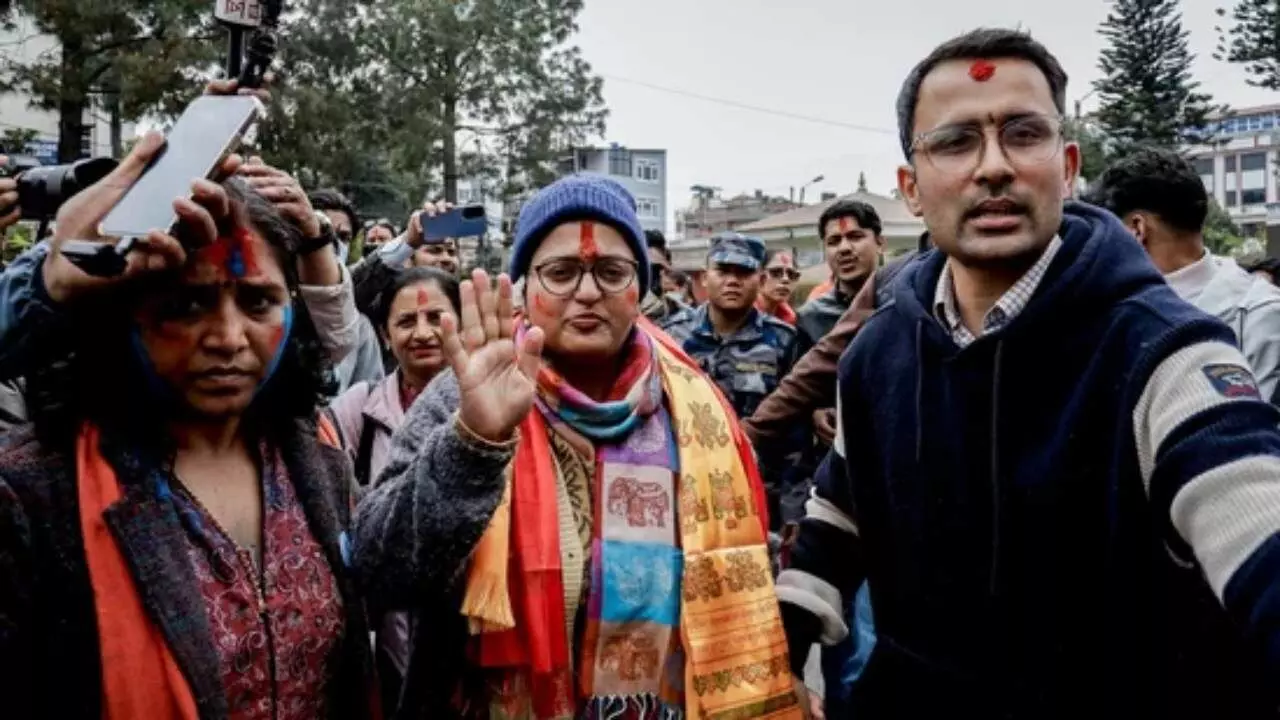
Balen Shah's Rastriya Swatantra Party (RSP) is leading in 103 constituencies across Nepal in early vote counting. RSP's candidate Ranju Neupane (Darshana) has won the parliamentary seat from Kathmandu-1. His party widened his lead over CPN-UML chairman and former prime minister KP Sharma Oli as vote counting continues in Jhapa-5.
Shah's party is often described as Gen Z-backed because his political rise has been closely tied to the wave of youth frustration that fueled last year’s youth protests.
A former rapper with a strong social media presence, Shah built his popularity among young, urban voters through digital outreach, anti-establishment messaging and criticism of traditional political elites.
Polling in Nepal’s general election closed on Thursday evening, with the Himalayan nation set to elect a new parliament nearly six months after 77 people were killed in a crackdown on Gen Z–led protests that forced the then prime minister to resign.
The Election Commission said it has made all necessary arrangements to declare the results within 24 hours of the vote count. It added that counting for the proportional representation category will begin only after the results of the first-past-the-post (FPTP) system are announced, as per a report by Nepal news.
How will the votes be counted?
Nepal’s lower house of parliament has a total of 275 seats, of which 165 are filled through direct elections where counting is currently underway.
The remaining 110 seats will be allocated later under the proportional representation system.
Early trends in Nepal polls
-Rastriya Swatantra Party (RSP) leading in 77 constituencies
-Nepali Congress has won 1 seat and is leading in 8 others
-CPN-UML leading in 7 constituencies
-Nepali Communist Party leading in 6 constituencies
-Rastriya Prajatantra Party leading in 1 constituency
-Shram Sanskriti Party leading in 1 constituency
-67 parties contesting for 165 seats under the FPTP system
-Vote counting still underway across the country
60% voter turnout in elections, strong Gen Z participation
Preliminary estimates suggest overall voter turnout reached around 60 percent, with strong participation from Gen Z voters adding what officials described as “unprecedented” energy to the polls.
The Election Commission attributed the smooth conduct of the vote to improved voter education, cooperation from political parties and robust security arrangements.
First elections after Gen Z protests in Nepal
The election, held months after the Gen Z–led protests that had raised questions about the credibility of the government and the Election Commission, was largely peaceful across the country. After polling concluded at 5 pm, Officiating Election Commissioner Ram Prasad Bhandari thanked the people of Nepal for their participation.
Speaking to ANI, Joint Secretary and Spokesperson of the Nepal Election Commission Narayan Prasad Bhattarai said, "This election was planned in special circumstances. There were some doubts among the people about the success of the selection, but due to the effective cooperation from political parties, candidates, all voters, Govt of Nepal, the private sector, the media and all sectors, we were able to successfully conclude the elections."
Referring to the role of young voters after the earlier protests, Bhattarai said, “Gen Z has been very much supportive in this election. Their participation in this election process has also been positive in terms of Candidates as well as voters.”
What were the Gen Z protests?
The 2025 protests in Nepal were not meant to spark a revolution, but within days thousands of young people took to the streets to protest rampant corruption in the government.
Widespread unemployment, a struggling economy and a ban on 26 social media platforms fuelled anger among “Generation Z”, who marched in large numbers demanding accountability from the authorities.
The demonstrations escalated after clashes with police left 19 people, mostly students, dead. Despite police orders, young protesters continued to rally, calling for the resignation of the government led by Prime Minister KP Sharma Oli.
On September 12, 2025, Nepal witnessed a historic moment when former chief justice Sushila Karki was sworn in as interim prime minister, becoming the first woman to hold the post. The development came after days of intense unrest across the country that left at least 74 people dead and more than 2,000 injured.
How does Nepal’s electoral system work?
Members of Nepal’s House of Representatives are elected through a mixed system that combines first-past-the-post (FPTP) voting and proportional representation. Voters cast two ballots on election day, one for an individual candidate in their constituency and another for a political party.
In total, 275 seats in the House of Representatives, the lower house of the Federal Parliament, are being filled, according to International Foundation for Electoral Systems.
Of these, 165 members are elected through direct constituency contests under the FPTP system, while the remaining 110 seats are allocated through proportional representation based on the share of votes each party receives for its party list.
The 165 constituency seats are distributed across Nepal’s seven provinces.