TRENDING TAGS :
New York Flights Cancelled: Blizzard Chaos and When It Will End
A historic blizzard has cancelled thousands of New York flights. Here’s the exact reason, latest airport status, and when operations are expected to fully recover.

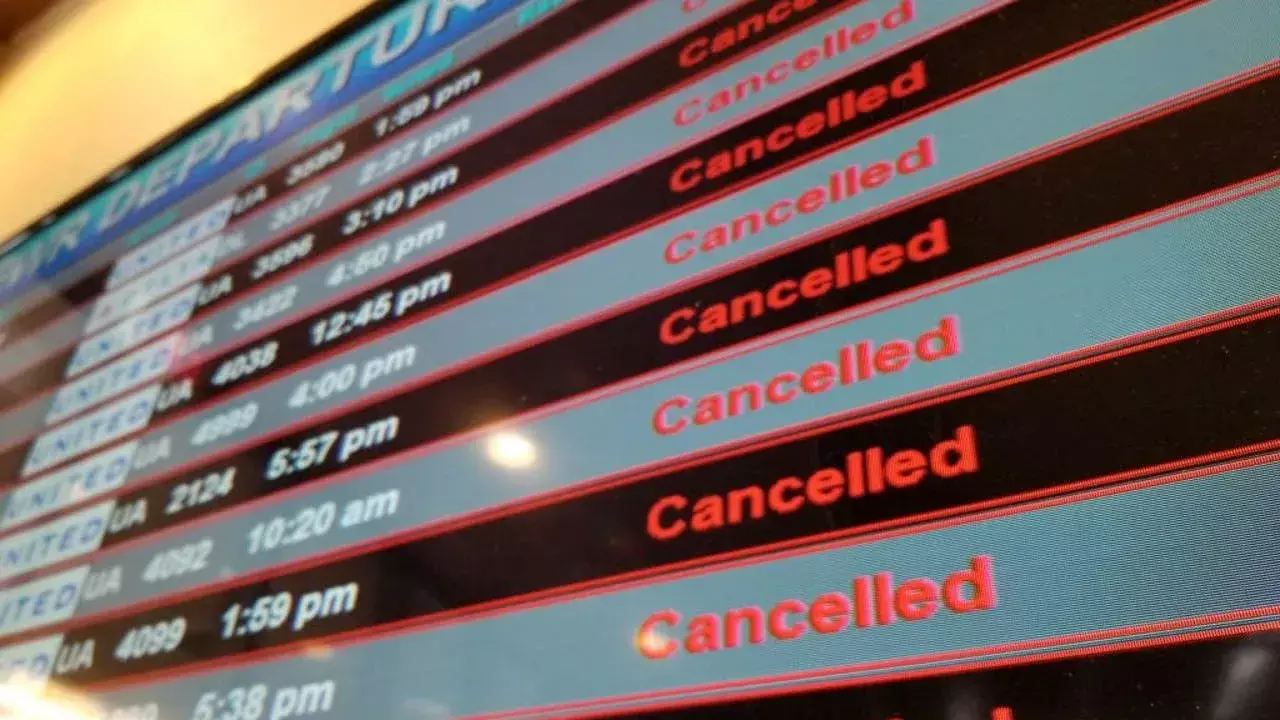
New York Flights Cancelled (PC- Social Media)
New York flights were cancelled because of a historic blizzard that hit the Northeast United States this week. Heavy snow, freezing winds, and near-zero visibility forced airports to shut down or limit operations. Flights are slowly resuming, but delays and cancellations may continue for a few more days as airlines clear the backlog.
Why Were So Many Flights Cancelled?
The main reason is the powerful snowstorm that covered New York and nearby states in thick snow. Airports like John F. Kennedy International Airport, LaGuardia Airport, and Newark Liberty International Airport faced dangerous runway conditions.
Snow removal takes time. Planes must be de-iced. Staff also struggle to reach the airport during such storms. Because of this, airlines had no option but to cancel hundreds of flights.
Between Sunday and Tuesday, more than 12,000 flights were cancelled across the U.S. The New York tri-state area was the worst affected. On Tuesday alone, Newark saw over 470 cancellations. JFK had more than 500. LaGuardia nearly 450. That’s massive disruption.
Current Airport Status in NYC
Flights officially began resuming around noon on Tuesday, February 24. But resuming does not mean normal. Many aircraft and crews are out of position. That creates a domino effect across the system.
As of February 25, operations are improving slowly. However, passengers should still expect delays. Some flights are running on adjusted schedules. Weather may have passed, but the after-effects remain.
Airports in Boston and Philadelphia were also badly hit. Even Florida airports like Orlando, Miami, and Tampa reported hundreds of cancellations, mostly linked to Northeast routes.
When Will Things Be Fully Normal?
If no new weather system hits, experts expect major recovery within two to three days. Full normalcy may take until the weekend. Airlines are adding extra flights to clear stranded passengers.
Backlogs take time. Aircraft rotation has to be reset. Crew schedules must be legally compliant. It’s not instant.
Midweek should look better than Monday and Tuesday. By Friday or Saturday, most operations should stabilize, unless weather changes again.
What Are Airlines Offering?
Major carriers issued travel waivers. Airlines such as Delta Air Lines, American Airlines, United Airlines, and JetBlue are allowing passengers to rebook without change fees for travel affected through February 26.
Southwest Airlines is offering flexible rebooking within two weeks of the original travel date. Fare differences are mostly waived in impacted areas.
If your flight is cancelled, you are legally entitled to a refund if you choose not to travel. That rule applies across the United States.
What Should You Do Right Now?
Check your flight before leaving home. Do not assume it’s operating. Use airline apps. Turn on notifications. Monitor aircraft status if possible.
Airports are still handling stranded passengers. Customer service lines are extremely busy. Rebooking through the mobile app is usually faster.
If you can travel a day later, that might actually reduce stress. Midweek travel is improving, but seats are limited.
How Big Was This Blizzard Impact?
More than 2,100 U.S. flights were cancelled on Tuesday alone. The Northeast corridor was nearly frozen. Snow blanketed cities, grounded planes, and slowed everything.
Florida airports reported over 300 delays and nearly 400 cancellations. Even though Florida had better weather, flights to New York and Boston were stuck because planes never arrived.
This is how interconnected air travel works. One storm, nationwide ripple.
Final Word on New York Flight Cancellations
New York flights were cancelled due to a historic blizzard that made flying unsafe. Airports have reopened, but recovery is ongoing. Expect gradual improvement over the next few days. Check your flight status often, use airline apps, and consider flexible travel if possible. Things are moving, just not at full speed yet.