
TRENDING TAGS :
Sri Lanka MP Pension Repeal 2026: Should India Reform Parliamentary Pension Rules?
Sri Lanka scrapped MP pensions in Feb 2026. This analysis explains India’s MP pension rules (₹31,000 + additional) and explores reform options.

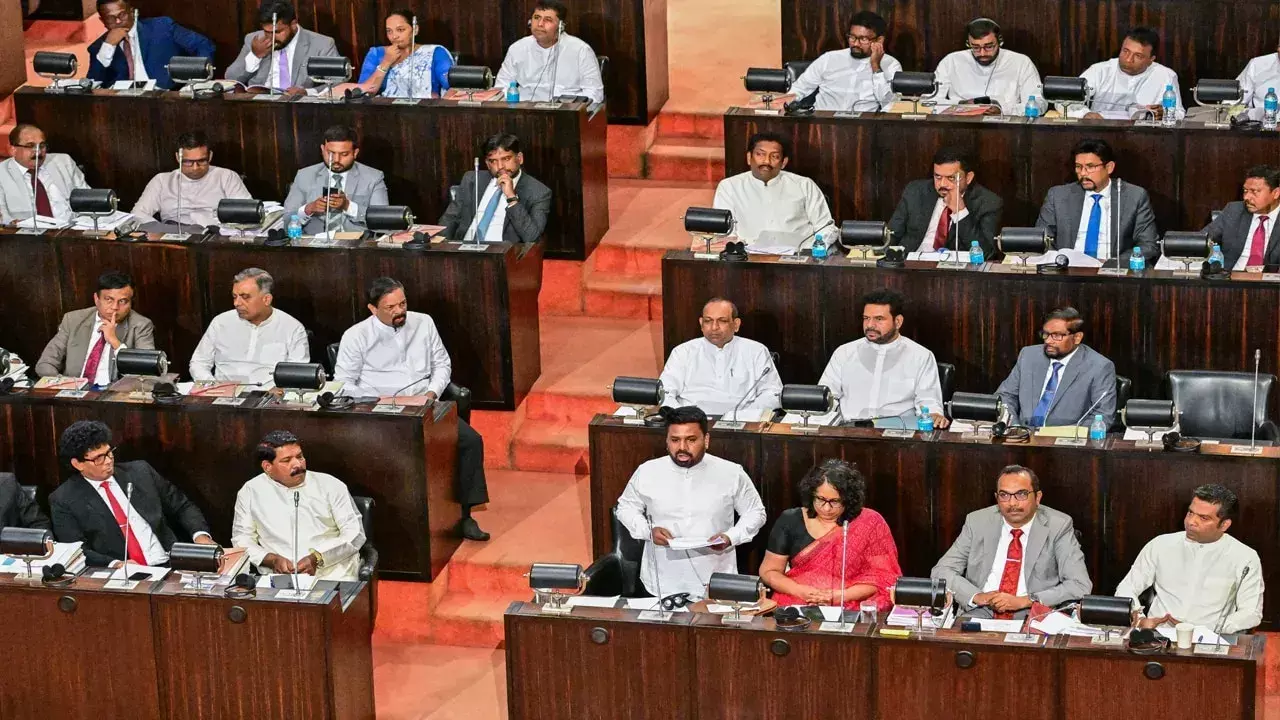
Sri Lanka MP Pension Repeal 2026 (PC- Social Media)
Is politics a means to secure lifelong pension benefits, or is it a responsibility of public service? This question has been raised for decades, but in February 2026, a decision by Sri Lanka’s Parliament gave the debate renewed global momentum. The 225-member Sri Lankan Parliament, by an overwhelming majority of 154 votes, repealed the parliamentary pension law that had been in force since 1977. Not only that, pensions being received by former Members of Parliament under the old law were also discontinued. This move was not merely an economic reform; it was a political message—public life is a responsibility, not a privilege.
Sri Lanka’s Justice Minister stated in Parliament in unambiguous terms that the conduct and quality of debate displayed by lawmakers did not make the public feel that they deserved lifelong pensions. The remark may have sounded harsh, but in a country that has endured a severe economic crisis, it resonated with public sentiment. President Anura Kumara Dissanayake’s government, by abolishing a nearly 49-year-old provision, signaled that politics cannot be treated as a mechanism for lifelong financial security.
This naturally leads to the question—what is the situation in India? India’s Parliament currently consists of 543 members in the Lok Sabha and 245 in the Rajya Sabha, making a total of 788 Members of Parliament. Former MPs in India are entitled to pensions under the “Salary, Allowances and Pension of Members of Parliament Act.” As per the revised rates effective from April 1, 2023, a former MP receives a minimum pension of ₹31,000 per month. For every additional year of service beyond five years, an extra ₹2,500 per month is added.
Technically, there is no separate pension for each term served. However, since pension increases with total years of service, those elected multiple times receive proportionately higher benefits. In practice, therefore, long-serving MPs enjoy greater pension payouts.
Available data from previous years indicate that the annual expenditure on pensions for former MPs has reached several dozen crores of rupees. Around 2018–19, this figure was reported to be approximately ₹70 crore. With revised rates, the actual financial burden is likely to be higher today. While this amount may not appear substantial in the context of India’s overall national budget, the issue is not merely about money—it is about principle. At a time when the old pension scheme for government employees has been discontinued and replaced with a contributory system, calls for reviewing MPs’ pension arrangements are understandable.
Should India follow Sri Lanka and abolish parliamentary pensions altogether? This is a matter that requires institutional prudence rather than emotional reaction. MPs do not have guaranteed tenure, they are not conventional government employees, and political life can be uncertain and risky. Therefore, instead of complete abolition, reform may offer a more balanced approach. For instance, a cap could be placed on additional pension accrual; a maximum service limit could be defined for pension enhancement; or the scheme could be made partially contributory. Transparency can also be strengthened by mandating the annual public disclosure of total beneficiaries and total pension expenditure.
It is equally important to recognize that in a democracy, elected representatives must be assured a dignified livelihood after public service. However, such security should not turn into privilege. If politics is truly about service, then its benefits must remain within the ethical boundaries of service. The objective of pension provisions should be social security—not lifelong entitlement.
India and Sri Lanka operate under different economic and political circumstances. Sri Lanka’s decision emerged in the aftermath of a deep financial crisis, whereas India’s economy is far larger and structurally different. Nonetheless, Sri Lanka’s move raises a fundamental question: should the benefits extended to public representatives be aligned with the economic realities faced by citizens? Would restructuring or rationalizing MPs’ pensions strengthen democratic morality?
Ultimately, this debate transcends one country or one policy. It is about political culture. If politics is to be seen less as a career and more as a duty, then transparency, accountability, and balance in the structure of benefits are essential. Sri Lanka has pointed toward one direction. India must engage in serious policy deliberation—free from populism and driven by reason—to arrive at a decision that reinforces public trust and upholds the dignity of democracy.
(साभार: Sri Lanka Parliament/Parliament News, NDTV (AFP), Sansad Entitlements PDFs, Ministry of Parliamentary Affairs Notification, The Tribune India)


