TRENDING TAGS :
Trump Pushes ‘Dalilah Law’ After Indian Trucker Crash
Trump cites Indian trucker crash to push “Dalilah Law” banning commercial driving licences for illegal migrants. Here’s what happened and why it matters.

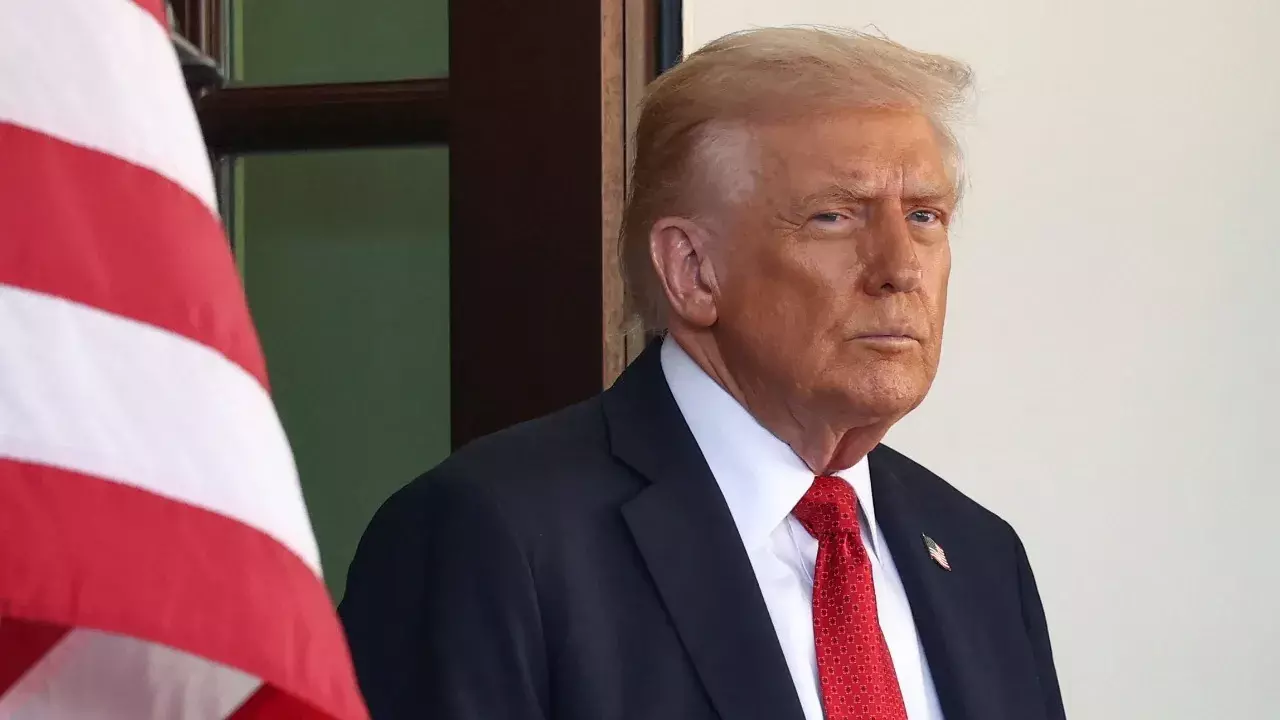
Trump (PC- Social Media)
US President Donald Trump has called for a federal ban on giving commercial driver’s licences to people living illegally in the United States. He cited a 2024 California truck crash involving an Indian migrant driver in which a young girl, Dalilah Coleman, was seriously injured. He wants Congress to pass a new law, which he named the Dalilah Law, to stop states from issuing such licences.
Trump made the announcement during his State of the Union Address to Congress. While speaking on illegal immigration, he brought up Dalilah’s story. She was present in the public gallery. Lawmakers stood up and applauded as her father lifted her in his arms. It was an emotional moment, very deliberate too.
What Happened in the California Crash
The accident took place in California in June 2024. According to the US Department of Homeland Security, an 18-wheeler truck driven at high speed failed to stop in a construction zone. That led to a multi-vehicle collision. Several people were injured.
The department later identified the driver as Partap Singh, who had entered the US through Mexico in October 2022. Officials described him as living in the country illegally at the time of the crash.
Dalilah Coleman suffered severe injuries. Trump said doctors had feared she would never walk or talk again. Homeland Security stated she remained in a coma for three weeks and needed six months of hospital treatment before going home. Trump called her an inspiration and said she is now in first grade, learning to walk again. Her recovery became central to his argument.
What Is the ‘Dalilah Law’?
Trump said he wants Congress to pass a federal law that would block any state from granting commercial driver’s licences to undocumented migrants. In his speech, he criticised what he described as open border policies in states like California.
He also blamed former President Joe Biden for immigration policies that, according to him, allowed such cases to happen. Trump argued that many illegal migrants do not speak English well and may struggle to read road signs. His words were sharp, political, and clearly aimed at strengthening his immigration stance.
The proposed Dalilah Law would focus specifically on commercial licences. These licences allow drivers to operate large trucks and heavy vehicles. Trump framed it as a public safety issue, not only an immigration debate.
Bigger Debate on Immigration and Safety
This case has quickly turned into more than just one accident story. It now sits inside a wider US debate over immigration enforcement, border control, and public safety. Supporters of Trump say stricter rules are needed. Critics argue that immigration status alone does not define driving ability or safety.
Homeland Security also stated that at least three other illegal migrants from India have been involved in trucking crashes and are facing deportation. That detail added fuel to the political discussion.
At the same time, road accidents in construction zones are not uncommon in the US. Safety experts often point to speed, fatigue, and enforcement gaps as common causes. The immigration angle, however, has drawn most of the attention in this case.
Why This Story Is Getting So Much Attention
The image of a child survivor standing in Congress carries weight. It connects policy with a human face. That is powerful in politics.
Trump’s call for the Dalilah Law is likely to spark heated debate in Congress. Immigration remains one of the most polarising issues in American politics. Linking it to road safety may shift how some voters see the issue.
For now, the proposed law is just a proposal. Whether Congress passes it or not will depend on political numbers and negotiations ahead. But the message was clear. Trump wants stricter rules, and he is using this case to press the point hard.
The story blends tragedy, recovery, and politics. It also shows how one accident can shape a national policy conversation overnight.