TRENDING TAGS :
Trump’s 126% Tariff On Indian Solar Panels Shocks Markets
US imposes 126% tariff on Indian solar panels under Donald Trump administration, shaking Indian markets and raising concerns for solar exports and trade talks.

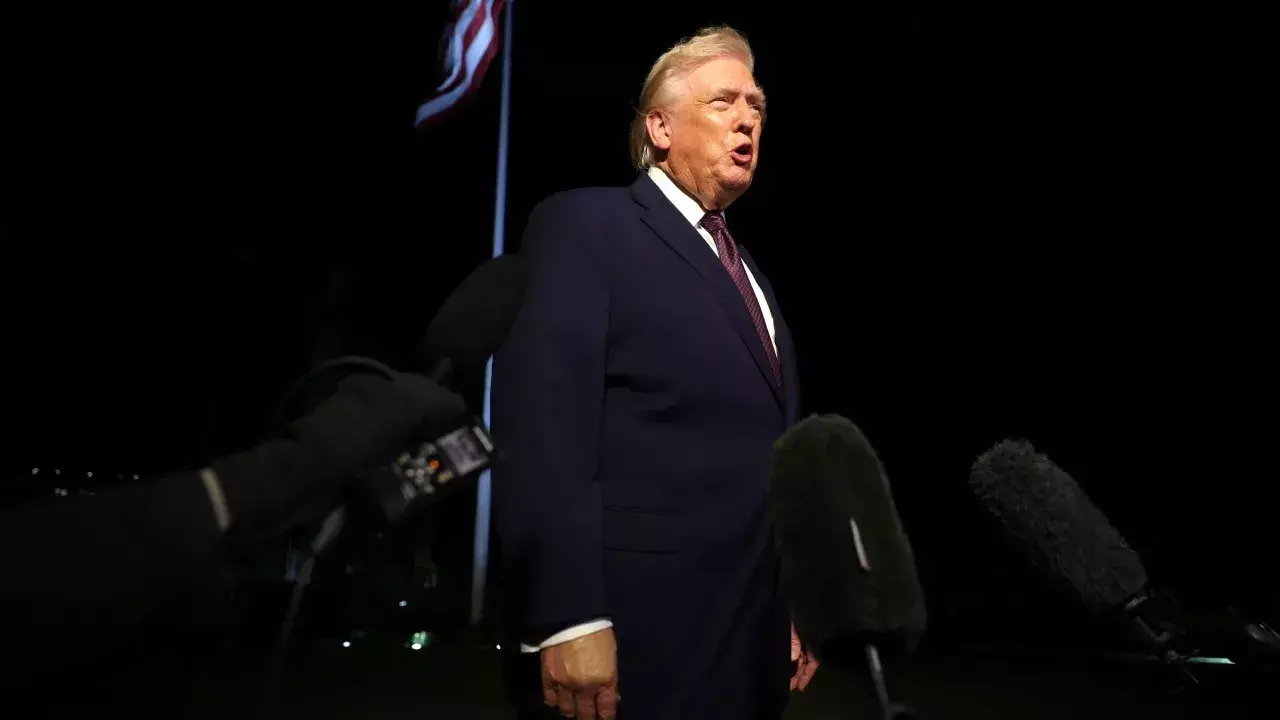
Trump (PC- Social Media)
The US has imposed a 126% preliminary tariff on Indian solar panel imports under Donald Trump’s administration. This decision has hit Indian solar exporters hard and created panic in the market. The move is linked to anti-dumping and subsidy investigations. It may also strain India-US trade talks further.
Why The US Imposed This Massive Tariff
According to the US Commerce Department, Indian solar manufacturers received unfair government subsidies. Because of that, they were allegedly selling panels at lower prices in the US market. American companies claimed this caused damage to their business.
As a result, the US announced a steep 126% tariff on Indian solar imports. Similar duties have been proposed on Indonesia and Laos as well. This is not a small policy shift. It is direct pressure.
The action is part of an anti-dumping and countervailing duty probe. A final decision is expected by July 6. Until then, uncertainty will stay.
Big Blow To Indian Solar Exporters
In 2024, India exported solar products worth 792.6 million dollars to the United States. That figure was nearly nine times higher than 2022 levels. The US had become a strong market for Indian manufacturers.
Now things look difficult. With a 126% tariff, competing in the American market will be extremely tough. Prices will rise sharply. Orders may slow down. Margins will shrink.
Indian solar stocks reacted nervously after the news. Investors do not like sudden policy shocks.
Impact On The US Solar Industry Too
This decision does not affect India alone. The US imports a large portion of its solar modules. In the first half of 2025, about 57% of imported solar modules came from India, Indonesia, and Laos.
Higher tariffs could increase costs for American solar developers. Renewable energy projects may become more expensive. Consumers might feel it indirectly.
So while the aim is to protect US manufacturers, the broader solar ecosystem may face higher costs.
Timing Raises Trade Tension
The timing of this tariff is sensitive. India and the US were already in the middle of trade discussions. A meeting between chief negotiators scheduled for February 22 in Washington was postponed.
India’s Commerce Minister Piyush Goyal has said that once there is clarity on tariffs, trade talks can resume. But clearly, the atmosphere is tense right now.
Trade relations work on trust. Sudden tariffs complicate that.
Separate From Earlier General Tariffs
This 126% tariff is different from the earlier 10% general tariff introduced after a court rejected broader duties. The current action specifically targets solar imports under trade law investigations.
That means it is technical and legal in nature, not just political. Still, politics is never far from trade.
Markets are watching carefully.
What Happens Next
The final ruling is expected by early July. Until then, Indian exporters may explore other markets. Diversification becomes important in such times.
Meanwhile, India is also moving ahead with talks on a Free Trade Agreement with Canada. Canadian Prime Minister Mark Carney is expected to visit India on February 26. Trade doors do not close fully. They shift.
The solar sector in India has grown rapidly in recent years. This tariff will test its resilience. Companies may adapt, negotiate, or innovate around pricing pressures.
For now, one thing is clear. A 126% tariff is heavy. It shakes confidence. It adds friction to an already delicate trade relationship.
How both countries handle this in coming weeks will decide whether this is a temporary storm or a longer trade battle.