TRENDING TAGS :
Venezuela Action: US Revives 'Monroe Doctrine' and Gives it a New Name
An in-depth analysis of how the US revived the Monroe Doctrine during Venezuela action, examining Trump’s strategy, Maduro’s capture, and global geopolitical implications.

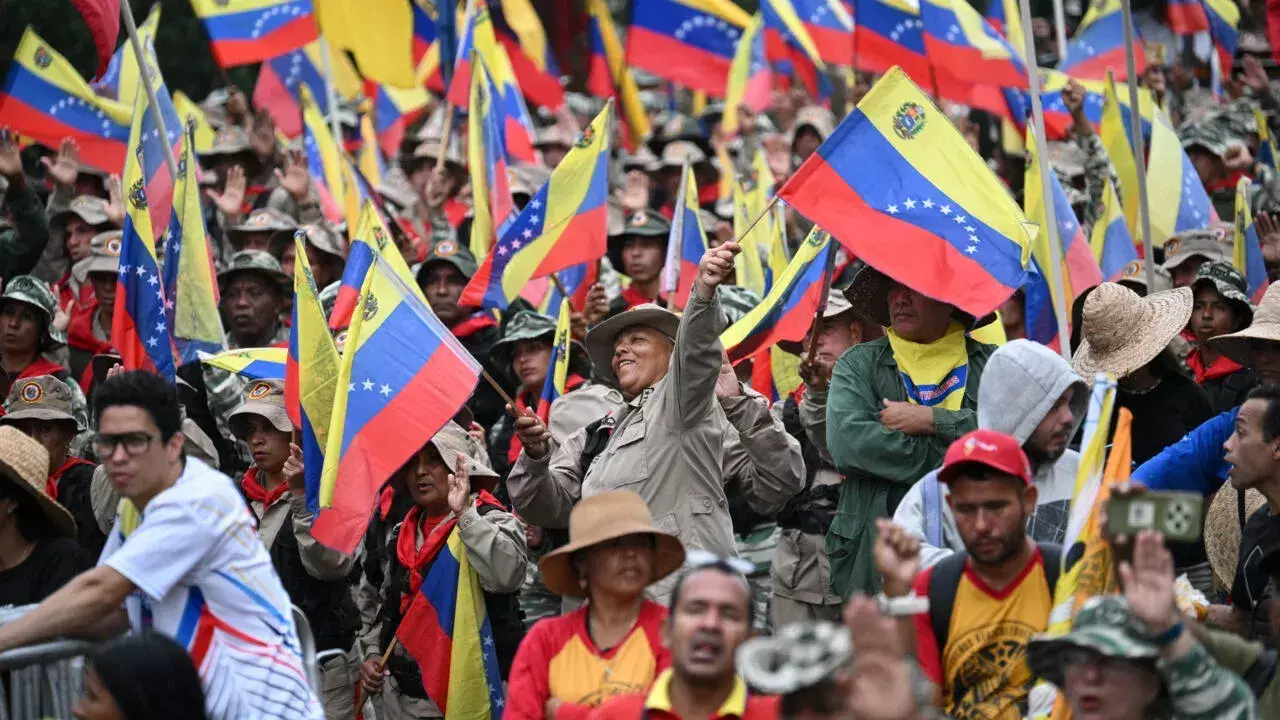
Venezuela Action (PC- Social Media)
In one of the most dramatic U.S. foreign policy actions in decades, President Donald Trump has invoked and transformed the nearly 200-year-old Monroe Doctrine in the context of military action and regime change in Venezuela, bringing the crisis into sharp global focus.
What Is the Monroe Doctrine?
Initially founded by US President James Monroe in 1823, the Monroe Doctrine declared the Western Hemisphere off-limits to further European colonial interference, in exchange for U.S. non-interference in European wars. Historically, it became a justification for U.S. influence and intervention across Latin America throughout the 19th and 20th centuries.
Under recent administrations, the doctrine’s name had fallen out of everyday use. But now the Trump administration explicitly resurrected it with strategic language that signals a more assertive U.S. role in its hemisphere.
Turning Point: Capture of Maduro
On January 3, 2026, U.S. forces launched coordinated air strikes and special operations in Venezuela striking military installations and in a surprise raid, elite U.S. troops captured President Nicolás Maduro and his wife, Cilia Flores, flying them to New York to face charges related to narcotics and organized crime.
President Trump declared that the United States would “run” Venezuela temporarily while ensuring a “safe, proper and judicious transition” of power.
Trump’s “Don-roe Doctrine”
Rather than merely invoking the old doctrine, President Trump has rebranded and expanded it. Administrations officials and Trump himself have even referred to the updated policy as the “Don-roe Doctrine,” suggesting a modernized version that asserts U.S. dominance in the Western Hemisphere against perceived threats from foreign actors, narcotraffickers, and hostile regimes.
In the revised framework, the Western Hemisphere is treated as a first line of defense against external influence, including from China, Russia, and Iran. The U.S. claims authority to intervene militarily and otherwise to protect its interests, disrupt drug trafficking networks, and secure strategic resources.
This approach goes beyond the 1823 doctrine’s original aim of deterring European colonialism. It represents a shift toward unilateral action, direct intervention, and territorial influence, raising legal and ethical questions about sovereignty and international norms.