TRENDING TAGS :
When a Single Person in Iran Used to Have Several Names
For example, Hasan-e-Shirazi meant Hasan who lived in Shiraz, or Mohammad ibn Ali meant Mohammad, the son of Ali.

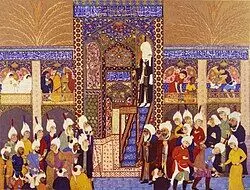
Did you know that there was a time when a single person in Iran was known by different names to different people? The reason was that until the early decades of the 20th century, people in Iran did not use family names or surnames the way we do today. Generally, people used only their first name and added their father’s name, profession, title, or the name of the province they belonged to.
For example, Hasan-e-Shirazi meant Hasan who lived in Shiraz, or Mohammad ibn Ali meant Mohammad, the son of Ali.
⸻
Names Were Not Permanent
What is interesting is that even names themselves were not permanent. For instance, if a person left one city and settled in another, his name would change accordingly. If someone adopted a new profession, a new identity would be added to the name. In other words, as life changed, names changed along with it.
⸻
Problems Increased, So a Law Was Made
As time passed and Iran began to undergo modern transformations, the absence of surnames started creating administrative problems. As the country modernized, issues arose in census records, government documents, tax systems, and passports. When hundreds or thousands of people appeared with the same name, confusion and errors became common in official records.
As a result, in 1919, during the government of Vosuq-od-Dowleh, Iran’s State Council passed an act that introduced the use of surnames.
When Reza Shah came to power in 1925, he strictly enforced this law across the entire country. He himself chose the surname “Pahlavi.” Pahlavi was an ancient Iranian language and symbolized the glory of Iran’s past.
⸻
New Surnames Were Created
Since people did not previously have family names, after the law was enacted they began inventing surnames for themselves. Some adopted the name of their city as a surname, some took their father’s or grandfather’s name, while others simply chose a pleasant or meaningful word as their family name.
⸻
Present-Day Iran and the Identity of Names
If you look at Iranian names from before 1900, you will find that they often consisted of multiple parts, reflecting the cultural identity of that era. Even today, many Iranians include in their names the place or community to which their roots are connected. Women’s surnames, even now, generally do not change after marriage.