TRENDING TAGS :
Who are the Men Still Running Iran After a Wave of Assassinations?
After assassinations during the Iran war, key leaders like Mojtaba Khamenei, Ali Larijani, and Ahmad Vahidi continue running Iran’s military and political command.
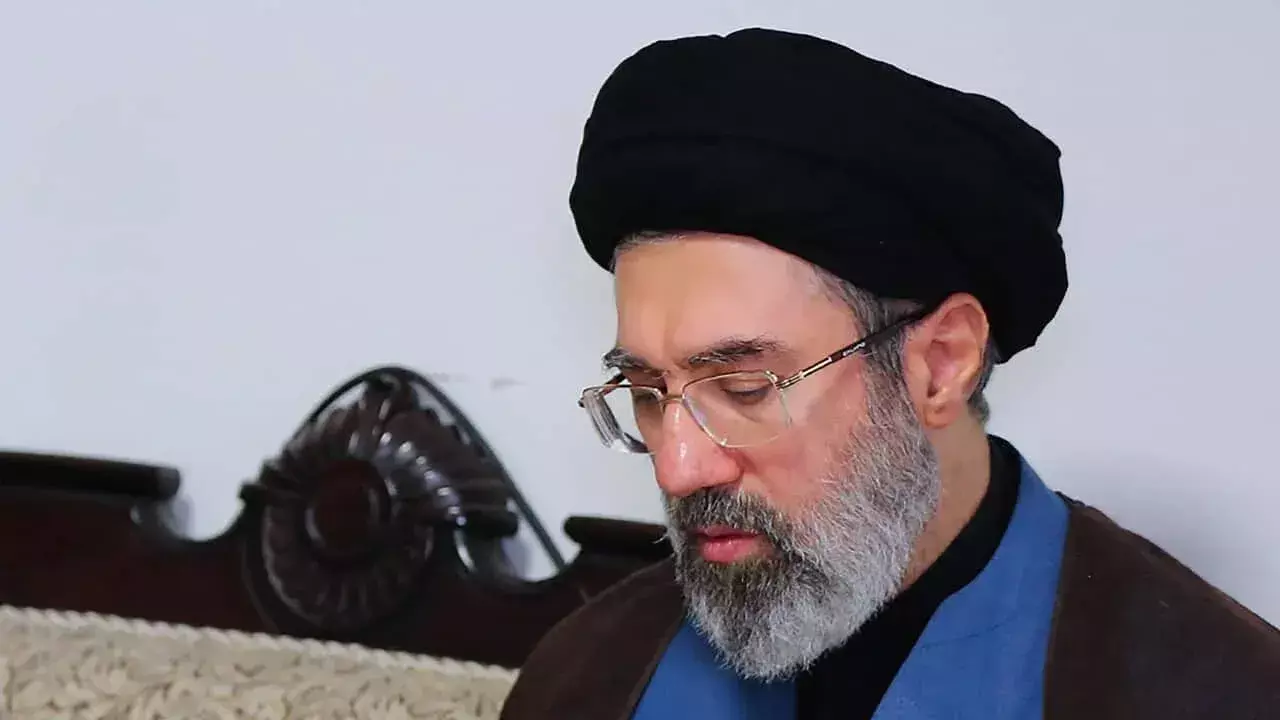
Mojtaba Khamenei (PC- Social Media)
In after a series of assassinations and targeted strikes during the ongoing war, Iran’s leadership structure has not crumbled. Despite the loss of several senior commanders and officials, a core group of powerful figures remains in control issuing warnings to Israel, the United States, and the wider region while attempting to stabilize the country’s command structure.
Mojtaba Khamenei
At the center of this shifting power dynamic is Mojtaba Khamenei, who is widely believed to have stepped into the role of Iran’s top authority following the reported killing of his father, Ali Khamenei.
A first message attributed to him surfaced Thursday, promising revenge for those killed in the conflict. The statement, however, was not delivered in his own voice, fueling speculation about his condition and the stability of the leadership transition.
According to a report by CNN, Mojtaba Khamenei is believed to have been injured at the start of the war. Sources say he suffered a fractured foot, trauma around his left eye, and facial cuts, though the injuries are not considered life-threatening.
When asked whether Israel might attempt to assassinate him, Israeli Prime Minister Benjamin Netanyahu avoided a direct answer. He warned that Iran’s leadership should not feel secure.
Ali Larijani: The Power Broker
Another key figure now shaping Iran’s wartime decision-making is Ali Larijani, secretary of the Supreme National Security Council.
According to The New York Times, responsibility for managing much of Iran’s day-to-day state affairs had already been transferred to Larijani several days before the war erupted, effectively placing him at the center of crisis management.
Larijani has also been active on the diplomatic front. He recently traveled to Oman, which has historically served as a quiet mediator between Iran and the West.
But his rhetoric has been anything but conciliatory. In one of the starkest warnings issued since the war began, Larijani said that if Donald Trump were to “darken Iran,” the consequences would spread rapidly across the region.
Ahmad Vahidi: New Guard Commander
Within Iran’s security establishment, Ahmad Vahidi has risen to prominence after being appointed commander of the Islamic Revolutionary Guard Corps.
He replaced Mohammad Pakpour, who was reportedly killed during the opening strike of the war. Vahidi is a controversial figure internationally. He previously commanded the IRGC’s Quds Force and has long been accused by investigators of involvement in the 1994 AMIA bombing, which killed 85 people in Argentina.
Since taking command of the Guard Corps, Vahidi has remained largely silent publicly, though before the conflict he warned that any “miscalculation” by Iran’s enemies would cause them severe consequences.
Mohammad Bagher Ghalibaf
On the political front, Mohammad Bagher Ghalibaf has become one of the most outspoken voices of resistance against Israel. Ghalibaf has rejected calls for a ceasefire, insisting that Iran must strike back decisively.
A former military pilot, Ghalibaf has cultivated a strong image among hardliners. Earlier this year he and several lawmakers appeared in Revolutionary Guard uniforms after the European Union designated the IRGC as a terrorist organization.
Amir Hatami
Another key military leader still standing is Amir Hatami, who commands Iran’s regular army. Hatami was appointed to the role in June 2025 after Abdolrahim Mousavi was promoted to chief of staff—before later being killed during the current conflict. A former defense minister and close adviser to the supreme leader, Hatami has issued fiery rhetoric during the war.
On the first day of fighting, rumors circulated that Hatami himself had been killed, but Iranian media quickly denied those reports.
A Leadership Under Siege
The wave of assassinations and battlefield losses has left Iran’s power structure bruised and under intense pressure. Yet the emergence of Mojtaba Khamenei and a circle of political and military figures suggests the Islamic Republic is attempting to project continuity and defiance despite the turmoil.
For now, the surviving leadership appears determined to signal that even after devastating strikes and internal upheaval, Iran’s command structure remains intact and ready to escalate the confrontation further.